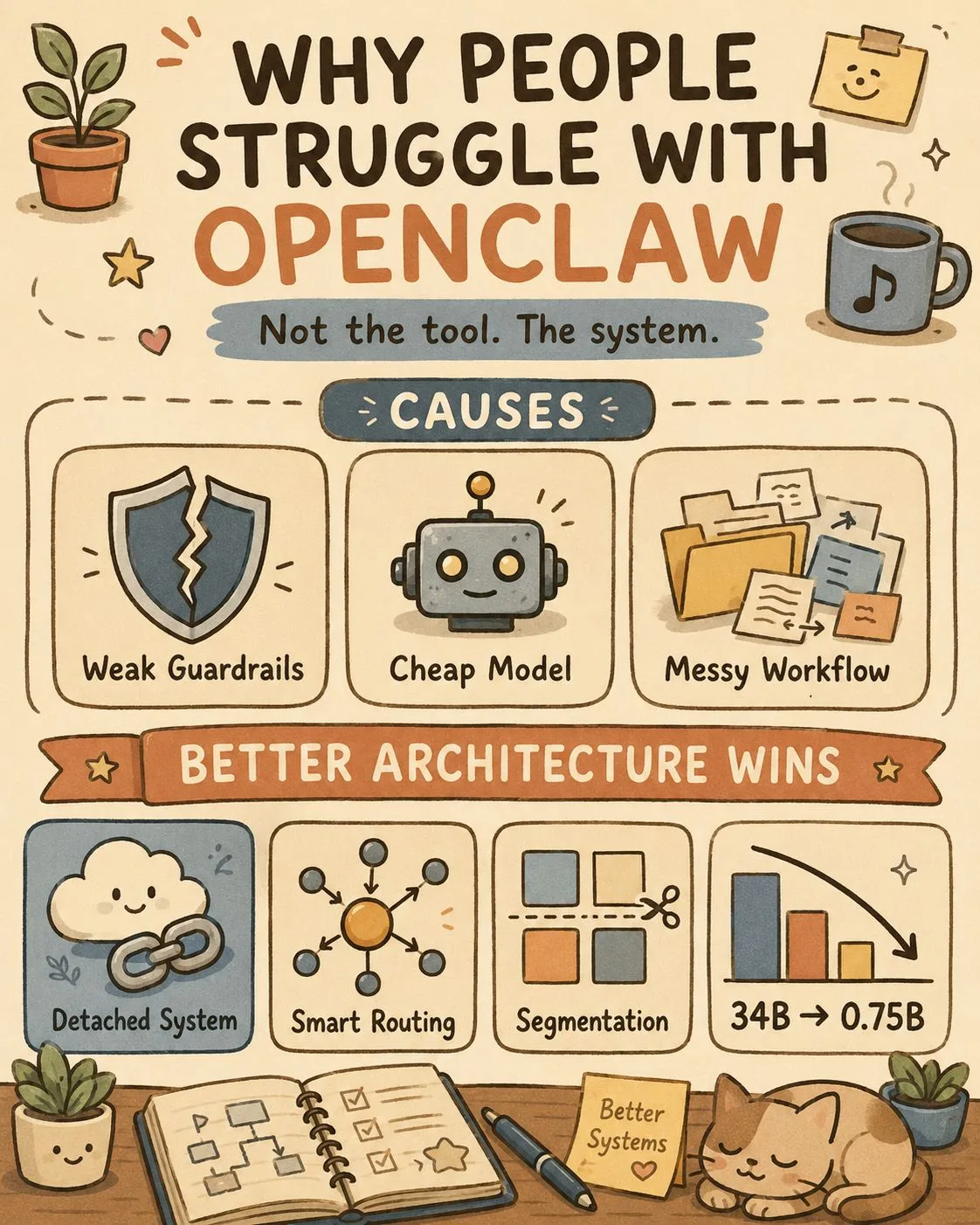
No, I would not suggest swapping to Hermes or Claude Code either. What made the difference in our OpenClaw cost base was not a model swap. It was architectural discipline: detached, trigger-based processes running continuously, smart routing that sends the right finance task to the right model, and clear segmentation so the agent books, reconciles, and reports from proper source documents rather than guessing like an untrained intern. In our case, token burn dropped from the equivalent of 34 billion per month down to 1.5 billion, and now sits near 0.75 billion. That is a real P&L and balance-sheet impact, not a benchmark bragging right.
OpenCode Agent is a useful fallback for troubleshooting, more reliable than Hermes, cheaper than Claude Code, and comparable in stability to Grok Agent. Even so, OpenClaw still fills gaps that OpenCode does not. So this is not a vendor contest. For AINNA's SME clients, it is a system design contest. Throwing expensive models at messy finance data does not fix bad ledgers. Better process architecture does, and that is where measurable ROI lives.
Official Cross-Network Resource
















Ruang pembaca
Apa pendapat anda?
Komen disemak sebelum diterbitkan. Email diperlukan untuk moderasi dan tidak dipaparkan kepada pembaca.
先存起来,主要是为了34。
Whoever wrote this actually did the work on cheaper than claude code.
Still thinking about smart routing that sends.
Honestly what made the difference caught me off guard.