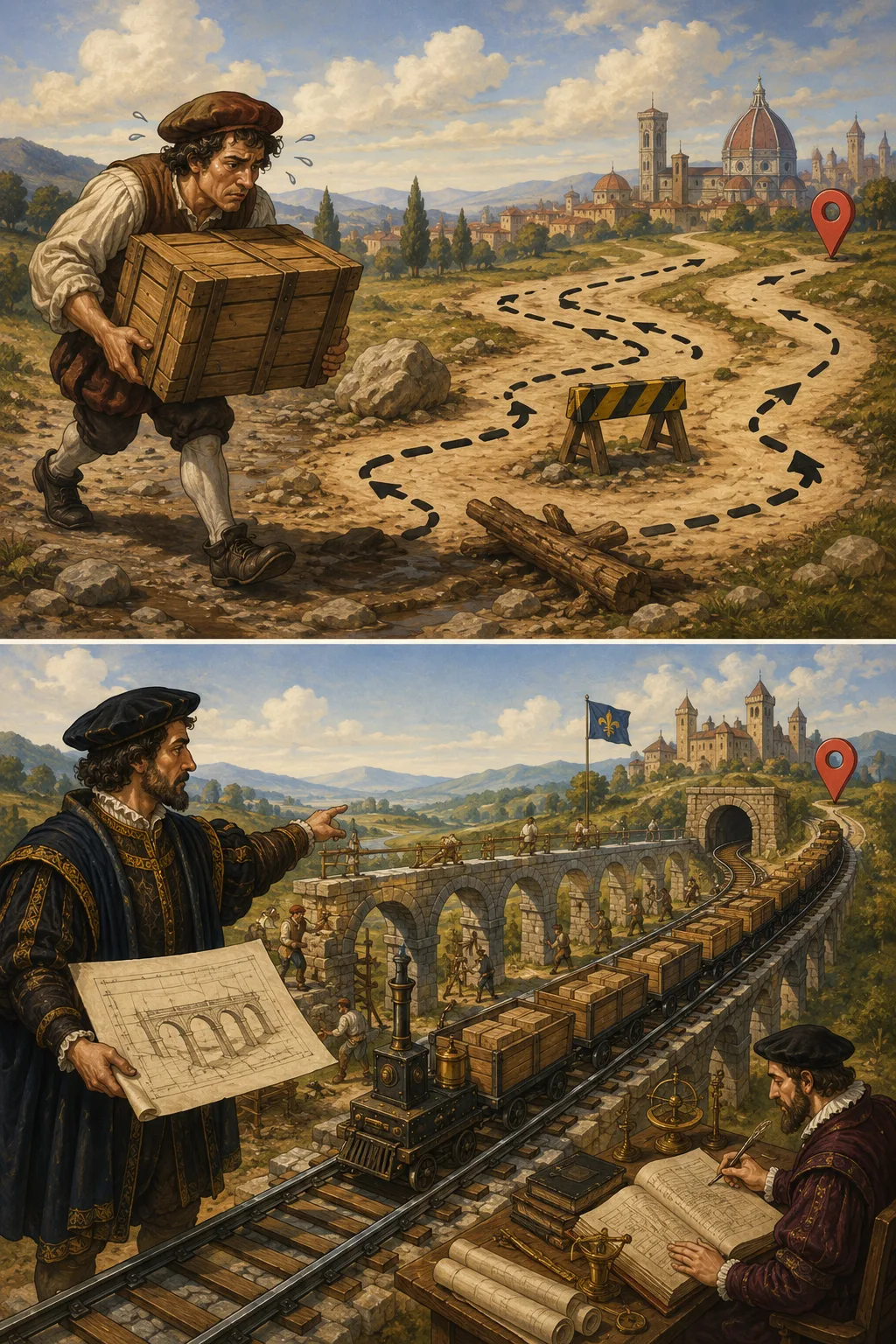
Which is more reliable for moving SME cargo?
A robot that handles every shipment itself choosing routes, deciding priorities, and adapting on the fly?
Or a robot that builds the railway, signalling system, checkpoints, and operating rules so thousands of shipments can move automatically through a controlled path?
For high-volume, high-stakes operations, the second approach is more reliable.
At AINNA, I see SME finance the same way.
Applying an LLM directly to every invoice, receipt, or journal entry introduces variability. Output can drift with context, prompt phrasing, model updates, training data, and accumulated human bias.
A better architecture is to use AI to build the railway.
Let AI design the detached accounting layer: fixed parsers, deterministic ledger logic, accounting standards, validation rules, bank-reconciliation checks, asset-classification rules, and predefined financial indicators.
Then let financial data travel through that controlled system repeatedly.
The AI does not need to “reason” about every transaction.
It is invoked only when the system flags an exception or complexity that genuinely requires judgement.
AI builds the railway.
Deterministic systems move the transactions.
AI handles the exceptions.
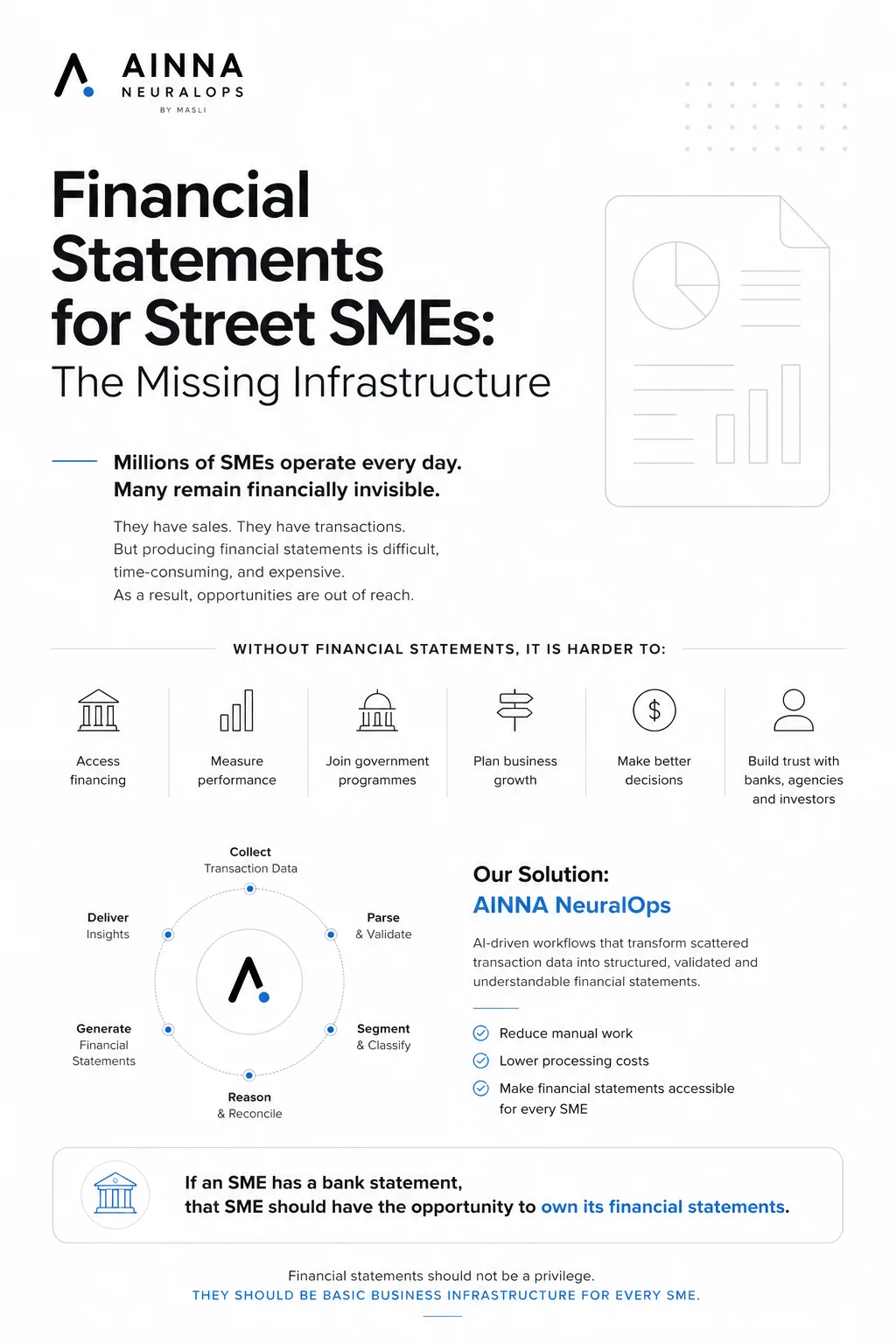
For SME accounting and asset management systems, reliability should come from architecture, not from asking a probabilistic model to repeat the same judgement across thousands of transactions. That is the financial-control value AINNA builds for Malaysian SMEs.














Ruang pembaca
Apa pendapat anda?
Komen disemak sebelum diterbitkan. Email diperlukan untuk moderasi dan tidak dipaparkan kepada pembaca.
Berbaloi baca sebab applying an LLM.
We hit applying an LLM at work before. Good that someone wrote it down.
这个主题这部分我看了几遍,值得再想。
Still thinking about reliability should come from architecture.
इस हिस्से के आँकड़े बाकी लेखों से ज़्यादा तर्कसंगत लगे।
इस लेख वाला हिस्सा मैं अपने बॉस को भेजूँगा।
The framing on AI handles the exceptions is better than expected.
Already sent this to two people. Deterministic systems move the transactions is why.