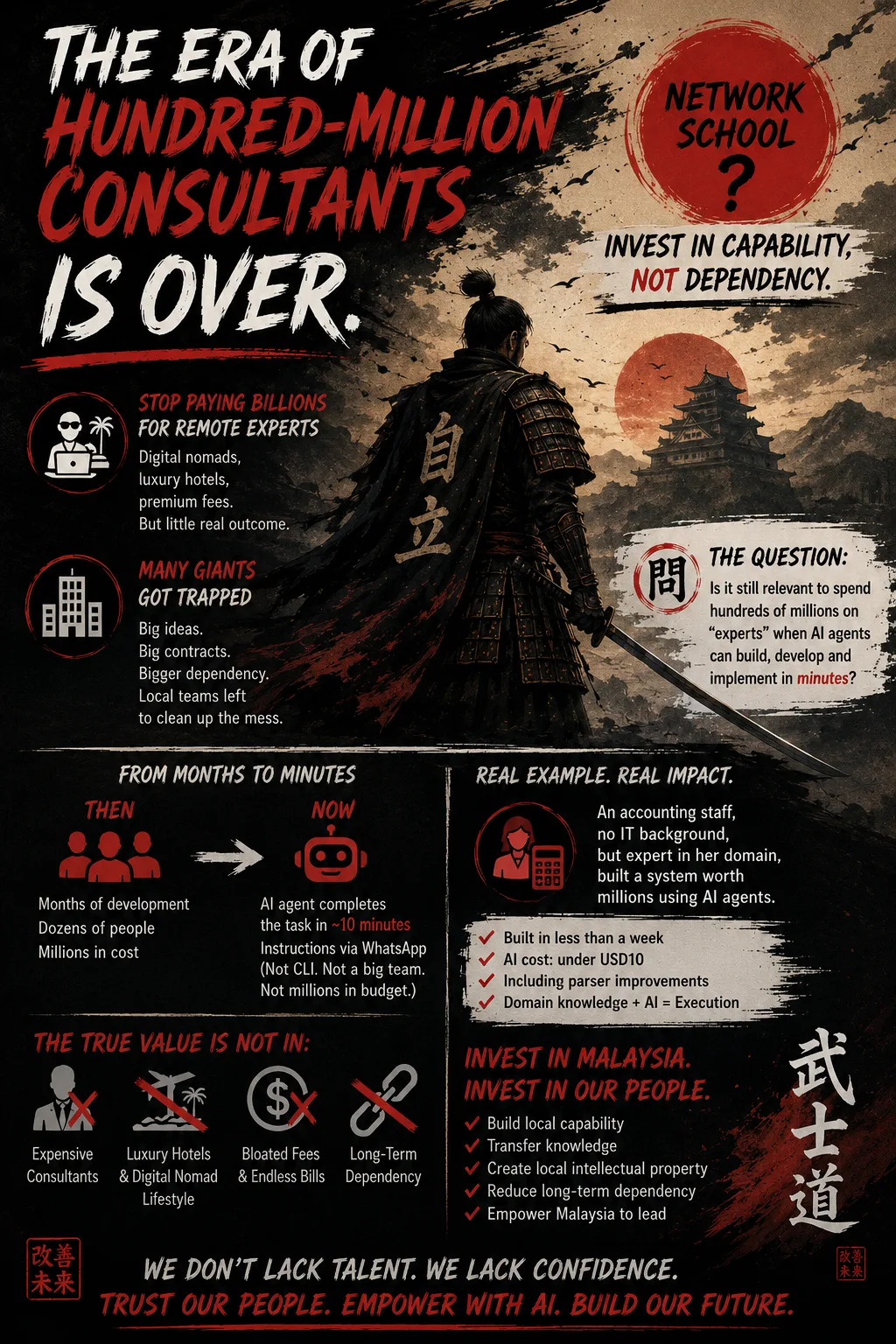
From where I sit at AINNA, I am still trying to figure out what Network School is really delivering when people talk about hundreds of millions.
I hope it is not the same old consulting playbook: pitch technology ideas worth hundreds of millions, position foreign experts as the only solution, and lock Malaysian companies into multi-billion-ringgit consulting, development, maintenance, and licensing cycles.
Some of those ideas were actually solid.
The breakdown happened in execution.
Too many of those consultants lived as digital nomads, billing premium rates from beachfront hotels while local engineers and developers were on the ground keeping the systems running.
When those projects stalled, became over-engineered, or failed, it was local talent that had to refactor, stabilise, and rescue the deployment.
I am not going to get into politics or geopolitics here.
My focus is on investment and technology systems.
If Network School's investment is really about building digital platforms, software, or innovation infrastructure, then I think we need to ask a simple engineering question:
Is it still relevant to spend hundreds of millions bringing in so-called world-class digital experts when AI agents can now generate many of the same ideas, prototypes, and implementations in minutes?
I am speaking from nearly 30 years in the field building, deploying, and maintaining engineering systems.
Years ago, one development task could take months and a room full of people.
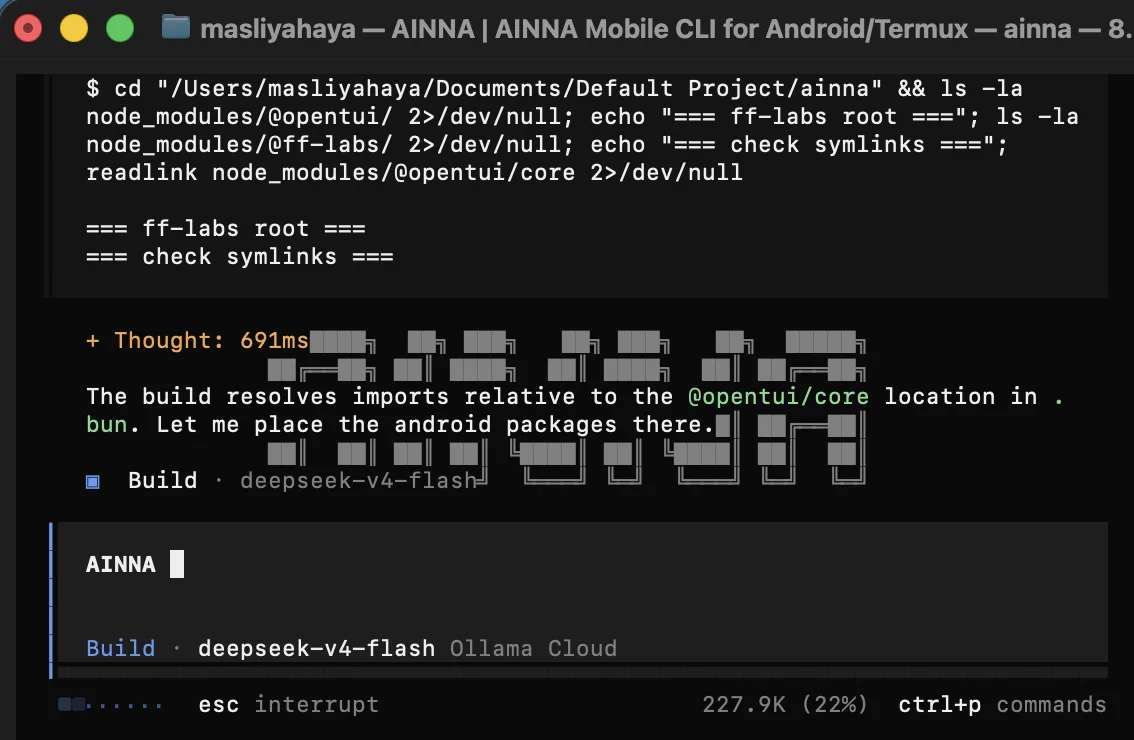
Today, I can send instructions to an AI agent over WhatsApp and get a working result in about 10 minutes without touching a CLI.
Here is a real example.
One of our accounting staff has no formal IT background. She is simply an expert in accounting operations.
Using her domain knowledge and AI agents, she designed and built a system that, under the traditional consulting model, would have been priced in the millions.
The entire implementation, including multiple parser improvements, was completed in less than a week, and the AI cost was under USD10.
That is the shift I am seeing on the ground.
The competitive advantage is no longer about hiring the most expensive consultants.
It belongs to organisations that deeply understand their own operations, combine that domain knowledge with AI, and execute quickly.
Malaysia does not lack engineering talent.
What we often lack is confidence in our own people.
Good investment should build local capability, transfer knowledge, create local intellectual property, and reduce long-term dependency.
It should not create another generation of expensive dependence on external consultants.
Perhaps the question is no longer whether Malaysia can build world-class technology.
The real question is whether we still believe we need someone else to tell us how.
















Ruang pembaca
Apa pendapat anda?
Komen disemak sebelum diterbitkan. Email diperlukan untuk moderasi dan tidak dipaparkan kepada pembaca.
Sa totoo lang, nakakagulat ang 30.
Worth reading for position foreign experts alone.
ما زلت أفكر في 30.