Most conversations about scaling AI default to larger data centers and beefier power grids.
But as system builders, we should ask a different question first.
Instead of only asking how to generate more power for AI, we should also ask:
How do we design AI systems that need less power from the start?
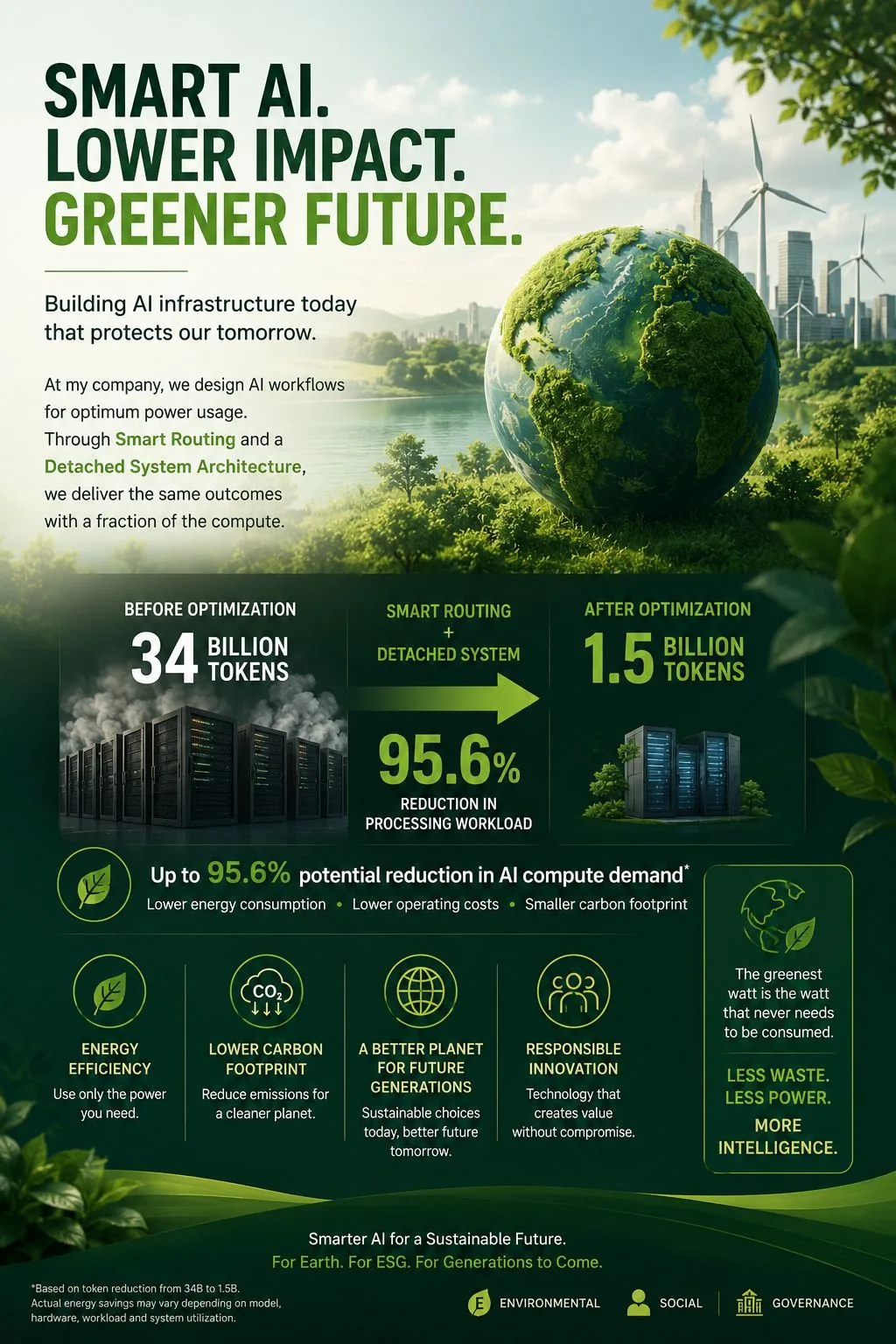
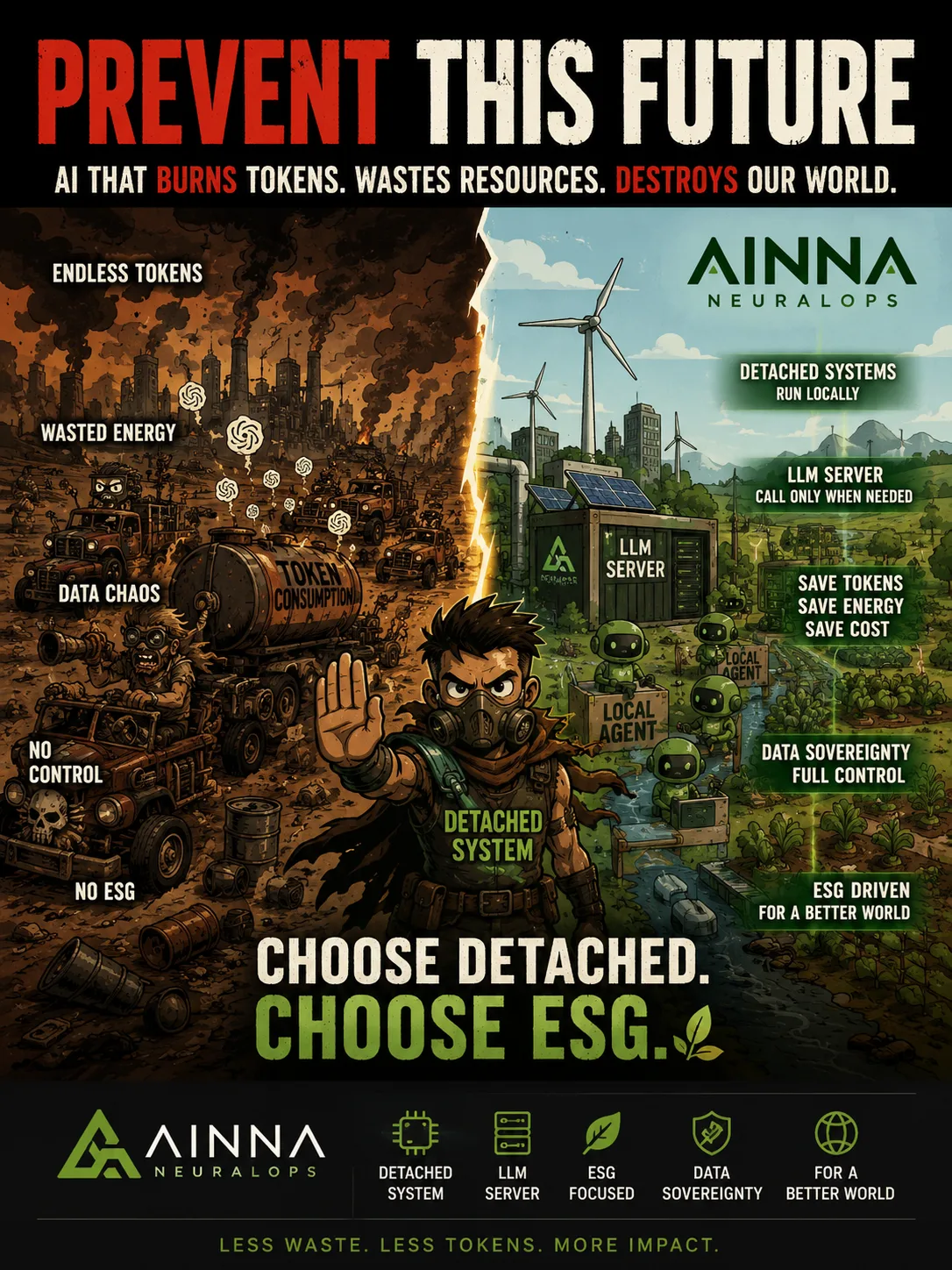
At AINNA, we build with ESG constraints in mind, so we took a different path. Rather than defaulting to brute-force inference, we optimize the AI workflow layer first.
By deploying Smart Routing and a Detached System Architecture, each request is steered to the smallest suitable model and subsystem, avoiding unnecessary GPU-heavy paths.
The impact was substantial:
- Before optimization: 34 billion tokens processed
- After optimization: 1.5 billion tokens processed
That is roughly a 95.6% reduction in total processing workload.
Actual energy and carbon savings will depend on the hardware stack, model choices, and utilization levels, but the principle is clear: intelligent routing can cut compute requirements by orders of magnitude without degrading results.
The future of AI infrastructure should not be measured only by data-center footprint or GPU count.
It should also be measured by how efficiently we use every watt and GPU-hour.
Smarter routing. Lower energy draw. Smaller carbon footprint. Better unit economics.
The most sustainable watt is still the one your system never has to draw.
#AI #ArtificialIntelligence #ESG #Sustainability #GreenTech #DataCenter #EnergyEfficiency #Innovation #DigitalTransformation #SmartRouting #FutureOfAI #ClimateTech #TechnologyLeadership #ResponsibleAI #AINNA














Ruang pembaca
Apa pendapat anda?
Komen disemak sebelum diterbitkan. Email diperlukan untuk moderasi dan tidak dipaparkan kepada pembaca.
Ringkas dan jelas. 34 boleh kongsi dengan team saya.
Angka soal 34 lebih masuk akal daripada kebanyakan artikel.
Bookmarked, mostly for data-center.