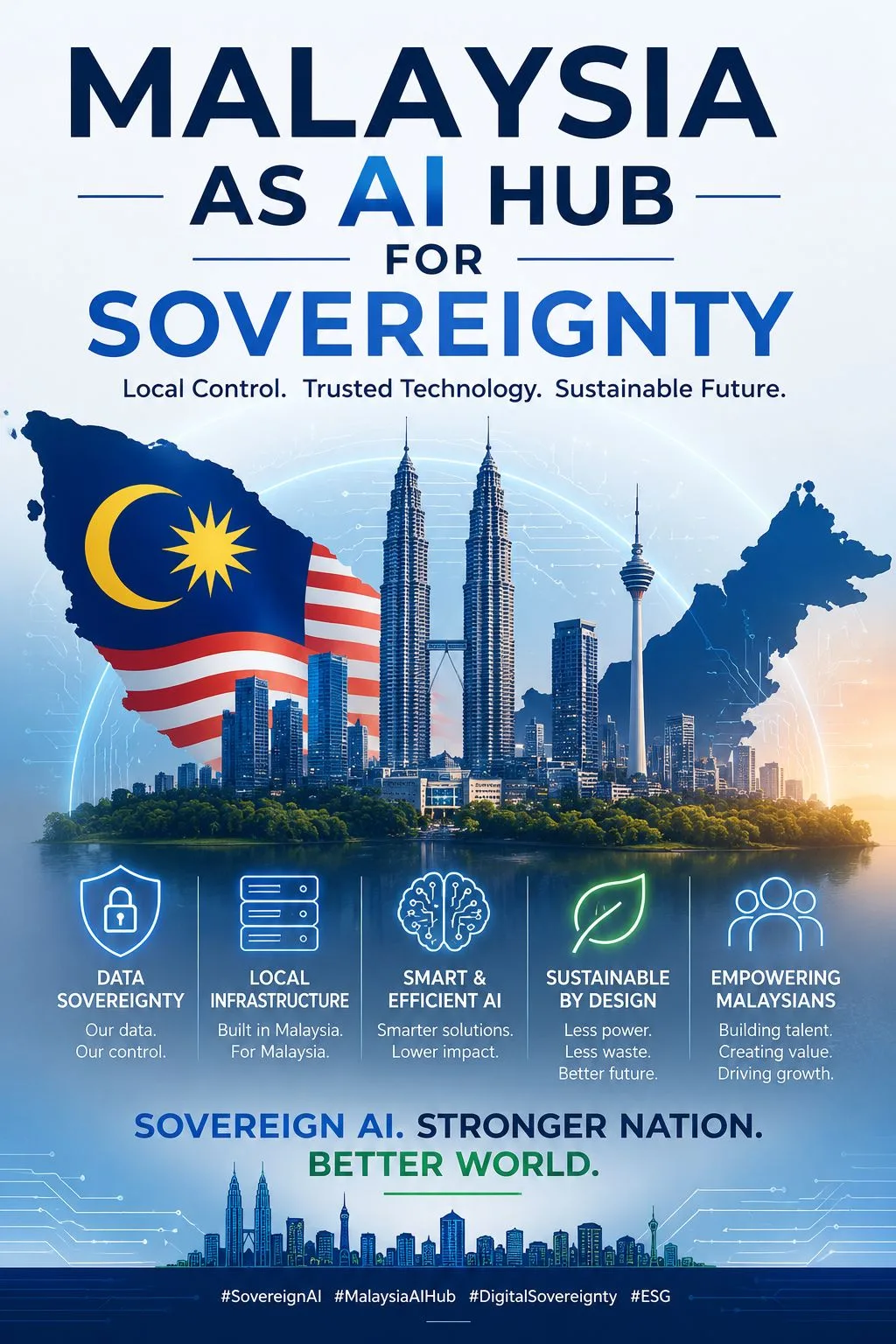
From a system builder's perspective, PMX's push for Sovereign AI and Malaysia's ambition to become a regional AI hub is the right architectural target.
But any architect has to face the current stack honestly.
Many government and industry systems are still wired tightly to foreign AI platforms.
We have all seen the recent large-scale investments in overseas AI solutions, with public sector access rolled out to large numbers of users. That accelerates adoption, but it also forces a design question:
Are we building AI capability, or are we simply renting it?
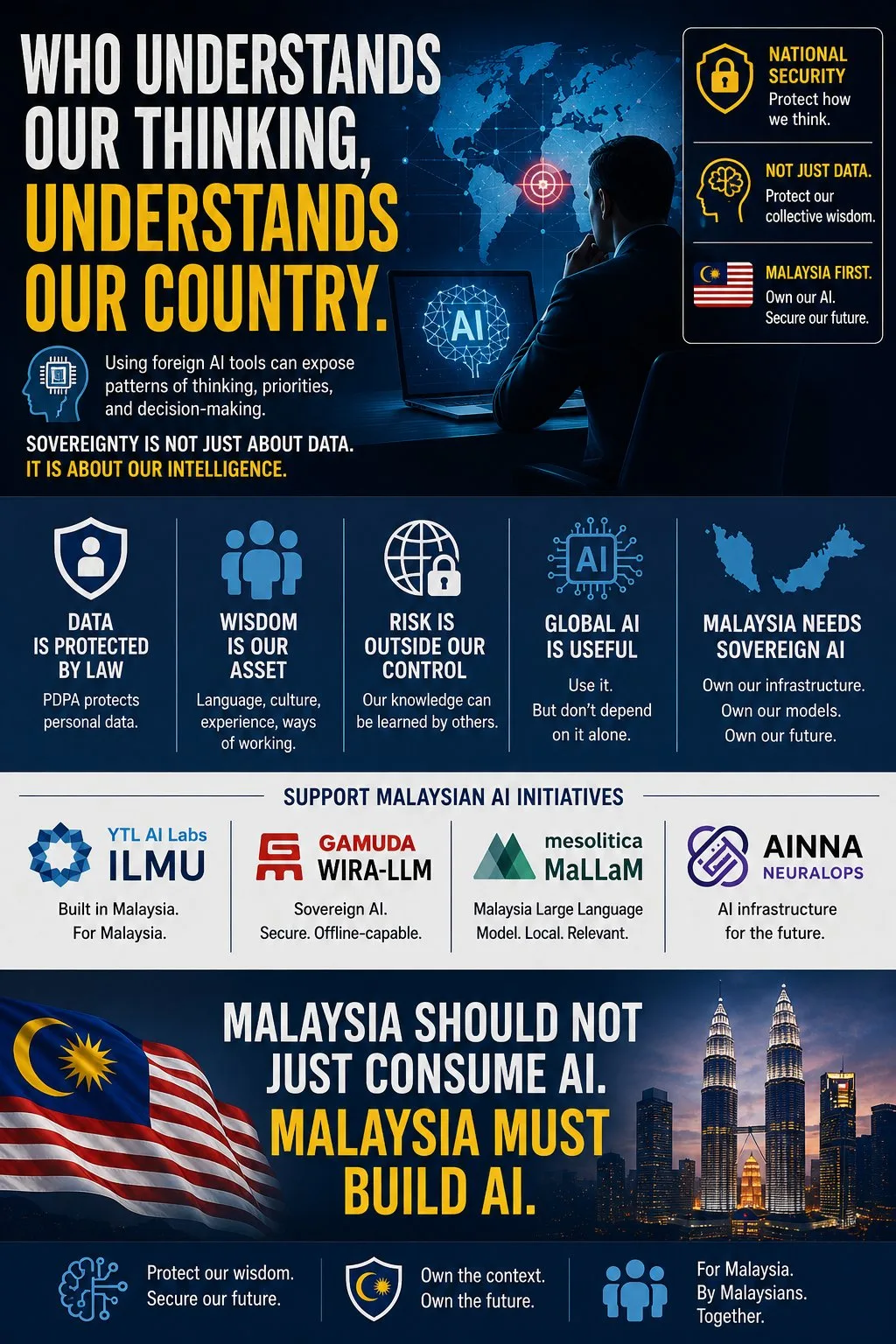
When a nation's workflows run heavily on foreign AI, the exported assets are not just bytes. Over time, those systems learn how we make decisions, how our institutions function, and how we reason. That is a deeper dependency than a software licence.
That is why Sovereign AI is not a political slogan; it is an architectural requirement.
It does not mean we are trying to rip out Microsoft, Google, Apple, AWS, or OpenAI. In the short term, that is neither realistic nor desirable.
But reducing dependency is a realistic engineering goal - and a necessary one.
We also need to look past the AI hype cycle. The debate keeps defaulting to bigger models, bigger GPU clusters, and larger data centres. In practice, the team that wins is often the one that deploys more intelligently, not the one that buys the most silicon.
Japan did not beat the American car giants by building larger engines. It built smaller, lighter, more reliable, and more efficient vehicles. They were underestimated at first, then they reshaped the whole industry.
AI can follow the same trajectory.
The future is not just about scaling up models. It is about designing smarter architectures.
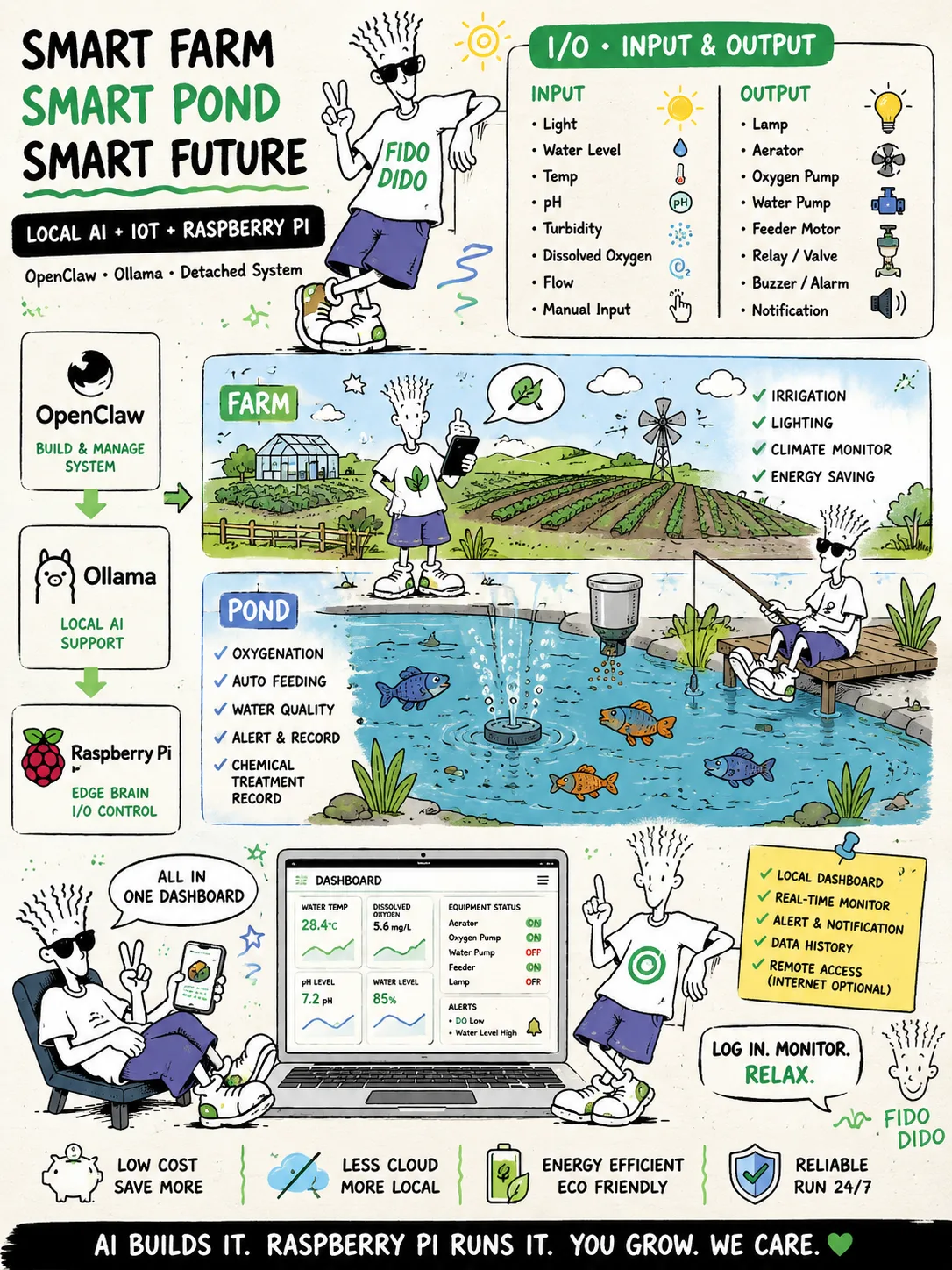
With patterns like smart routing and detached systems, the right workflows can cut GPU load, infrastructure footprint, and power draw by up to 90% without sacrificing useful output.
Most importantly, we need to adopt AI responsibly.
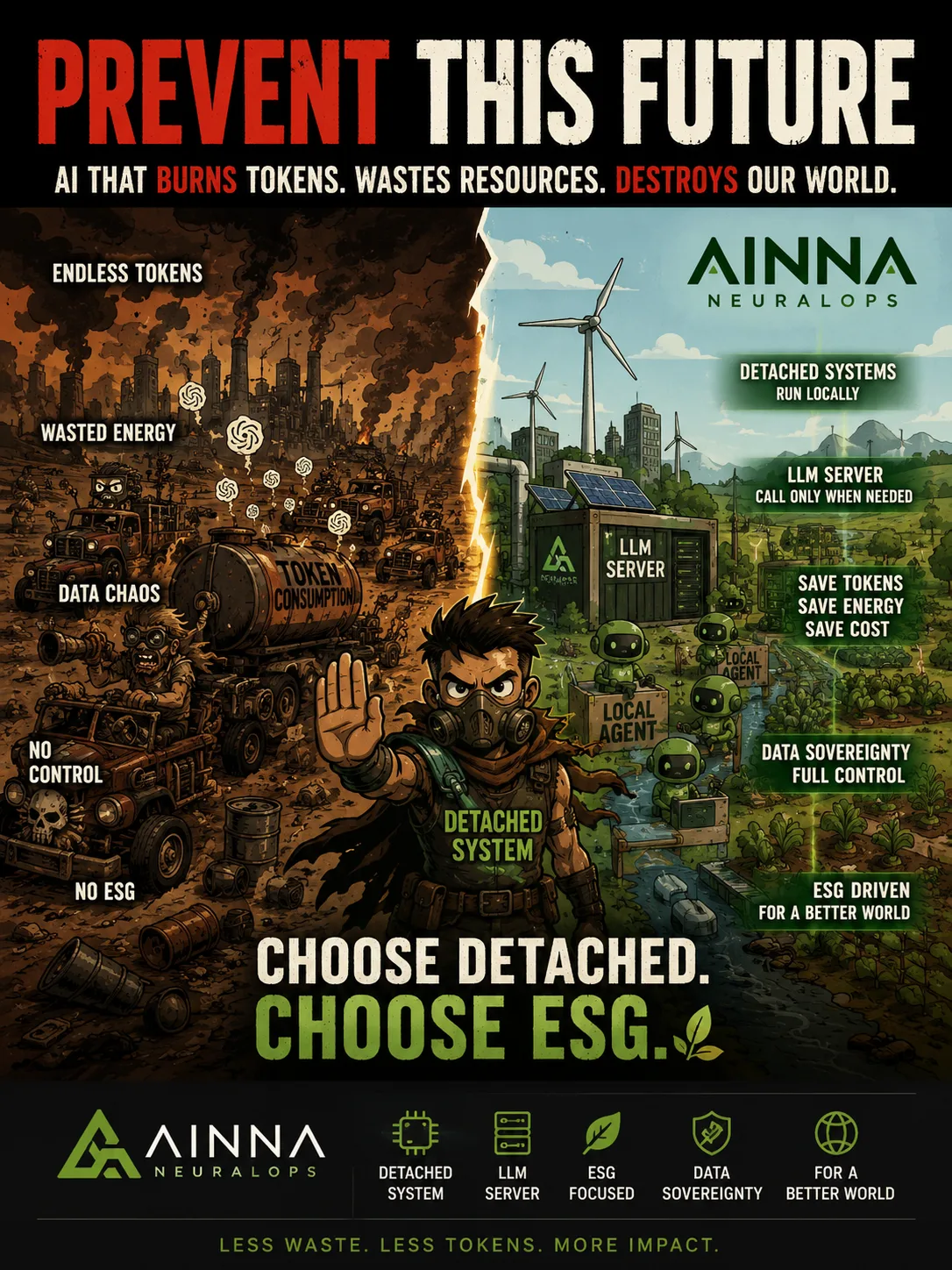
Intelligent AI use means lower power consumption, less waste, reduced environmental impact, and more sustainable digital infrastructure.
That is where AI and ESG converge.
Digital sovereignty is not isolationism.
It means owning your critical infrastructure, growing local capability, protecting strategic data, and keeping options open.
The future of AI should not be benchmarked by GPU count alone.
It should be measured by how efficiently, responsibly, and sustainably we put them to work.
🇲🇾 🤖 🌱














Ruang pembaca
Apa pendapat anda?
Komen disemak sebelum diterbitkan. Email diperlukan untuk moderasi dan tidak dipaparkan kepada pembaca.
9 - itu dah ringkasan artikel ni.
Baru kali ini ada yang bahas 9 dengan jujur.
First piece I have read that treats up to 9 90% honestly.
อธิบาย9ได้เข้าใจง่ายมาก
ส่วน9นี่ทำให้ผมคิดต่อ