Longitudinal capability development
Measure constructs before, during and after participation to establish temporal ordering, capability persistence and whether GMV gains continue beyond campaigns.
A precision revision responding to every second-round reviewer comment while preserving the original title, framework, hypotheses, dataset, design, tables, references and appendices.
Platform access alone does not explain why some agropreneurs convert digital activity into stronger business performance.
The rapid expansion of social commerce has transformed entrepreneurial activity by enabling small firms to reach broader markets through integrated content, interaction and transaction functions. Yet platform access alone does not explain why some agropreneurs convert digital activity into stronger business performance. This study examines the relationships between adaptive content capability, platform capability utilisation, institutional alignment capability and agropreneurial performance in the Agromarketing Masterclass TikTok Shop Edition (AMTTSE), a government-supported digital entrepreneurship programme implemented by the Federal Agricultural Marketing Authority (FAMA), Malaysia. A quantitative, non-experimental and cross-sectional design was applied to programme data associated with 80 companies, 160 entrepreneurs, 425 stock-keeping units and 13 companies owned by persons with disabilities during June-December 2024. Partial least squares structural equation modelling assessed the reported capability relationships, and the indirect effect was evaluated through 5,000 bootstrap resamples. The available record indicates significant positive relationships for the three capability paths and a significant mediating relationship through platform capability utilisation. Because the available archival record did not preserve the original structural-model output, effect magnitudes, path coefficients, t-values, p-values, confidence intervals and explained variance cannot be reported in this revised manuscript. Programme records reported cumulative gross merchandise value of RM6,205,957.06 and a return ratio of 1:31. The findings suggest that agropreneurial performance is associated with a configuration of content, platform and institutional capabilities, while the non-experimental design precludes causal interpretation.
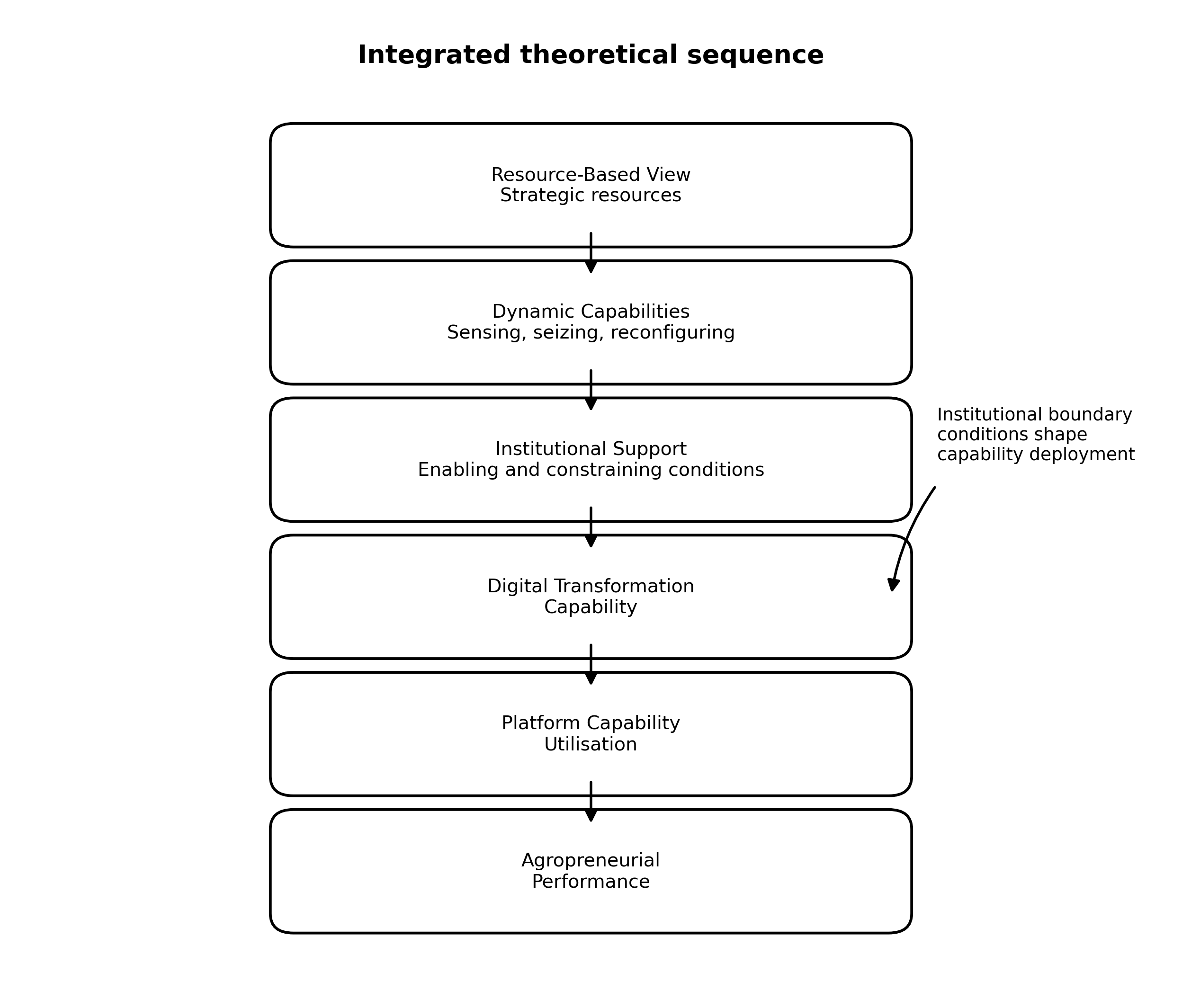
The Resource-Based View (RBV), Dynamic Capabilities Theory (DCT) and Institutional Theory address different but interdependent parts of the explanation developed in this study. RBV begins inside the firm and asks why enterprises facing a broadly similar market environment achieve heterogeneous outcomes. For agropreneurs, product knowledge, customer insight, brand credibility, content-production routines and fulfilment know-how can become strategically valuable when combined in ways that support market exchange. Access to TikTok Shop is not, by itself, a rare resource. Heterogeneity instead arises from firm-specific routines that connect product attributes, audience understanding and operational execution.
RBV alone is insufficient in a social-commerce setting because a valuable resource bundle may lose relevance when platform formats, recommendation mechanisms, customer preferences or campaign rules change. DCT supplies the temporal and process logic by explaining how firms sense changes, seize opportunities and reconfigure their resource base. Adaptive content capability reflects sensing and adjustment, while platform capability utilisation reflects seizing and orchestration. DCT thus explains how an inherited stock of knowledge and routines is repeatedly renewed rather than simply possessed.
The relationship between RBV and DCT is complementary rather than substitutive. RBV identifies what may underpin performance heterogeneity, whereas DCT explains how the usefulness of those resources is maintained under change. Content expertise without adaptation may become obsolete; adaptation without a substantive resource base may produce activity without a coherent value proposition. Transformation occurs when entrepreneurs convert generic technological affordances into situated routines that reflect their products, customers and operating constraints.
Institutional Theory extends the explanation beyond managerial discretion. Agropreneurs do not deploy capabilities in an institutional vacuum. Formal platform rules, programme requirements, public-agency procedures, product standards and data-reporting expectations establish permissible and legitimate modes of action. AMTTSE adds a salient institutional layer because FAMA supplies programme legitimacy, training and market facilitation while TikTok Shop controls important elements of the transaction infrastructure. Institutional alignment capability captures the entrepreneur's capacity to interpret, access and incorporate these arrangements into business routines rather than treating alignment as passive compliance.
Institutional conditions can enable capability deployment by reducing information gaps, legitimising unfamiliar selling practices, connecting firms with training and creating structured opportunities for experimentation. They may constrain deployment when standardised schedules do not fit product cycles, platform rules change, or reporting requirements consume scarce managerial attention. Institutional support is therefore not an automatically beneficial input. Its value depends on an entrepreneur's capacity to absorb and translate support and on the fit between institutional arrangements and firm-level needs.
Potential tensions arise from the theories' assumptions about agency, advantage and conformity. RBV emphasises firm heterogeneity, whereas institutional accounts explain why organisations exposed to common pressures may become more alike. DCT stresses purposeful reconfiguration, while Institutional Theory recognises that rules, norms and dependence limit feasible choices. Programme standardisation may create a common capability floor but narrow experimentation. Compliance may secure legitimacy and resources while diverting effort from differentiation. Performance consequently depends on balancing differentiation, adaptation and legitimacy.
The theories also operate at different levels. RBV and DCT principally explain intra-firm resources and managerial processes, while Institutional Theory addresses the organisational field in which those processes occur. The levels connect through institutional alignment capability. External support or constraint is filtered through entrepreneurs' prior resources and adaptive capacity. Platform governance, agency support, regional infrastructure and product regulation may strengthen or weaken the translation of capability into performance.
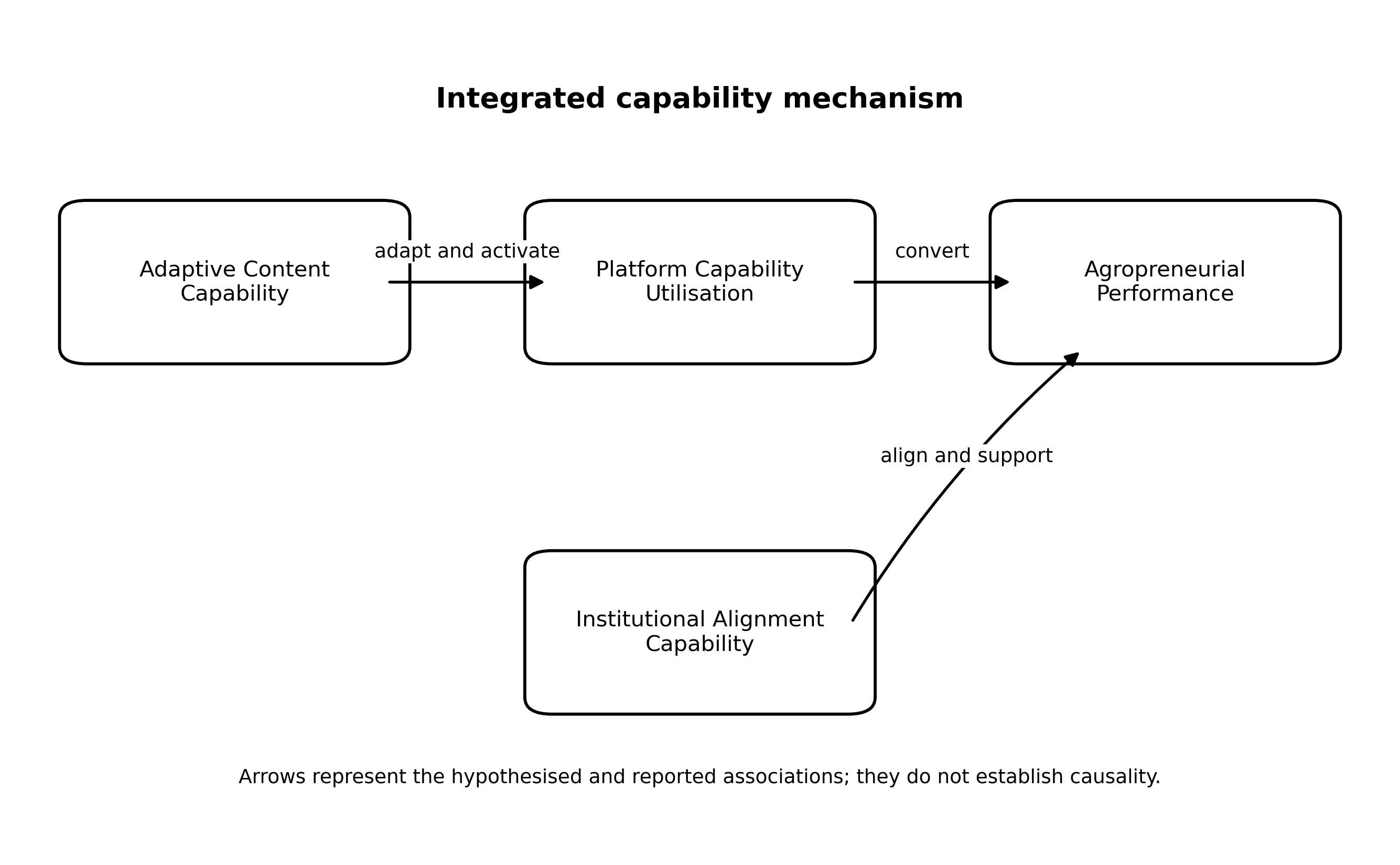
All three theories are required simultaneously. An RBV-only account would understate change and external dependence. A DCT-only account would explain adaptation without fully specifying the resource base or institutional limits. An institutional-only account would explain support, legitimacy and constraint but not persistent differences among firms in the same programme. Their synthesis maps H1 to valuable and renewable adaptive-content routines, H2 to platform-based opportunity seizure, H3 to institutional access and fit, and H4 to platform utilisation as the mechanism through which adaptive content becomes commercially actionable.
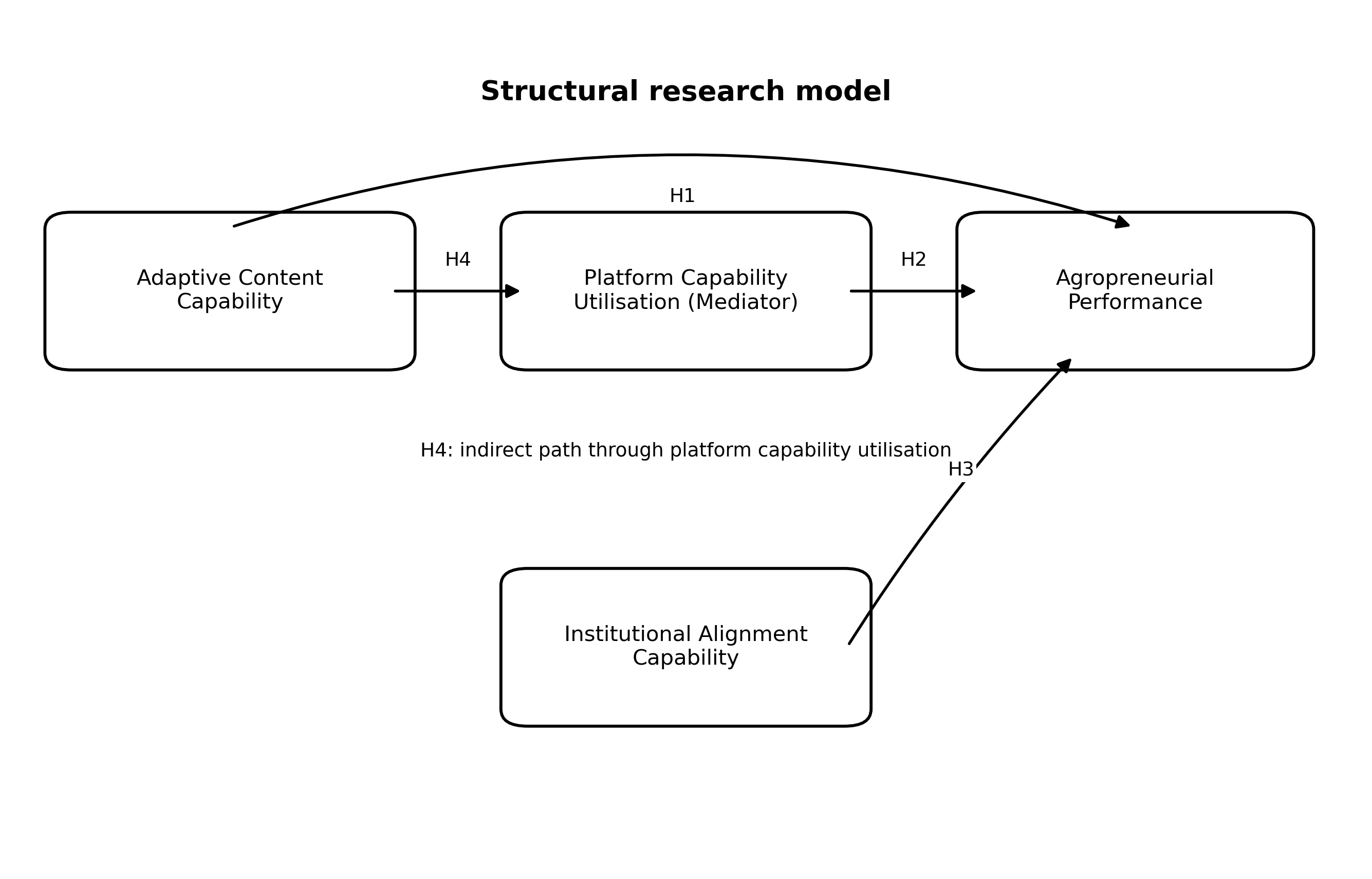
The archived record establishes direction and significance, but not effect magnitude.
Reported as significantly and positively related to agropreneurial performance. No beta, t-value, p-value or confidence interval survives in the archival record.
Reported as significantly and positively related to performance, consistent with a content-to-transaction conversion pathway.
Reported as significantly and positively related to performance within the bounded government-programme context.
Platform capability utilisation reportedly mediated the adaptive-content-to-performance relationship. Its size, type and proportion mediated cannot be determined.
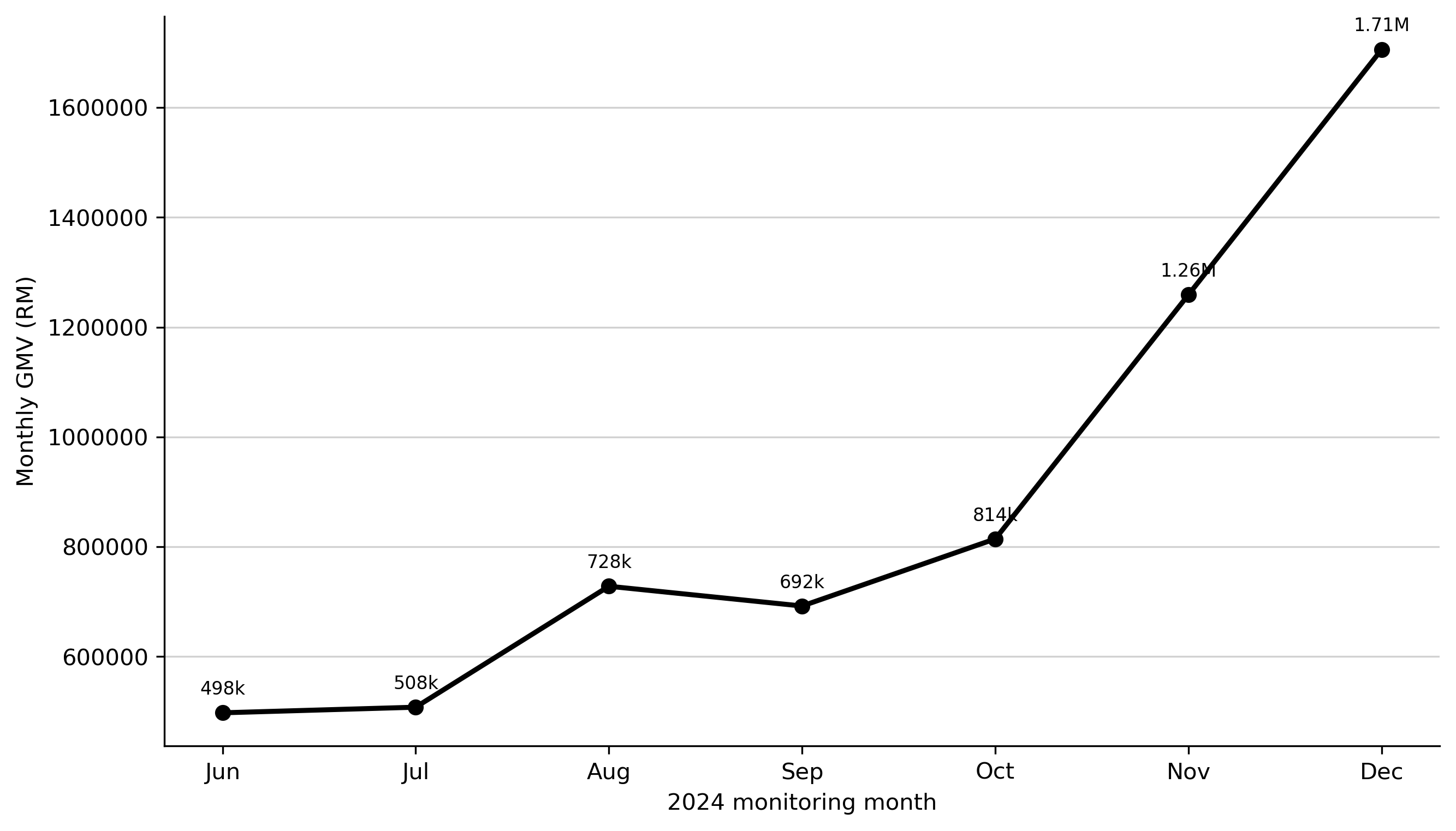
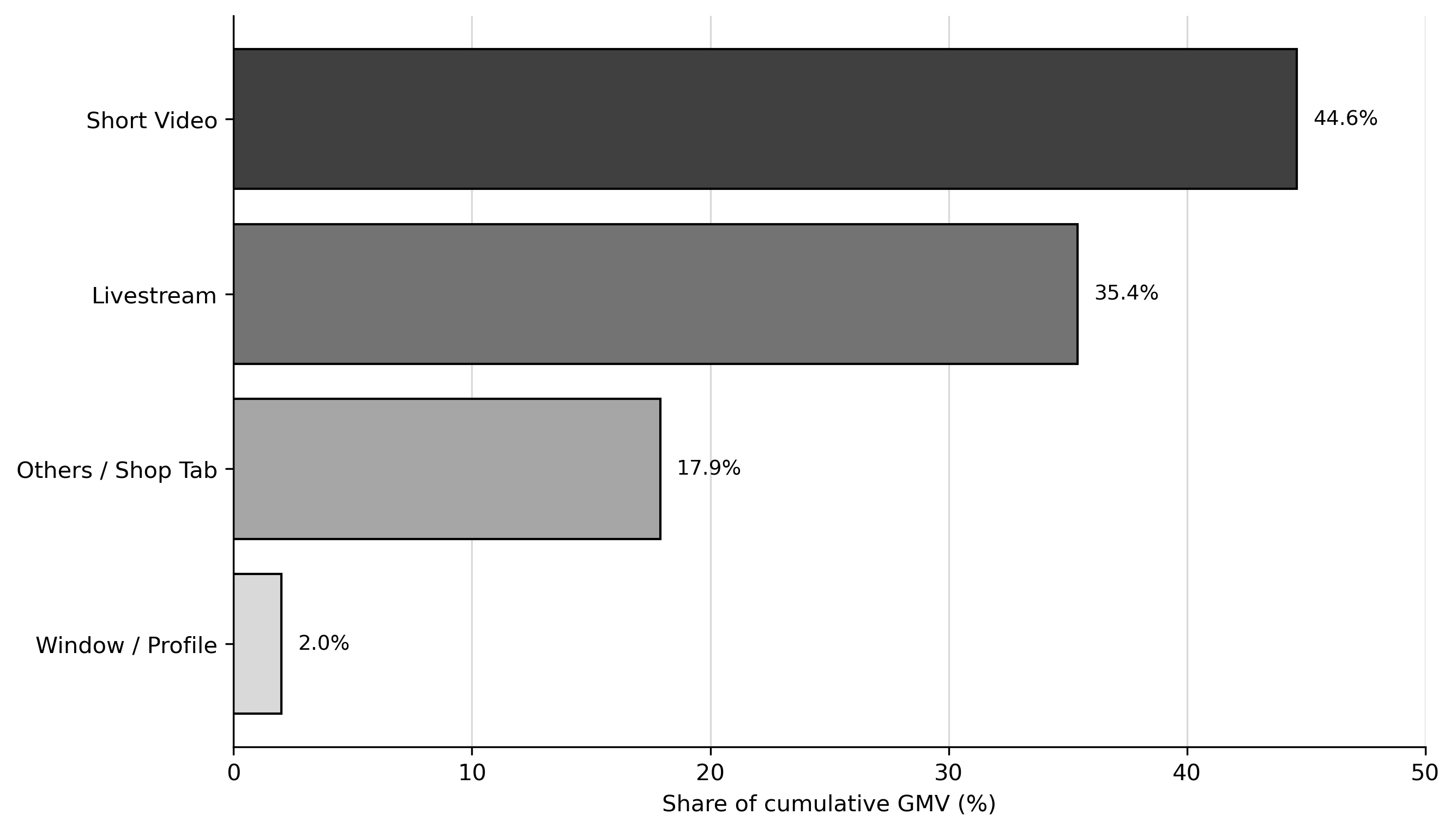
Taken together, the reported findings portray digital transformation capability as a configuration rather than a single resource. The archived record establishes the direction and significance of relationships but does not preserve path magnitudes or full structural-model diagnostics. The discussion therefore explains why the relationships are theoretically plausible without ranking their importance or treating significance as evidence of practical magnitude.
H1. The adaptive-content relationship is consistent with RBV because product knowledge, customer understanding and credible presentation become valuable when organised into market-facing routines. DCT explains why those routines must be renewed as audience feedback and platform conventions change. Institutional conditions bound adaptation because product claims, programme expectations and platform rules determine which forms of communication are legitimate and executable.
H2. The platform-utilisation relationship distinguishes access from effective deployment. RBV locates value in an embedded routine connecting discovery, product information, interaction, ordering and fulfilment. DCT explains utilisation as opportunity seizure and orchestration. Institutional Theory qualifies the process because platform governance allocates visibility and defines acceptable commercial conduct.
H3. The institutional-alignment relationship is compatible with resources, legitimacy and structured learning available through a government-supported programme. Institutional Theory explains access; RBV explains why firms differ in internalising the same support; and DCT explains how guidance is translated into revised routines. This reading does not attribute recorded GMV to FAMA alone.
H4. Adaptive content may create relevance and attention, but it becomes commercially actionable only when platform functions connect audiences with product access and transaction. RBV identifies content knowledge as an input, DCT explains conversion through platform-based sensing and seizure, and Institutional Theory specifies rules and support conditions. Because the indirect coefficient, confidence interval and direct effect were not retained, mediation cannot be classified or quantified.
Government-supported programme participation may influence both sample composition and observed outcomes. The available record does not establish whether firms entered through self-selection, agency nomination, regional referral or a combination. Volunteers may already possess stronger motivation or digital readiness, while agency nomination may prioritise inclusion, regional representation or developmental need rather than prior commercial performance.
Selangor accounts for 41.3% of participating companies, while several states are represented by one firm. It is unknown whether FAMA selected firms with established products, fulfilment readiness or prior sales records. Selection of stronger firms could inflate programme outcomes through pre-existing capability; intentional inclusion of less-ready firms could have the opposite effect. Neither can be resolved without baseline and non-participant data.
Regional targets, inclusion objectives, stakeholder visibility and pressure to demonstrate performance can shape recruitment, monitoring and reporting without implying improper conduct by FAMA or participating firms. Headline GMV may be emphasised because it is auditable and policy-relevant, yet it can obscure inactive sellers, uneven value capture or costs outside gross transaction value. Survivorship and administrative reporting bias also remain possible.
The findings therefore describe associations within a bounded programme cohort, not an unbiased programme treatment effect or national agropreneur performance. Future evaluation should document recruitment routes and eligibility, retain baselines, report all enrolled firms including zero-GMV participants, compare completers with non-completers and, where feasible, establish an appropriate comparison group.
The study extends RBV by showing how generally accessible platform infrastructure acquires strategic relevance through heterogeneous content and execution routines. It refines the application of DCT to content-led commerce by distinguishing adaptation from platform-based conversion, and it contextualises both through Institutional Theory in a government-supported entrepreneurship setting. The contribution is integrative rather than a claim that any constituent relationship is wholly new.
The study contributes to understanding seller-side capability in social commerce and directs agropreneurship research toward downstream market conversion alongside production-oriented digitalisation. The reported mediation is consistent with platform utilisation linking adaptive content and performance, but unavailable effect magnitude and cross-sectional design require interpretation as a theoretically informed association rather than a causal sequence.
The cross-sectional, non-experimental design cannot establish temporal ordering or causal effects. Possible self-selection, agency-selection and survivorship biases, as well as uneven geographic representation, limit generalisability. Administrative data may reflect operational definitions, incomplete linkage and reporting incentives; GMV is not profit, and the 1:31 ratio depends on an undocumented cost denominator. The original instrument wording, scale anchors, analytical unit and complete measurement-model archive were unavailable. Most importantly, the original SmartPLS structural output was not preserved: path coefficients, t-values, p-values, confidence intervals, R-squared, f-squared, Q-squared, SRMR and indirect-effect magnitude cannot be verified or reported.
Measure constructs before, during and after participation to establish temporal ordering, capability persistence and whether GMV gains continue beyond campaigns.
Compare otherwise similar agropreneurs across platforms to identify which capability relationships depend on specific affordances and governance.
Test whether generative content, recommendation analytics and automated support complement or substitute for human adaptive routines.
Include zero-GMV participants in qualitative process research to explain mechanisms and selection dynamics that aggregate records cannot reveal.
Separate entrepreneur, firm, region, cohort, agency and platform influences to clarify the level from which capability relationships originate.
Test the framework under different institutional systems, logistics and market maturity to refine its external validity and boundary conditions.
The available evidence suggests that agropreneurial performance in social commerce is associated with a configuration of adaptive content, platform utilisation and institutional alignment capabilities. The AMTTSE records indicate substantial aggregate commercial activity, while the uneven programme context and incomplete analytical archive require cautious interpretation. The relationships should not be read as causal effects, and the programme figures do not establish that capability gains were evenly distributed or persistent.
Publication-ready ARBMS manuscript and detailed point-by-point reviewer response.












Basic Package
Special SME traction programme by AINNA.
Limited starter website offer. AI usage, hosting, maintenance and custom integrations depend on the confirmed scope.
View SME Offer →