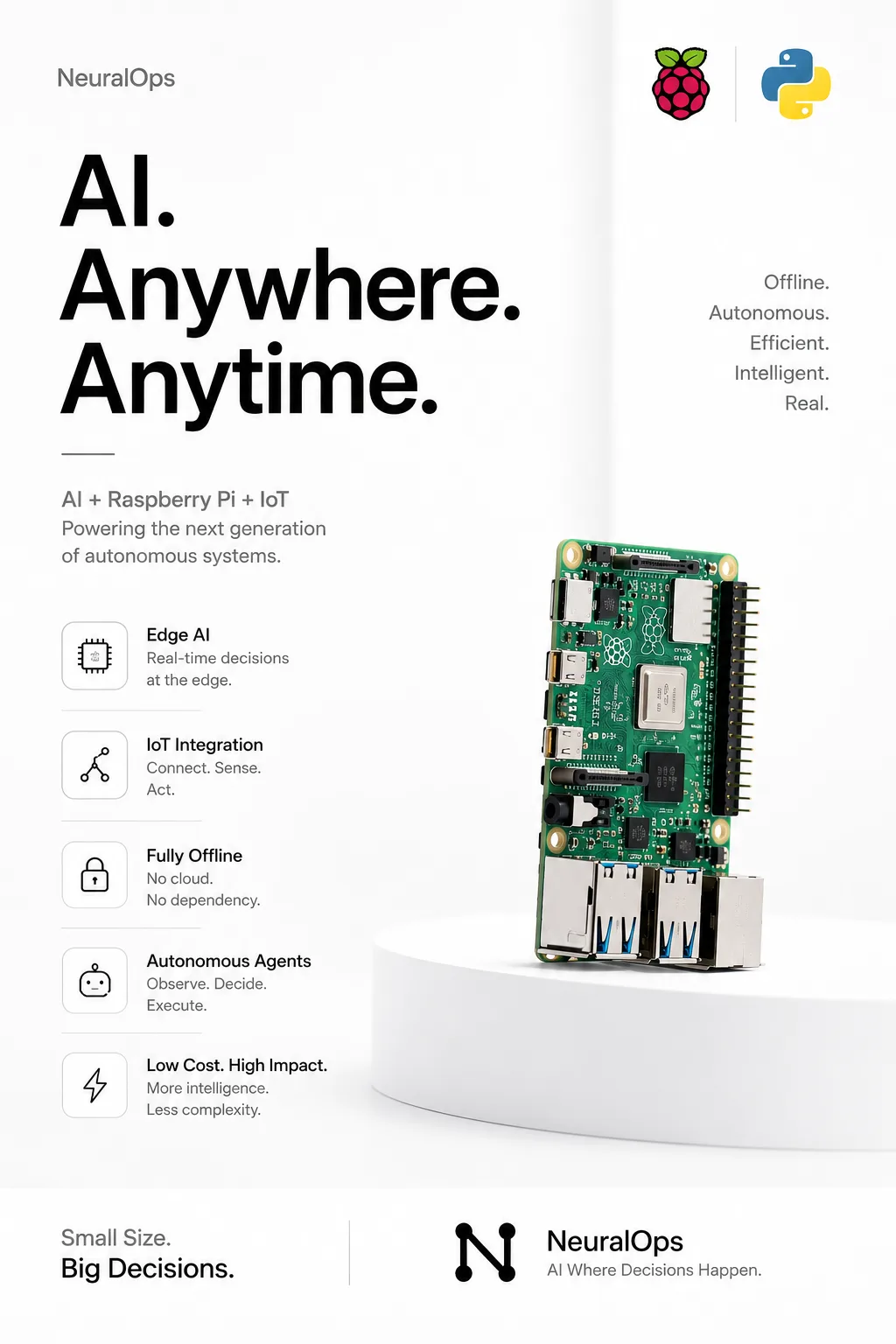
When we architect systems in NeuralOps, we stop asking how large the model is and start asking where the decision needs to be made. The most useful AI is not always the one running in a distant data center on rows of GPUs. Often it is the one embedded in the device, the machine, or the facility where the data is actually produced.
This is why the combination of AI, Raspberry Pi, and IoT is so practical for system builders. A compact edge node connected to sensors, cameras, relays, motors, and local storage can read physical state, run inference, and trigger action in milliseconds - without a round trip to the cloud.
NeuralOps is built around the idea of detached, distributed systems. Rather than pushing every task into one monolithic model, we split the workload across inference services, small language models, automation scripts, decision engines, and IoT controllers. Each component handles the task it is optimized for, at the compute tier it actually needs.
We are already approaching a point where compact models can power fully offline autonomous agents. These are not chat interfaces. They are control loops: they monitor state, make decisions, command hardware, persist records, and execute workflows locally - whether the network is available or not.
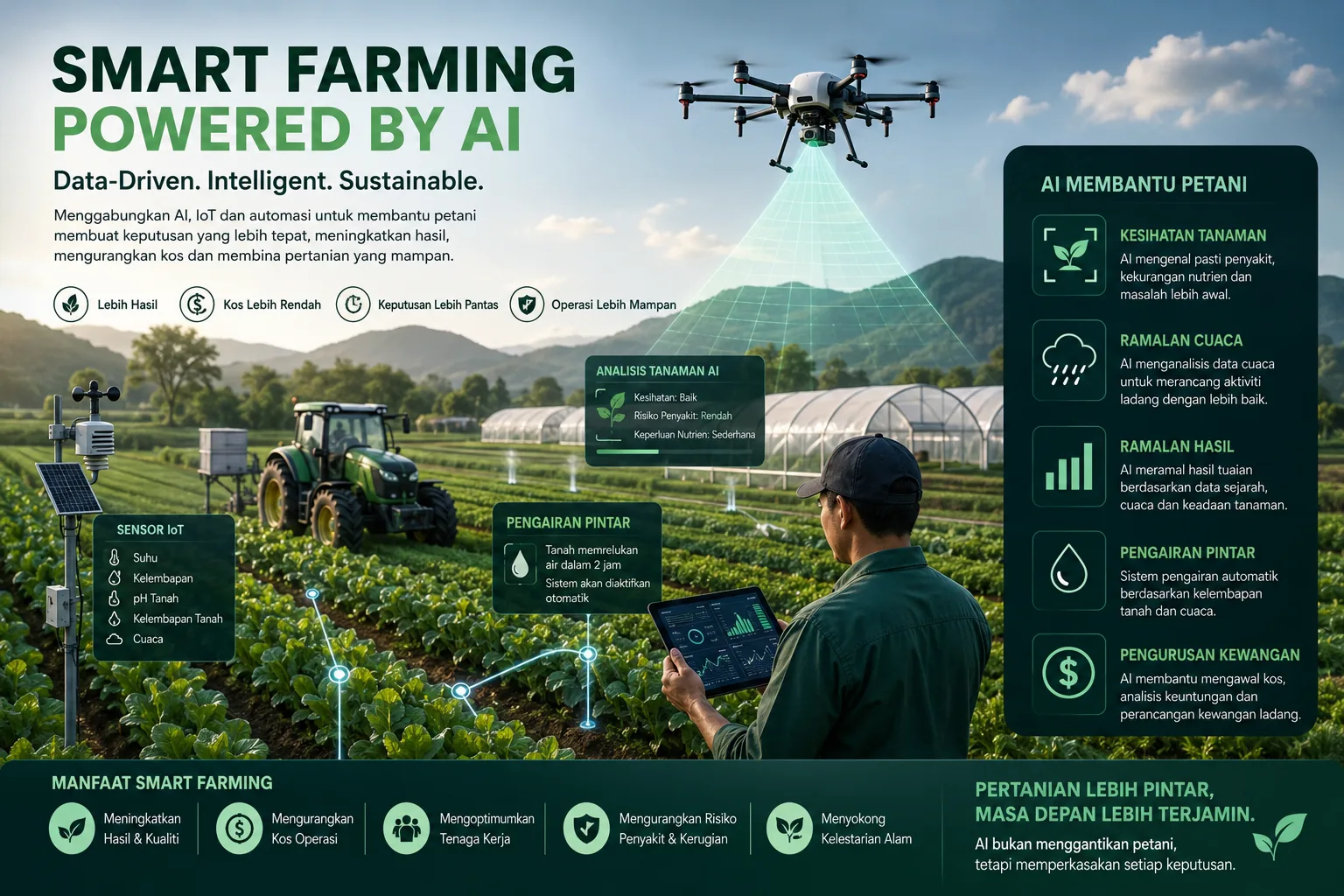
This matters because not every problem requires a 500B parameter foundation model. An irrigation controller, a warehouse stock monitor, a smart security device, or an industrial sensor mesh needs a deterministic, efficient, low-cost decision layer that acts at the right moment.
At AINNA, we believe the next benchmark for AI will not be parameter count. It will be the number of real-world decisions an autonomous system can make on its own - affordably, reliably, and at the edge. That is the standard we build toward with NeuralOps.















Ruang pembaca
Apa pendapat anda?
Komen disemak sebelum diterbitkan. Email diperlukan untuk moderasi dan tidak dipaparkan kepada pembaca.
500には賛成です。方向性がはっきりしています。
First piece I have read that treats low-cost honestly.
Berbaloi baca sebab 500.
The figures on real-world make more sense than most posts.
That point about distributed systems is well put.
Nice one. requires a 500 500B alone worth the read.