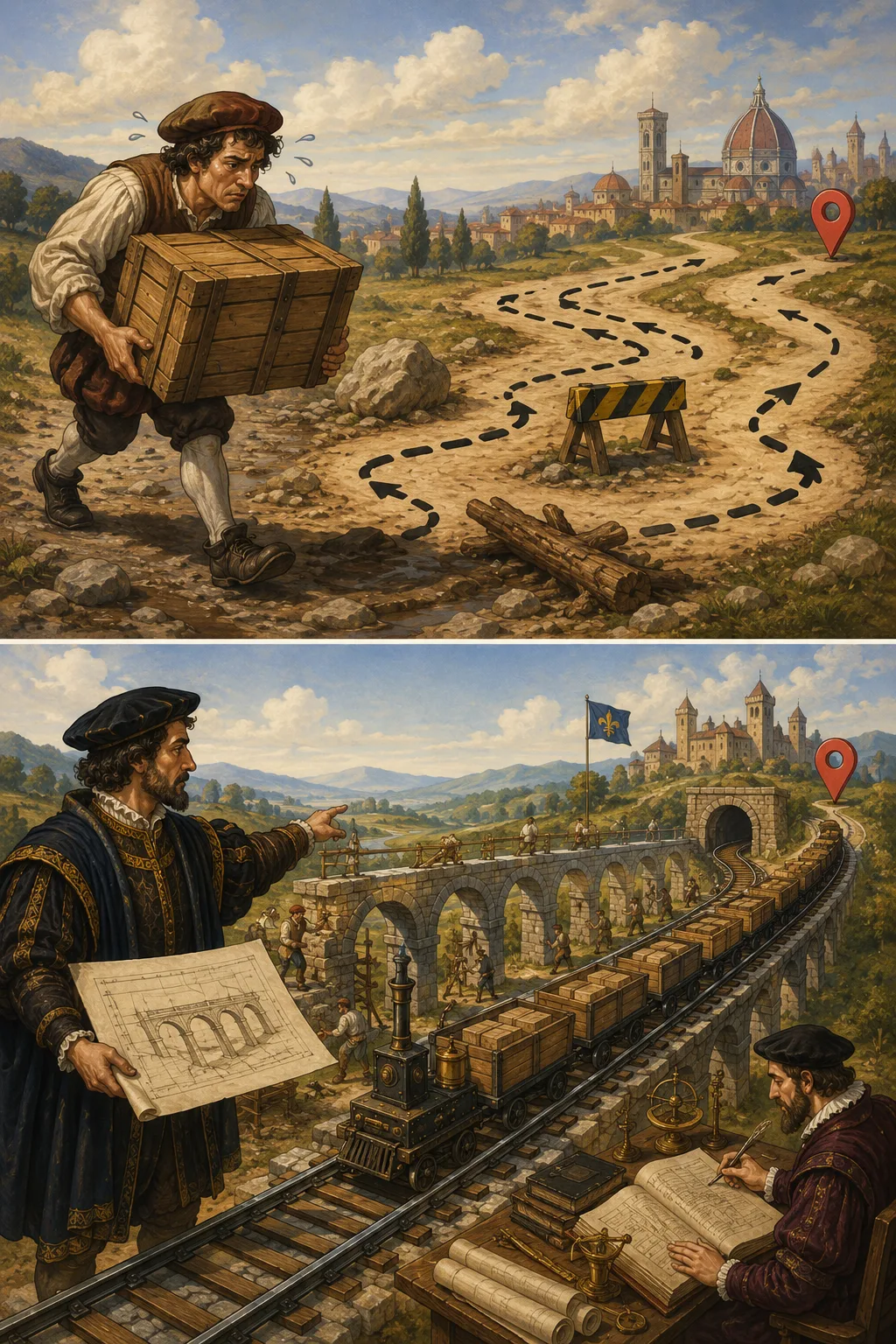
Which is more reliable for moving cargo?
A robot that hand-carries every shipment itself making route calls, handling exceptions, and re-planning on every run?
Or a robot that builds the railway, signalling system, checkpoints, and operating rules so thousands of shipments can move automatically through a controlled path?
For critical operations, the second approach is the one that scales.
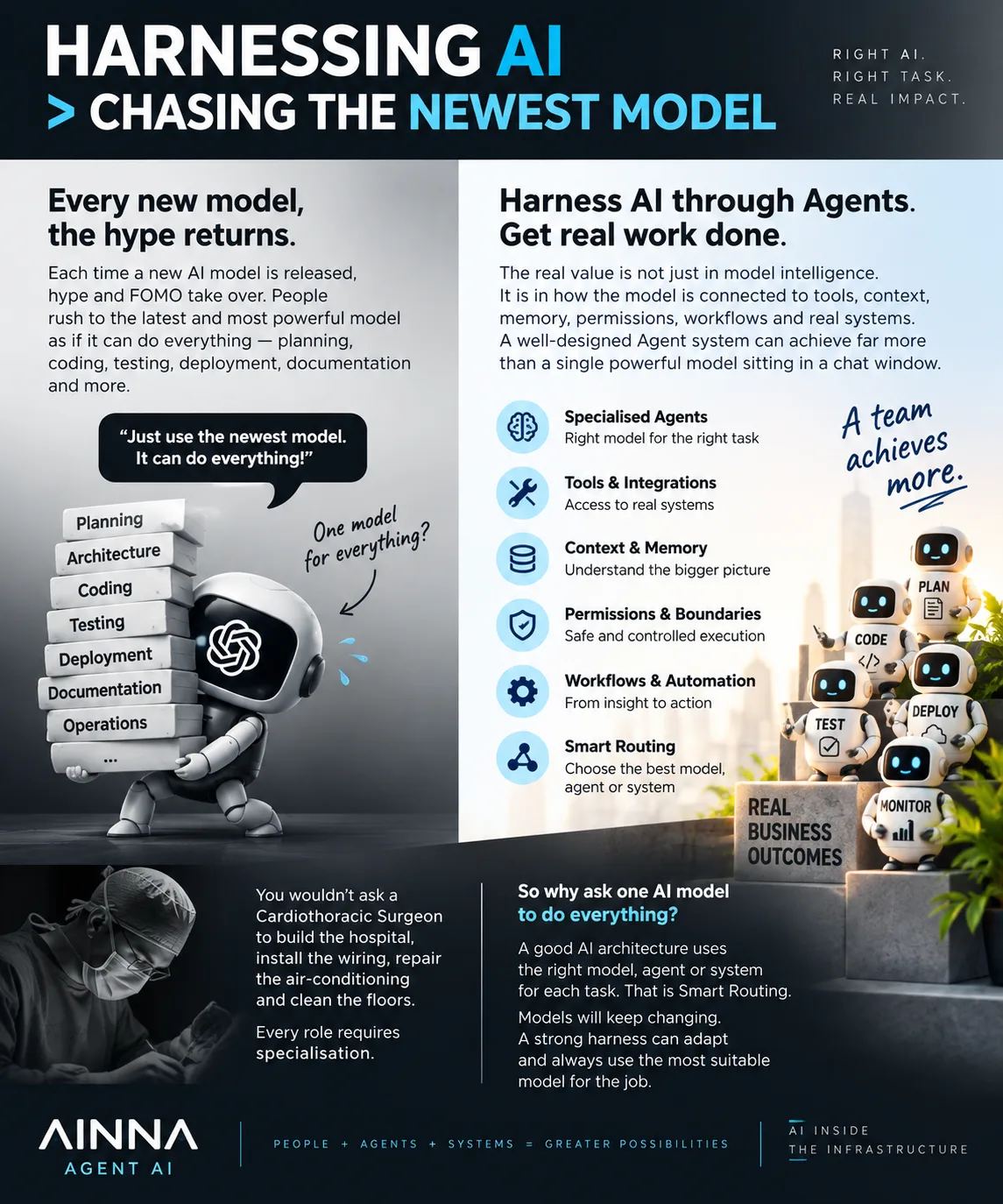
That is how I view financial AI when we build production systems at AINNA.
Routing every transaction through an LLM directly introduces variability. The output drifts with context, prompt wording, model updates, training data, and accumulated human bias.
The better architecture is to use AI to build the railway.
Let the model design the control plane: fixed parsers, deterministic logic, accounting guidelines, validation rules, reconciliation checks, and predefined financial indicators.
Then let financial data travel through that controlled pipeline, run after run.
The model does not need to “think” about every transaction.
It is invoked only when the system hits an exception or a complex case that genuinely requires reasoning.
AI builds the railway.
Deterministic systems move the cargo.
AI handles the exceptions.
For financial systems, reliability should come from architecture, not from asking a probabilistic model to make the same judgement thousands of times.














Ruang pembaca
Apa pendapat anda?
Komen disemak sebelum diterbitkan. Email diperlukan untuk moderasi dan tidak dipaparkan kepada pembaca.
Berbaloi baca sebab routing every transaction through.
Useful. We are handling AI handles the exceptions right now.
Clearer than the vendor decks I get about let the model design.
Good to finally see deterministic systems move the cargo set out this clearly.
ส่วนบทความนี้คือสิ่งที่ผมจะส่งให้หัวหน้า