
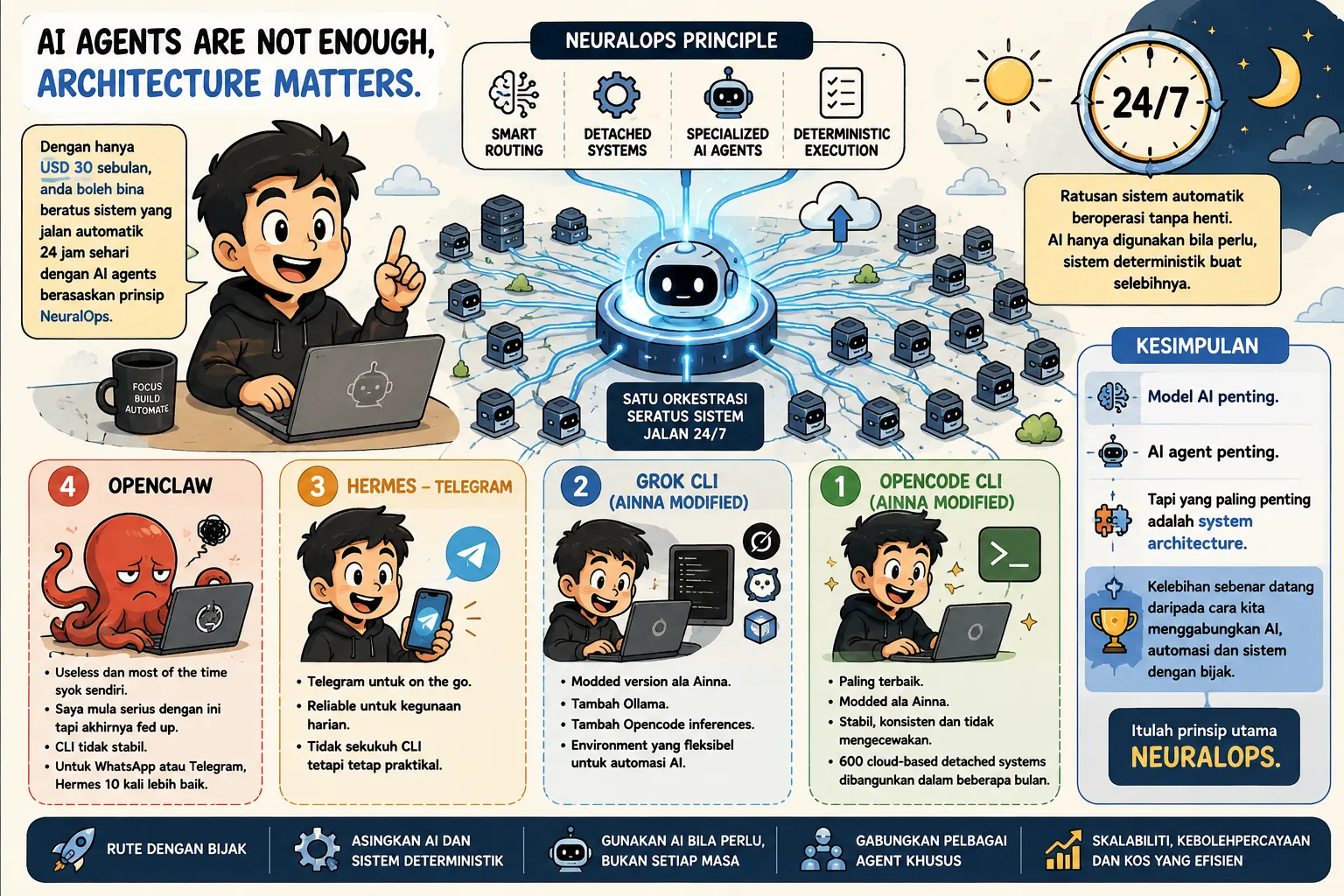
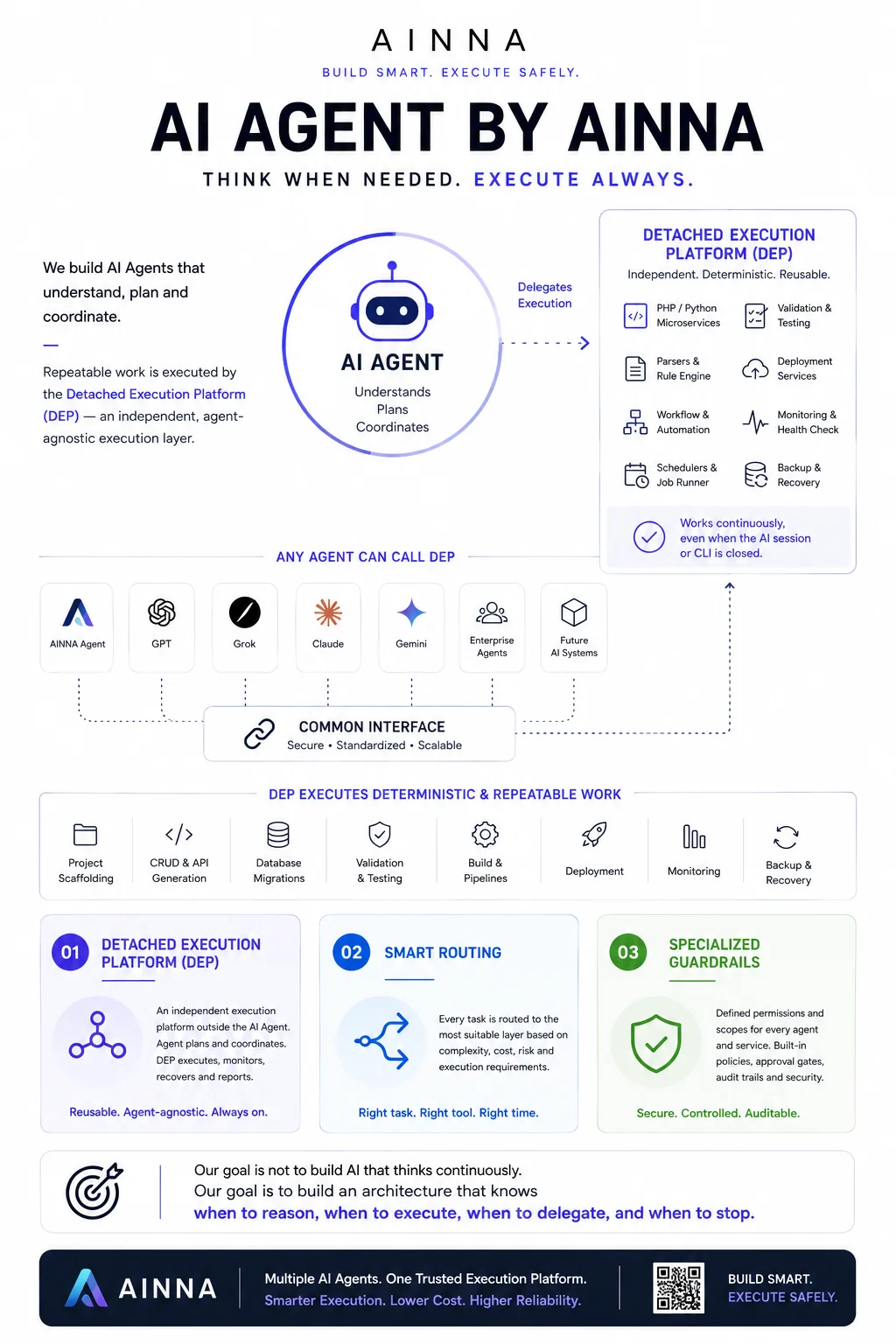
At AINNA, every NeuralOps deployment reinforces the same lesson: do not open with a detailed runbook. Open with a system read. We usually know the target outcome, but front-loading instructions also bakes our current assumptions into the pipeline. The agent may still hit the metric, yet the route can turn out brittle, over-parameterized, or expensive in compute and I/O.
My default opening now is a systems read: map the environment, flag what looks misaligned or inefficient, and propose a design. Execution comes only after I have reviewed that. That flips the agent from a scripted worker into a co-architect. It can spot redundant API calls, duplicated data paths, suboptimal event routing, cheaper model placement, overlooked failure modes, or a leaner topology that still meets the SLA.
The loop I keep coming back to is: observe, diagnose, recommend, challenge, execute. First, give the agent enough context to model the environment. Then let it surface friction, propose a fix, stress-test the current approach, and only then build it out.
The common trap is treating better prompting as more prompting. In production, better prompting is usually constraint shaping, not micromanagement. Keep the objective and guardrails explicit, but let the agent discover the route. The implementation does not have to come from us.
That is the point where AI agents stop being just automation glue and start becoming systems-redesign tools.
#AI #AIAgents #AgenticAI #Automation #DigitalTransformation #AIProductivity #BusinessStrategy #NeuralOps














Ruang pembaca
Apa pendapat anda?
Komen disemak sebelum diterbitkan. Email diperlukan untuk moderasi dan tidak dipaparkan kepada pembaca.
Arah yang ditulis pasal open with a system read memang betul.
Clearer than the vendor decks I get about every neuralops deployment reinforces.
The numbers around yet the route can turn make more sense than most posts I read.
सेव कर लिया, ख़ासकर इस विषय की वजह से।
The framing around over-parameterized is better than I expected.
Honestly open with a system read caught me off guard.