
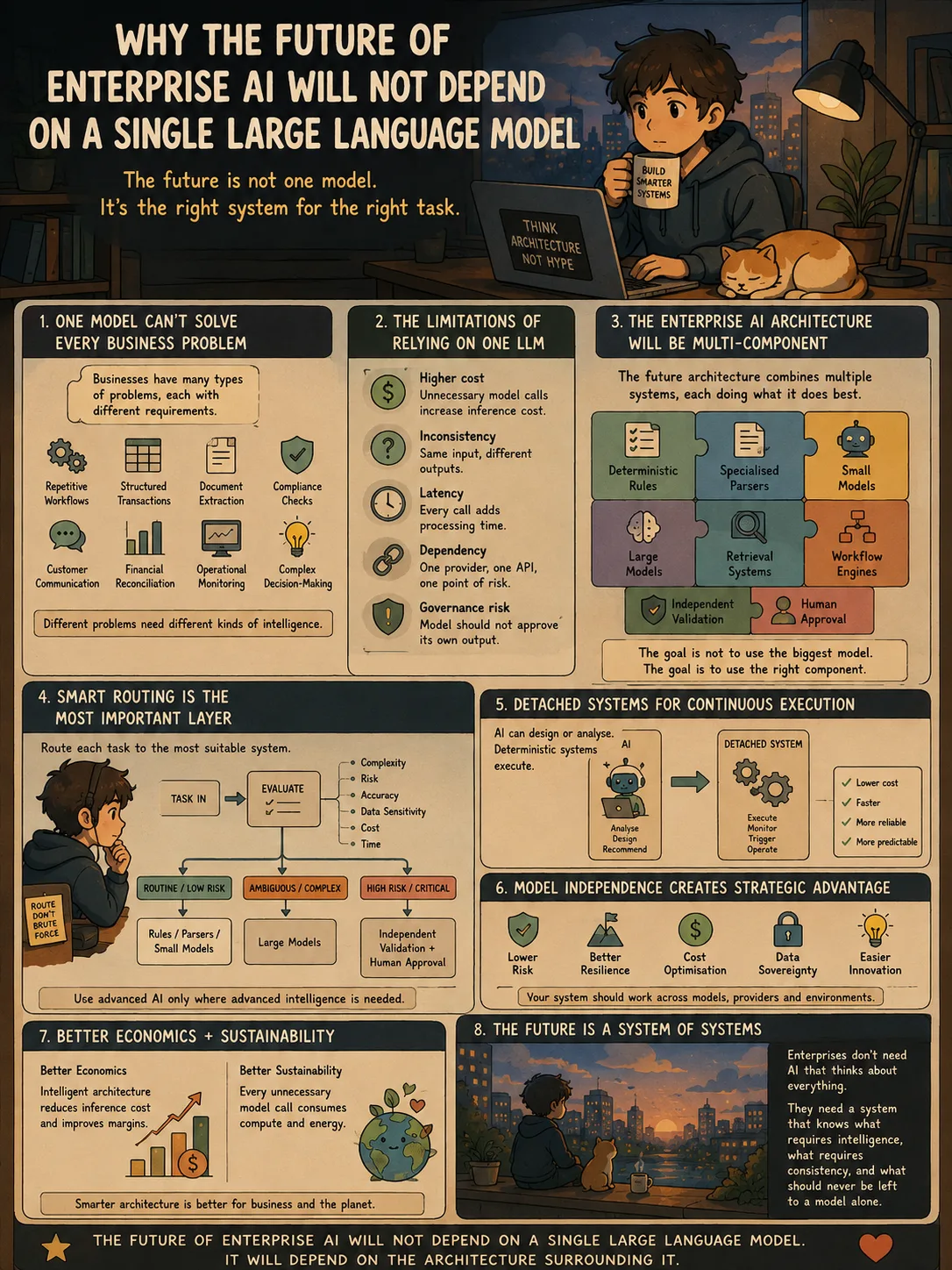
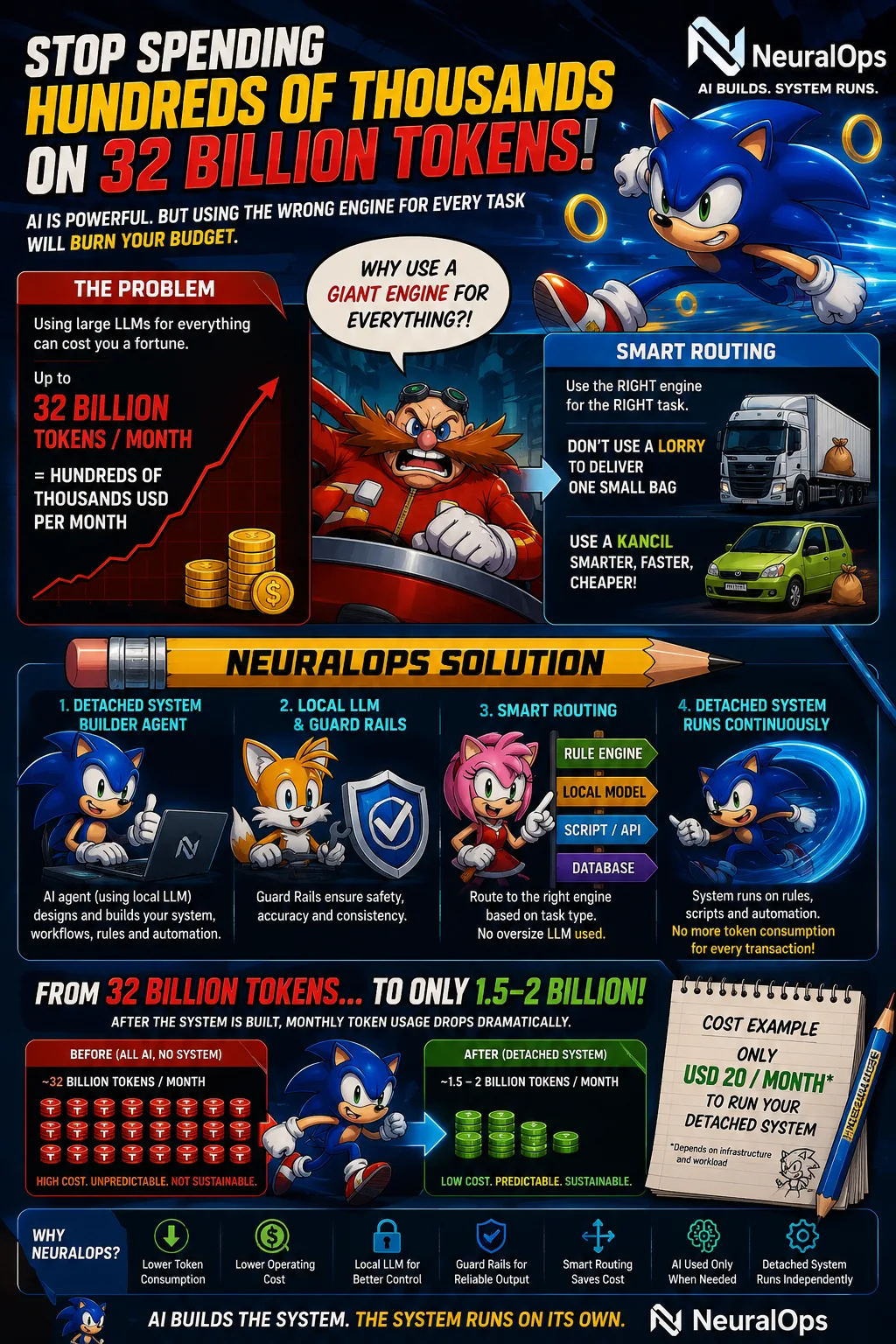
Enterprise AI does not need the most expensive model for every task.
Most corporate AI workloads are repetitive and structured:
Document extraction. Classification. Inventory checks. Transaction matching. Compliance validation. Customer response templates.
These tasks do not always require a full flagship AI model.
The NeuralOps Method uses:
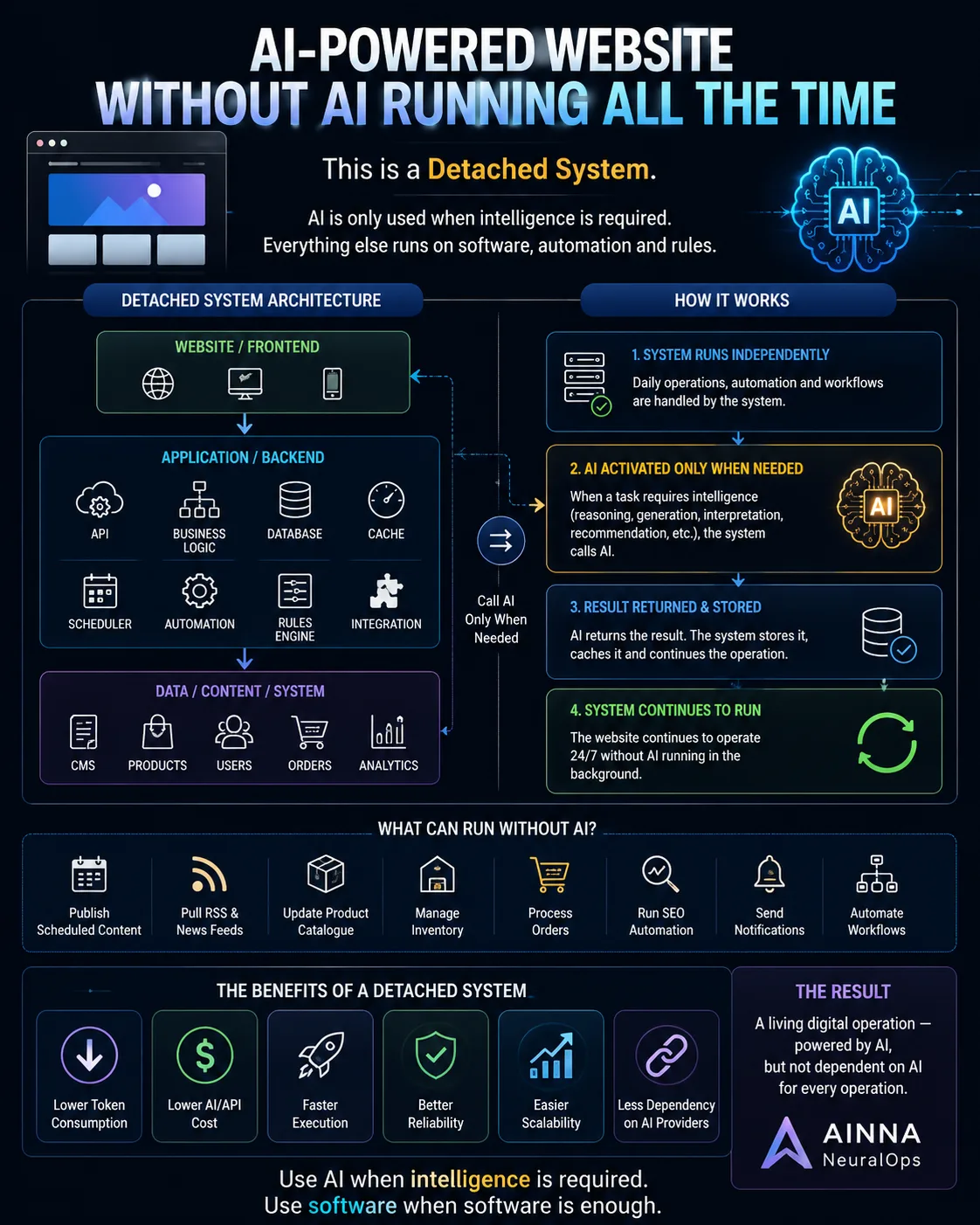
Smart Routing + Detached Systems + Segmentation + Rules + Local or Low-Cost Models + Selective Flagship AI
Smart Routing sends each task to the right processing layer.
Detached Systems isolate finance, inventory, compliance and customer-service operations, reducing data exposure and limiting system-wide failures.
Segmentation breaks large workflows into smaller, controlled steps, making errors easier to detect and outputs easier to audit.
Flagship AI is still important for deep reasoning, strategy and complex unstructured work.
But it should be a specialised reasoning layer-not the default layer for every request.
The result:
Lower cost.
Higher consistency.
Reduced hallucination risk.
Better auditability.
Easier scaling.
The best enterprise AI architecture is not the one that uses the largest model for everything.
It is the one that knows exactly when advanced intelligence is genuinely required.
#EnterpriseAI #NeuralOps #SmartRouting #LocalAI #AIAutomation #AIGovernance #DigitalTransformation














Ruang pembaca
Apa pendapat anda?
Komen baharu dihantar untuk semakan terlebih dahulu. Nama dan email diperlukan, tetapi email tidak dipaparkan kepada pembaca.
हमारी टीम अभी इस हिस्से पर काम कर रही है। उपयोगी। यह हिस्सा थोड़ा और सोचने योग्य है।
Good write-up. strategy and complex unstructured work.But alone was worth the read.
Bookmarked, mainly for system-wide.
Terus terang, enterprise AI does not need ni menarik.
The bit about inventory, compliance and customer-service is what I keep coming back to.
Useful. We are dealing with controlled steps, making errors easier right now.