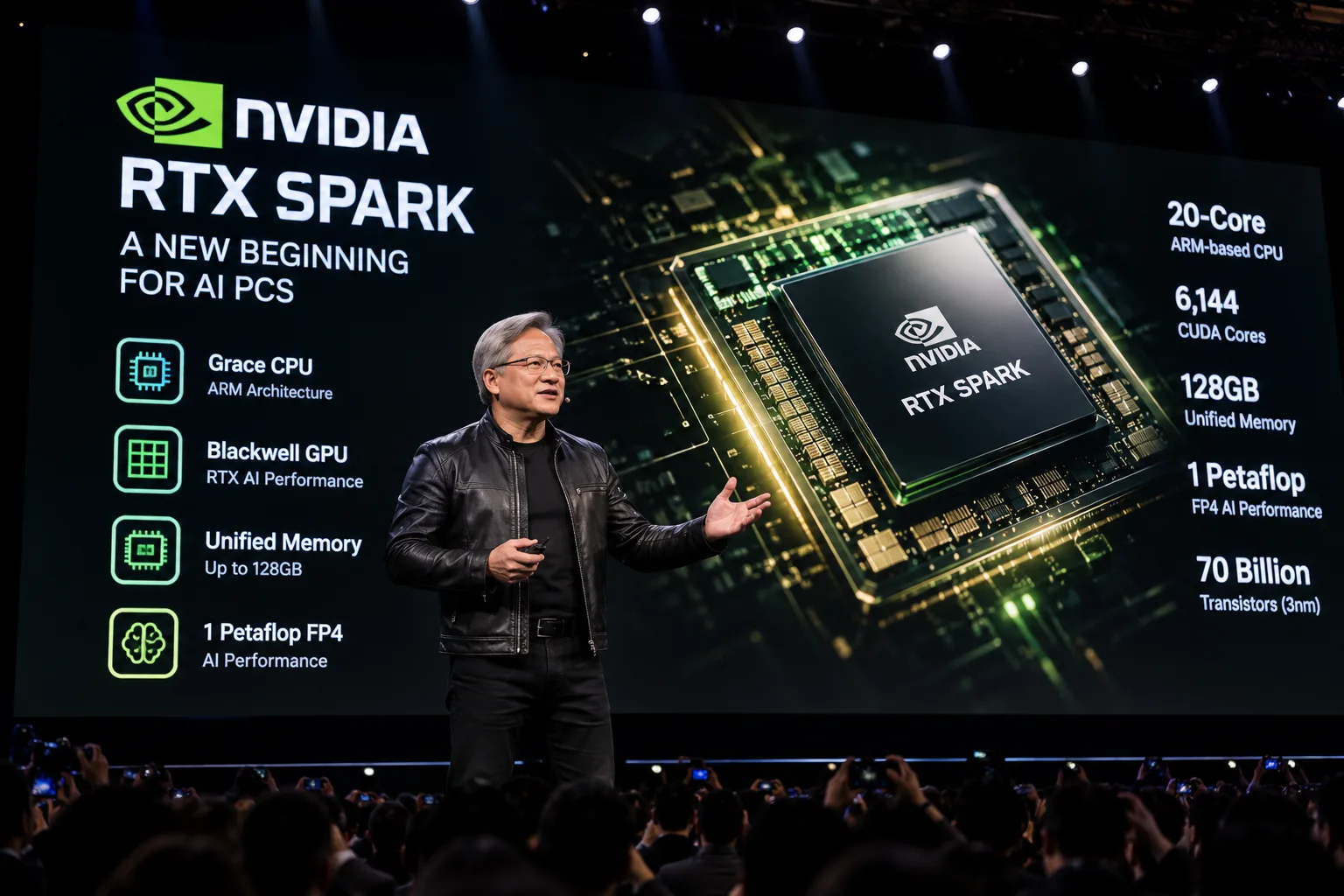
Jensen Huang's latest NVIDIA announcement reinforces an exciting direction: AI computing is becoming smaller, more powerful and more energy-efficient.
At AINNA, this aligns with our long-term vision for NeuralOps.
✅ WHERE WE ARE TODAY
Our server-based NeuralOps architecture focuses on doing more with less computing power through:
⚡ Multi-Stage Smart Routing
⚡ Intelligent Caching
⚡ Specialised Parsers & Detached Execution
⚡ Local SLM/LLM Integration
⚡ Multi-Agent Orchestration (under development)
⚡ WebCLI & Telegram Access
🚀 WHERE WE ARE HEADING
🟢 Phase 1 - NeuralOps Mini PC
Move NeuralOps from server infrastructure to dedicated PCB-based AI mini computers.
🔵 Phase 2 - Embedded NeuralOps
Integrate NeuralOps into increasingly compact ARM/NVIDIA AI computing modules.
🟣 Phase 3 - NeuralOps on Future AI Silicon
Optimise our intelligence architecture for next-generation miniaturised chips, potentially through semiconductor partnerships.
The hardware roadmap is our future direction, not a claim of existing deployment.
Imagine SMEs, factories and industrial devices running their own specialised AI agents locally, with minimal cloud dependency.
We're not building our own semiconductor chip today.
We're building an intelligence architecture designed to become smaller as computing technology evolves.
Maximum Intelligence. Minimum Compute.
Today: Server-Based NeuralOps
Next: PCB Mini PC
Future: Embedded AI → Chip-Level Intelligence
#AINNA #NeuralOps #NVIDIA #JensenHuang #EdgeAI #AgenticAI #EmbeddedAI #DeepTech #AIInfrastructure #MalaysiaTech
















Ruang pembaca
Apa pendapat anda?
Komen disemak sebelum diterbitkan. Email diperlukan untuk moderasi dan tidak dipaparkan kepada pembaca.
Tulisan yang bagus. NeuralOps mini PC move neuralops sahaja dah berbaloi.
That point about 🔵 phase 2 - embedded is well put.
Worth reading for 🟣 phase 3 - neuralops alone.
Whoever wrote this actually did the work on we're building an intelligence architecture.
ถ้ามี2ต่อ ผมจะอ่านแน่นอน
อธิบาย2ได้เข้าใจง่ายมาก