The Real AI Race May Not Be About Bigger Models It May Be About Cheaper Intelligence
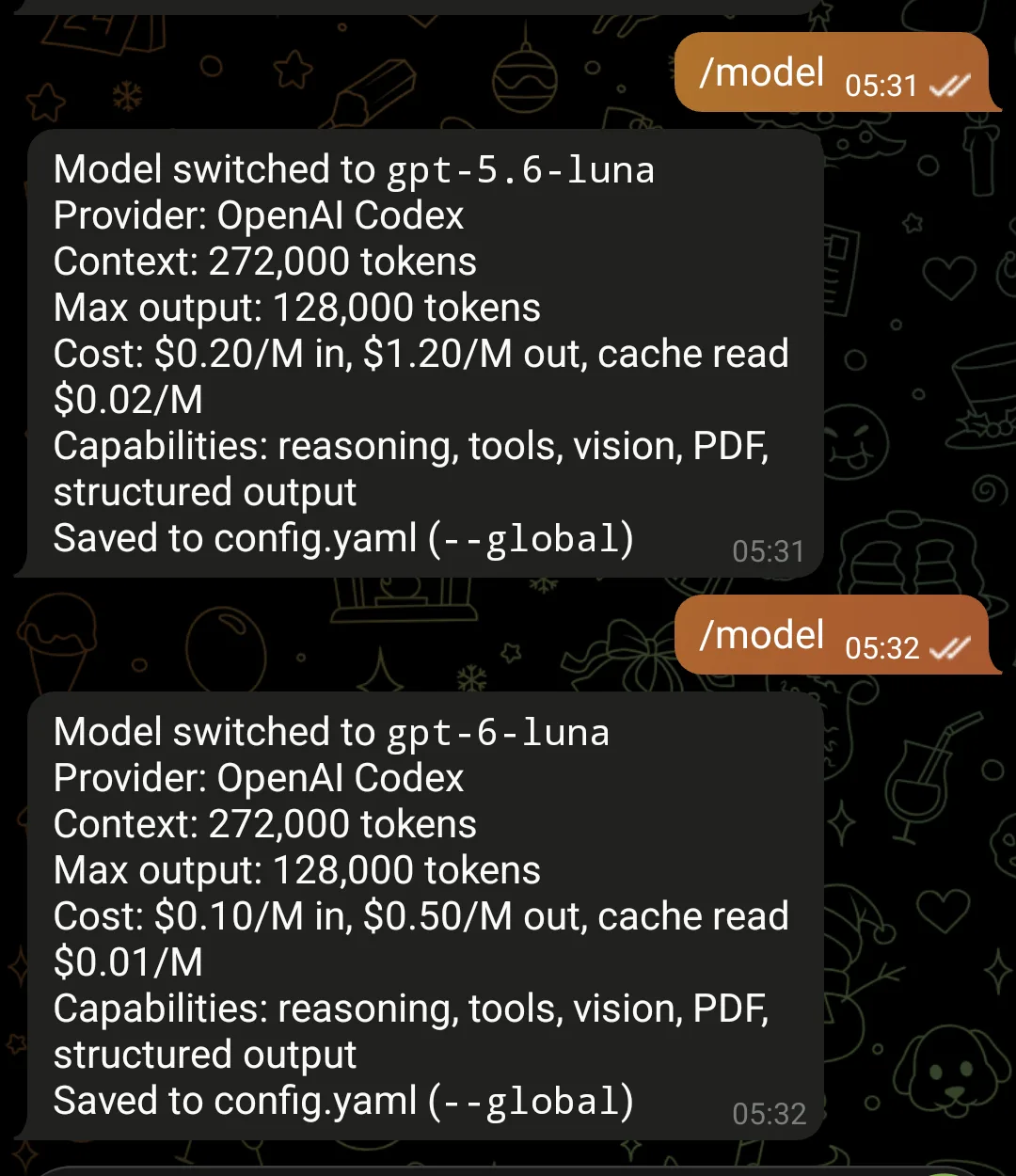
Looking at this comparison, the interesting part is not only the model name.
The bigger story is the cost curve.
In this setup, pricing drops from roughly $0.20/M input and $1.20/M output to $0.10/M input and $0.50/M output, while retaining the same stated context window and tool capabilities.
If this trend continues, it changes the economics of building AI systems.
For me, this is another strong reason to bulk-distill local LLMs and possibly SLMs as well.
Instead of depending permanently on expensive external inference, we can use increasingly optimized models as teachers to generate training data, refine workflows, build domain-specific reasoning patterns, and continuously improve our own local models.
The goal is not necessarily to build the biggest model.
The goal is to build a model that is optimized enough for its actual job.
For businesses, that could mean smaller models handling accounting, inventory, operations, customer service, machinery control, document processing, or internal automation, while larger external models are only used when truly necessary.
I hope this pricing trend continues.
At least until our own local LLMs are mature enough to handle most of the workload independently.
Use optimized models to build. Distill what matters. Reduce dependency over time.














Ruang pembaca
Apa pendapat anda?
Komen baharu dihantar untuk semakan terlebih dahulu. Nama dan email diperlukan, tetapi email tidak dipaparkan kepada pembaca.
Good write-up. pricing drops from roughly $0.20/M alone was worth the read.
The framing around machinery control, document processing is better than I expected.
Bookmarked, mostly for $0.20/M input and $1.20/M. Have a few questions left here.
$0.20/Mの部分が実務的で良かったと思います。
$1.20/M output to $0.10/M - that is the whole thing in one line.
We hit use optimized models to build at work before. Good that someone wrote it down. Still thinking this one through.