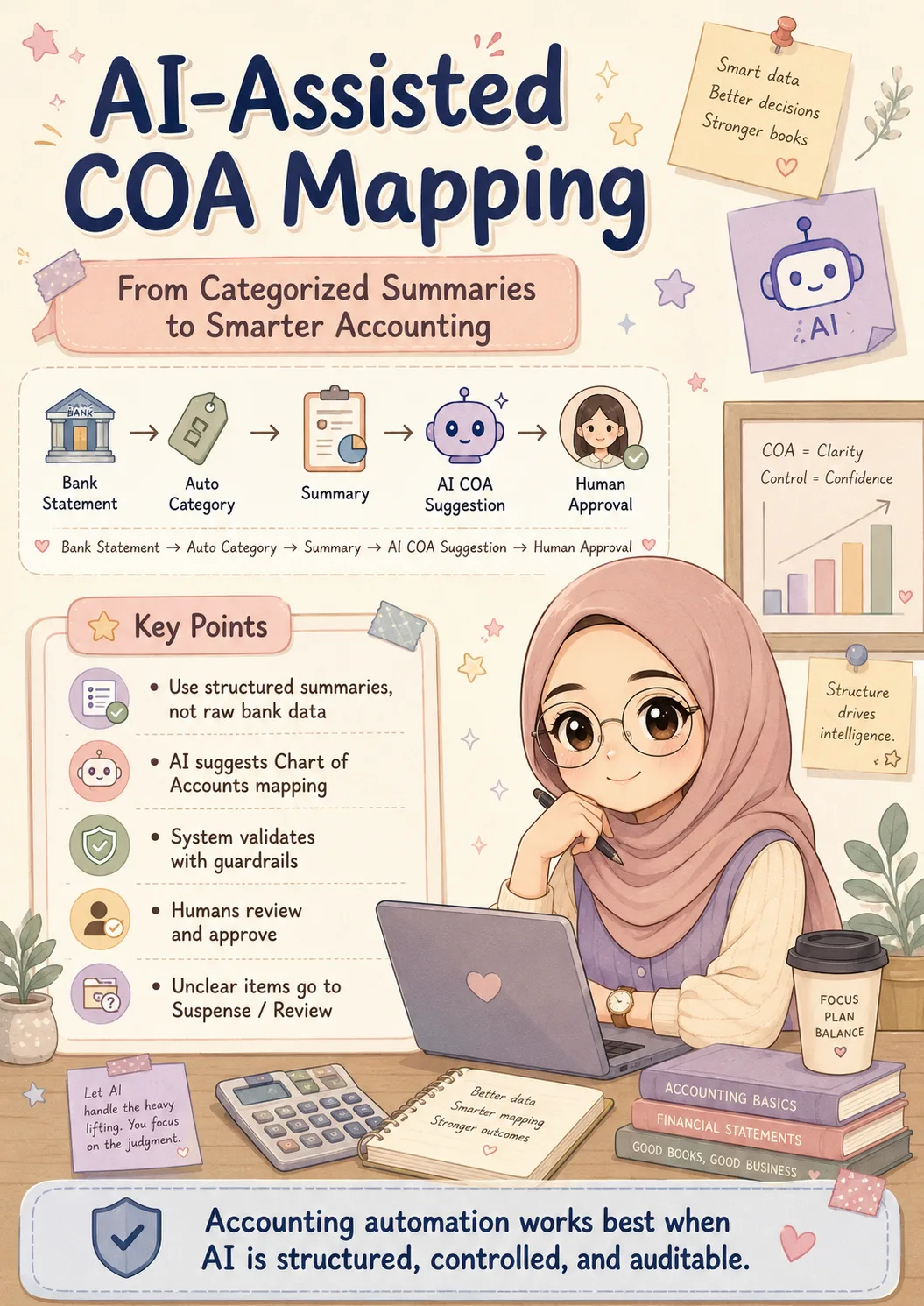
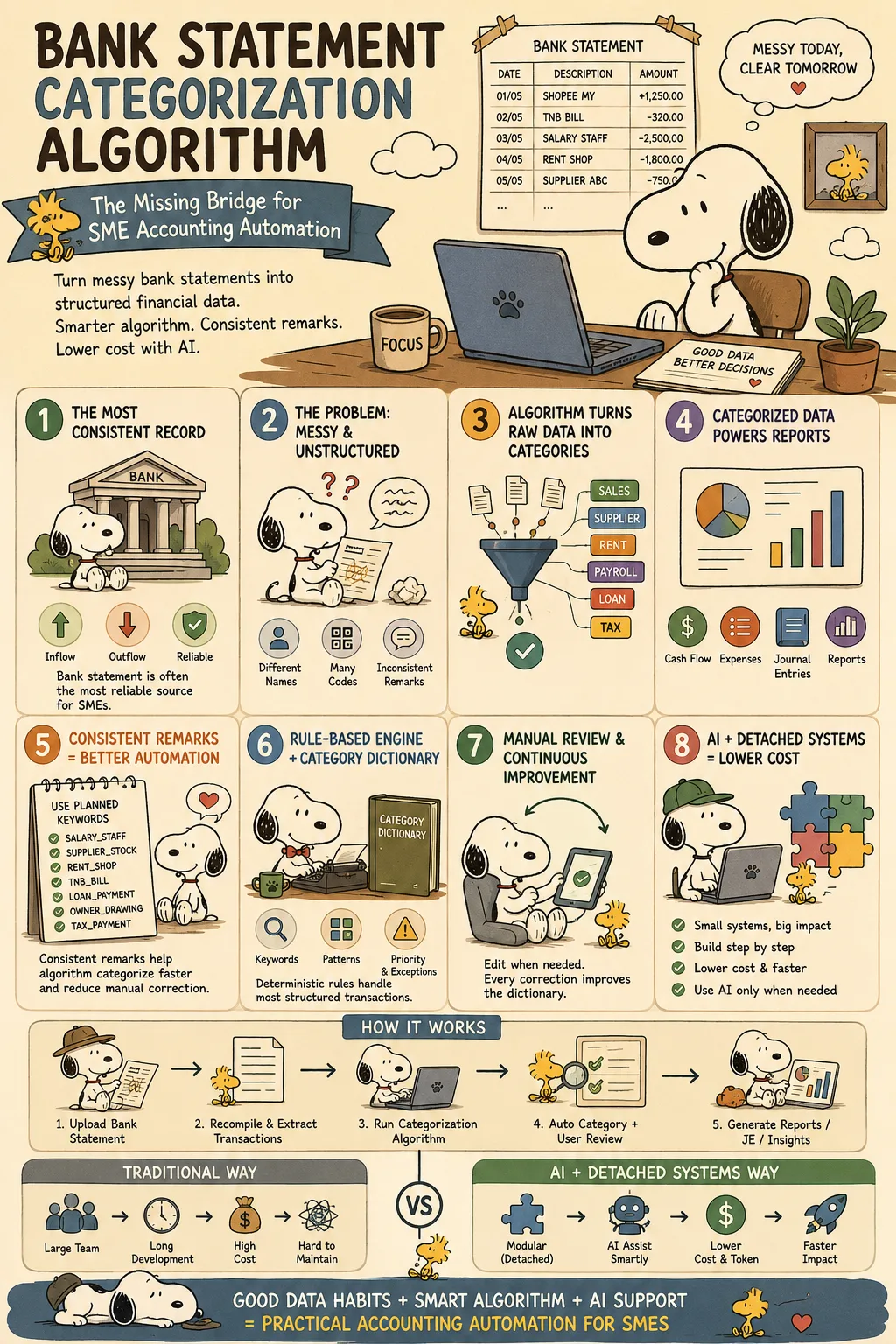
Bank statement processing is frequently treated as a data extraction task. From a finance and accounting standpoint, the real value begins only after those transactions have been cleaned, categorized, and summarized into a form the general ledger can use.
A practical extension is to use AI to propose a Chart of Accounts from these categorized summaries. Instead of passing raw bank statements into the model, the system first normalizes the transactions, groups them by category, keyword, merchant, and spending behavior, then submits only structured summaries to AI.
This matters because raw bank data is noisy. Descriptions are inconsistent, merchant names vary, and transaction purpose is not always explicit. Working from structured summaries keeps the AI output focused, controlled, and easier to review.
For example, advertising-related payments map to Advertising & Marketing Expense; courier and delivery payments to Delivery or Fulfillment Expense; and bank fees to Bank Charges. Where intent is unclear, the entry should go to Suspense or Review for manual checking rather than be forced into an arbitrary account.
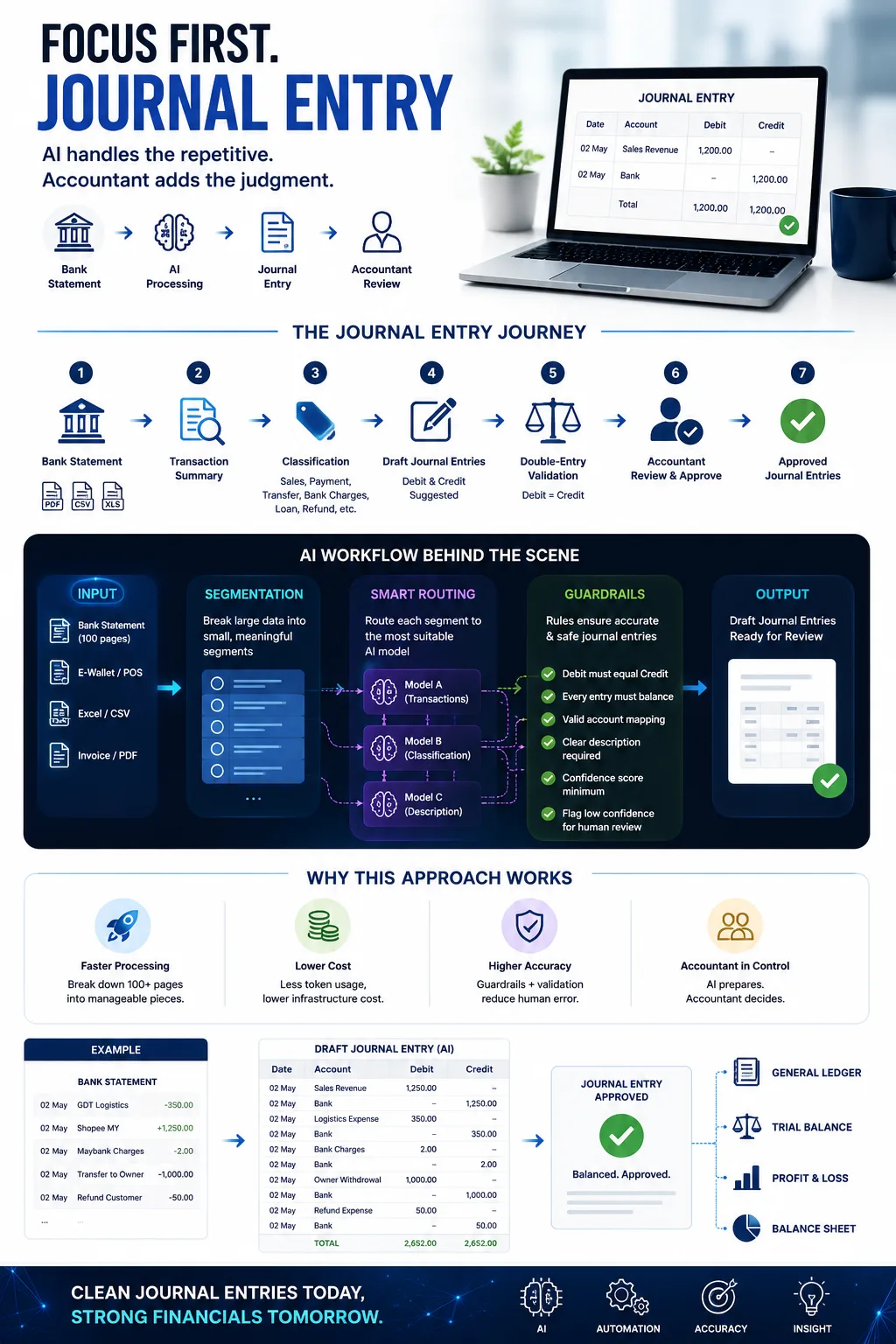
The governing principle is simple: AI proposes, the system validates, and the accountant approves.
AI should not create ledger accounts without guardrails. Without them, the Chart of Accounts quickly becomes cluttered with duplicates and inconsistent codes. A sound system first checks for existing similar accounts, applies confidence scoring, and routes uncertain items for manual review.
This gives a cleaner accounting workflow: bank statement → transaction category → summary → COA mapping → draft journal entries.
For Malaysian SMEs, this is particularly valuable. Many still rely on bank statements as their main financial record. Turning that data into a structured accounting format reduces manual entries, improves consistency, and makes monthly management reporting faster.
At AINNA, we see the goal as augmenting the finance workflow, not replacing it. AI belongs at the right point in the process, supported by validation rules, approval steps, and clear audit trails.
Done correctly, accounting automation becomes realistic, measurable business value: structured, controlled, and auditable.











Ruang pembaca
Apa pendapat anda?
Komen disemak sebelum diterbitkan. Email diperlukan untuk moderasi dan tidak dipaparkan kepada pembaca.
Bahagian bank statement processing tu yang paling kena dengan saya.
Nice one. Turning that data into alone worth the read.
The framing on courier and delivery payments is better than expected.
Honestly, AI belongs at the right surprised me.
The bit about working from structured summaries keeps is what I keep coming back to.
I read this twice. bank statement is the part that stuck.
Worth reading for bank statement processing alone.
First piece that handles advertising-related payments map honestly.