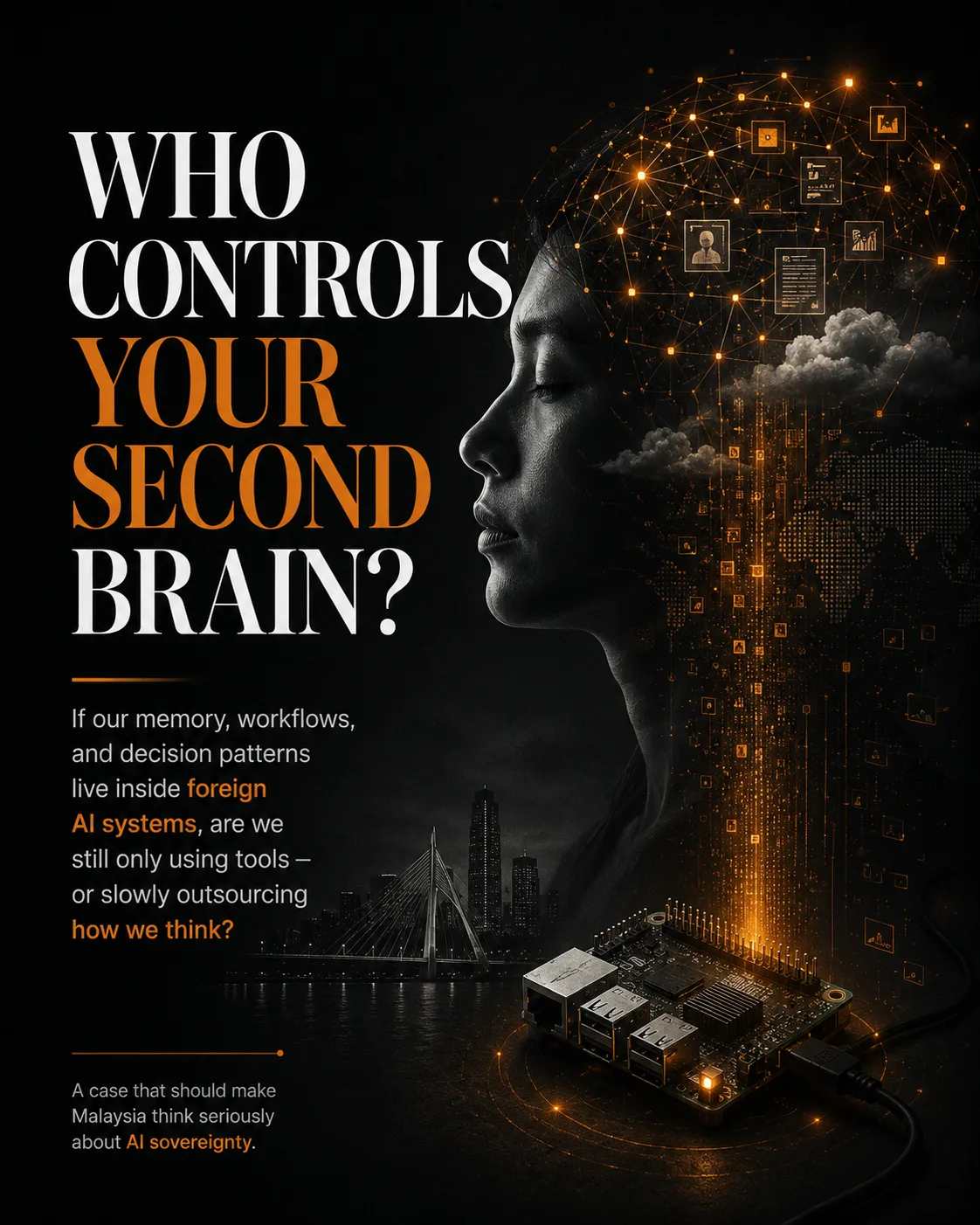
From a finance and accounting standpoint, this is not just a technology headline; it is a case study in asset control and vendor concentration risk. If a senior decision-maker can own the device, the model, the data trail, and the memory layer, the implication for Malaysian SMEs is clear: AI capability can be treated as an internally controlled asset, or as a recurring, opaque operating expense with governance exposure.
For finance leaders, AI is not simply a productivity tool. It is an intangible asset class sitting at the edge of every decision: customer records, forecasting logic, pricing behaviour, supplier terms, and management judgement patterns. The question is not whether we use AI, but whether that knowledge remains on our balance sheet or becomes embedded in a third-party provider’s training signal.
Over-reliance on foreign AI models creates more than data-leakage risk. It creates concentration risk. Every prompt, query, and workflow we feed into an external model is a transfer of operational intelligence: how we approve budgets, manage inventory, price products, assess debtors, and make capital calls. Over time, the provider gains visibility into our decision-making rhythm before our own internal controls have documented it.
In accounting terms, every prompt is a transaction. It records intent, timing, priority, and context. When those transactions sit outside our audit perimeter, we lose the ability to fully verify provenance, assure confidentiality, or support statutory reporting. That is not a technology inconvenience; it is a control weakness that auditors and regulators will eventually price in.
Malaysian businesses should not abandon foreign models. They are cost-effective, fast to deploy, and useful for general research, coding, and low-sensitivity tasks. But they belong in the right cost centre, with clear usage policies, data classification rules, and segregation of duties.
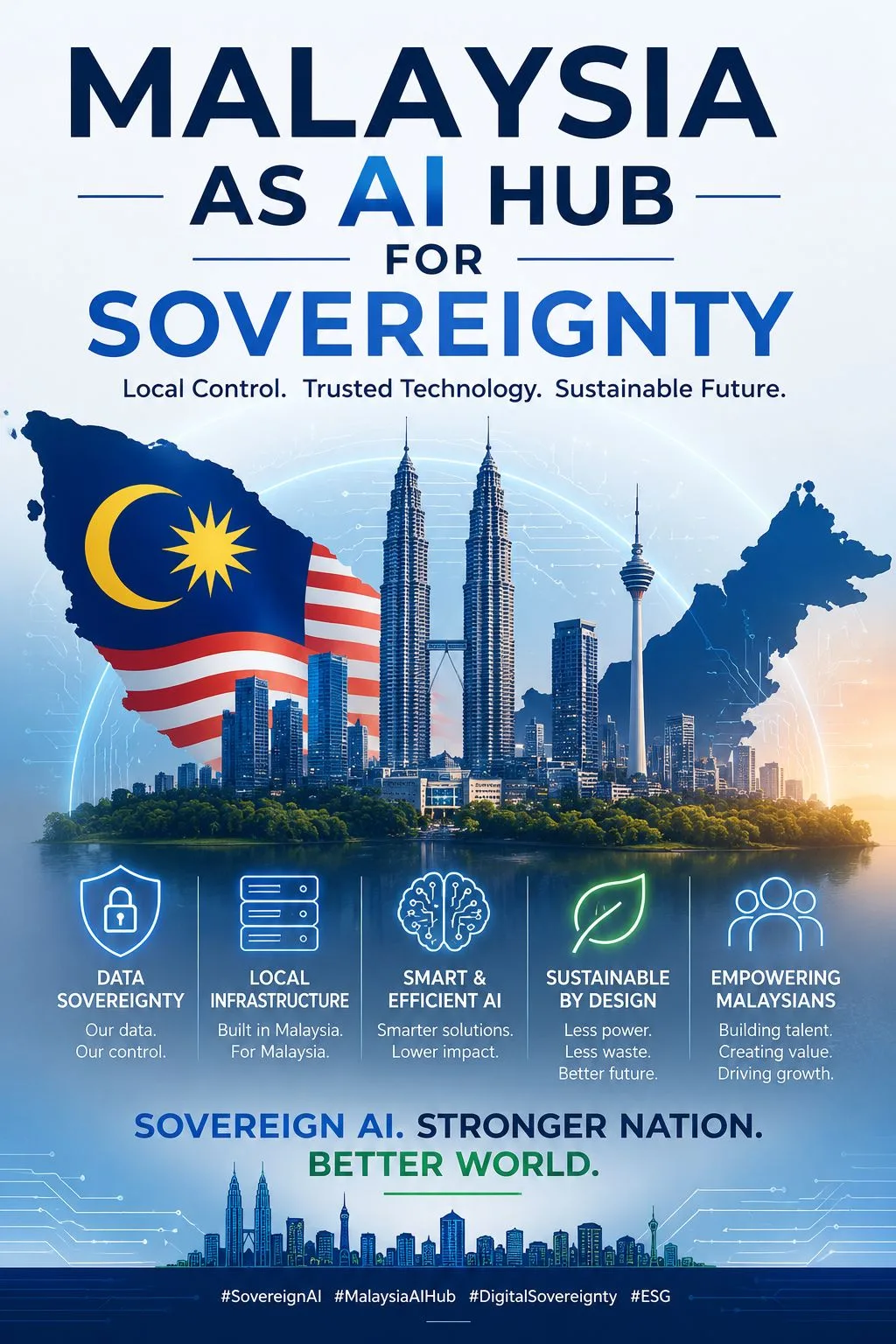
From an asset-management perspective, we need a hybrid AI operating model: foreign models for speed and scale, local or private models for sensitive data, on-premise or sovereign infrastructure for regulated workloads, and internal capability to capitalise knowledge assets rather than continuously rent them. At AINNA, we work with Malaysian SMEs to put that control layer in place, so AI investments map to measurable business value rather than recurring vendor lock-in.
The real question is not whether we adopt AI. It is whether we are building an AI capability we can account for, secure, and govern. If a minister can run a second brain from his desk, every SME board should be asking: who owns ours, where is the data capitalised, and what happens if the subscription stops?
Sovereignty in this context is not abstract. It is an accounting and operational discipline: data ownership, model control, infrastructure choice, audit rights, and decision authority. For Malaysian SMEs, getting this right is the difference between AI as a controlled asset and AI as an unrecorded liability.
#AISovereignty #SovereignAI #MalaysiaAI #LLM #ArtificialIntelligence #DataSovereignty #DigitalSovereignty #AIInfrastructure #LocalAI #AIStrategy
Official Cross-Network Resource













Ruang pembaca
Apa pendapat anda?
Komen disemak sebelum diterbitkan. Email diperlukan untuk moderasi dan tidak dipaparkan kepada pembaca.
先存起来,主要是为了这个主题。
Good write-up. Singapore’s foreign minister reportedly built alone was worth the read.
इस हिस्से की व्याख्या सरल और समझने योग्य है।
Honestly linked to claude caught me off guard.
Worth reading just for over-reliance on foreign AI models.