
In e-commerce, excess inventory, repeated shipments, and time-consuming manual work all show up as costs. They also give a Malaysian SME a practical place to start with ESG. Each item comes back to daily decisions about what to buy, how to ship, and where to spend staff time - decisions that carry a measurable financial effect.
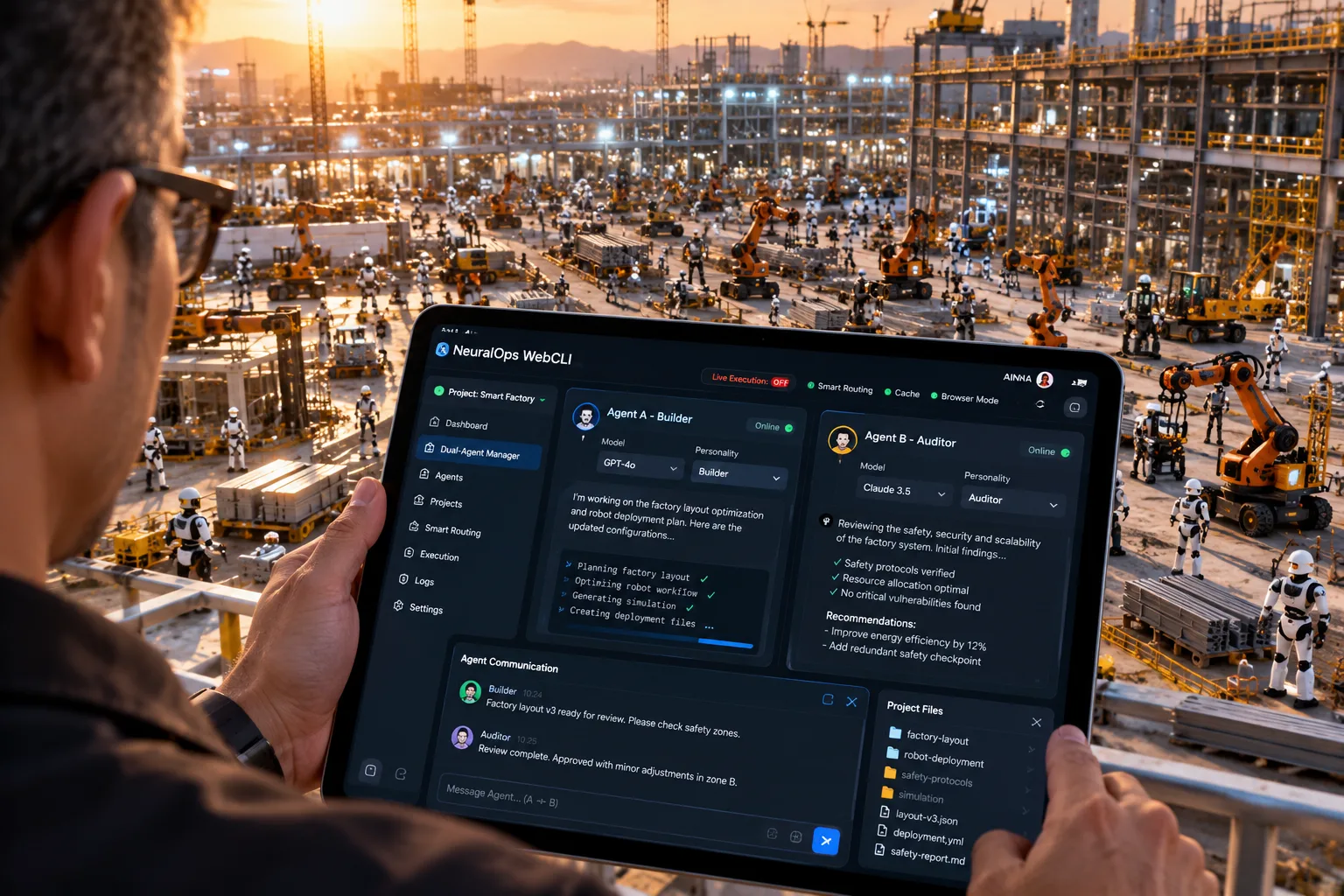
At AINNA, our team built NeuralOps to help teams develop applications and automate workflows. Its Smart Routing architecture selects AI models based on what each task requires. Our delivery team has used NeuralOps to support system development for two factories and a state government. That work reinforced a principle I apply to both AI and ESG: start with a specific operational problem and decide up front how you will measure progress. Without a baseline, you cannot tell whether the change improved margin, reduced working capital, or simply moved the cost somewhere else.
Environmental | Match resource use to the task
In inventory management, an early alert on slow-moving stock can prompt a review before excess inventory builds up and ties up working capital. The same discipline applies to AI. If a lightweight model can reliably classify records, Smart Routing can assign the task to that model rather than a heavier one. Matching the resource to the task is both an operating choice and a cost-control choice.
In roughly its first month, the NeuralOps architecture handled a workload of about 32 billion tokens, with AI model costs of around RM100. The token figure reflects workload across the overall architecture. Assessing the environmental impact would require separate measurement of energy use and emissions. From a finance perspective, the RM100 is the easier number to act on: it gives the team a cost baseline to compare against the manual effort and error rates it replaces.
Social | Give people more time for work that needs their judgment
Routine data checks, reports, and notifications can absorb a significant part of the working day. Automating some of those steps gives teams more time to investigate stock discrepancies or resolve customer issues - work that needs judgement and directly affects receivables, customer retention, and inventory accuracy. Processing time and error rates can help show whether the change is working for the people who use it. I would add a simple financial check: hours released, rework avoided, and the value of faster resolution.
Governance | Make decisions easy to review
When AI recommends an action that affects inventory, spending, or customers, the team should be able to see what data informed the recommendation, what triggered it, and who approved the action. For example, NeuralOps could flag slow-moving stock and suggest a smaller reorder. The purchasing team could then review the recommendation before changing the supplier order. For accounting and asset management, that review trail matters: it supports approval discipline, helps explain variances, and gives auditors a clear record of how a decision was made.
For a Malaysian SME, the practical starting point is one process with a clear baseline. If excess inventory is the issue, measure the value of slow-moving stock before and after the change, along with holding cost and markdown risk. If manual reporting is the issue, track the time it takes and how often errors occur, then compare that with the cost of the workflow. Those measures give the team a basis for deciding whether to keep, refine, or expand the workflow - and whether the business case still holds.
If you could improve one process in your organisation with AI, which would you choose and how would you measure the result?
#ESG #NeuralOps #AINNA #DigitalTransformation #AIAutomation














Ruang pembaca
Apa pendapat anda?
Komen disemak sebelum diterbitkan. Email diperlukan untuk moderasi dan tidak dipaparkan kepada pembaca.
Bagus ada yang tulis pasal 3 dengan jelas.
Berguna. Kami sedang hadap 3 sekarang.
Clearer than the decks I usually get on environmental | match resource use.
Sent this to two people already. Smart routing can assign is why.
Bookmarked, mostly for start with a specific operational.
Short and clear. of about 3 32 billion is worth sending to my team.
Good write-up. our team built neuralops alone was worth the read.
First piece that handles social | give people honestly.