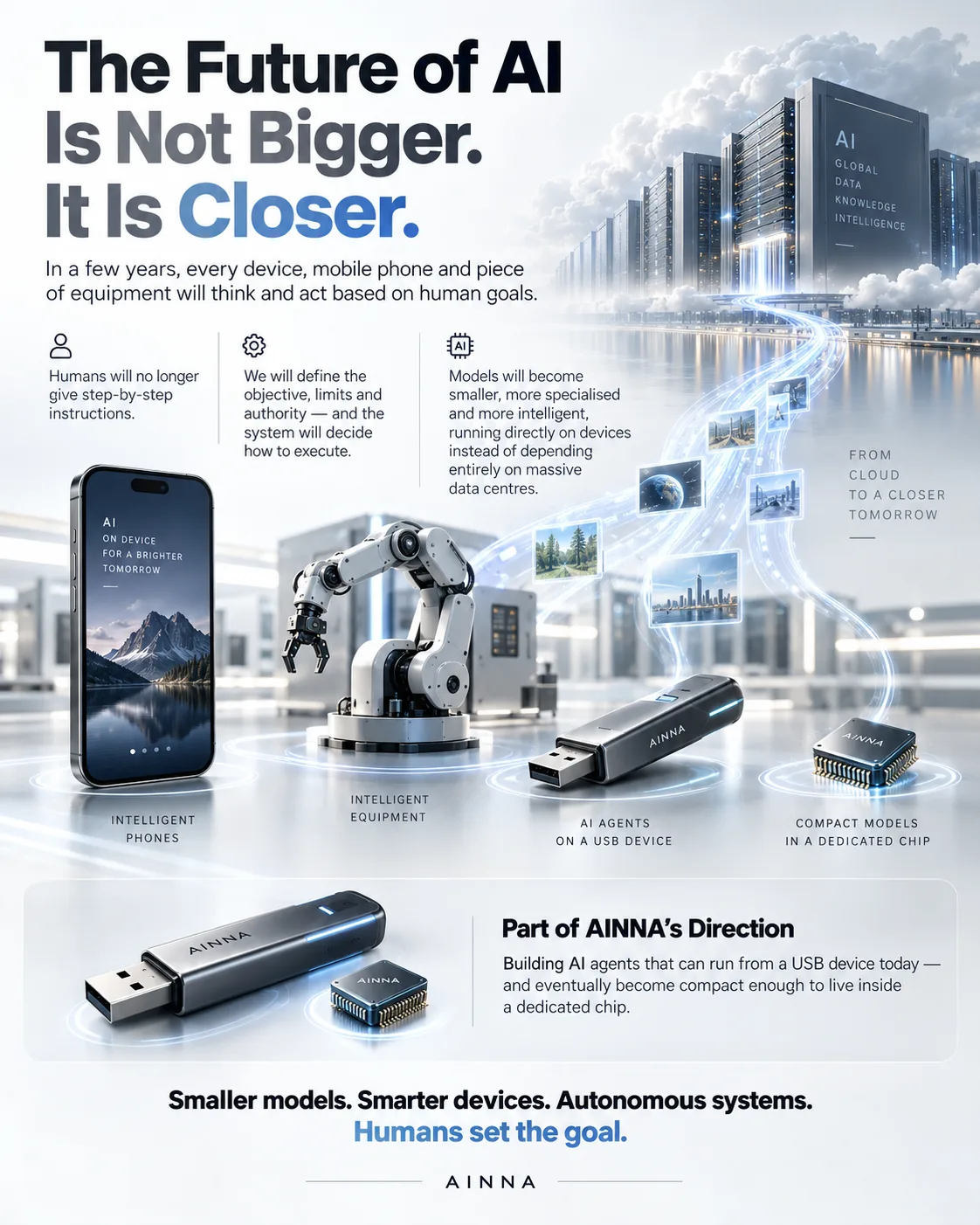
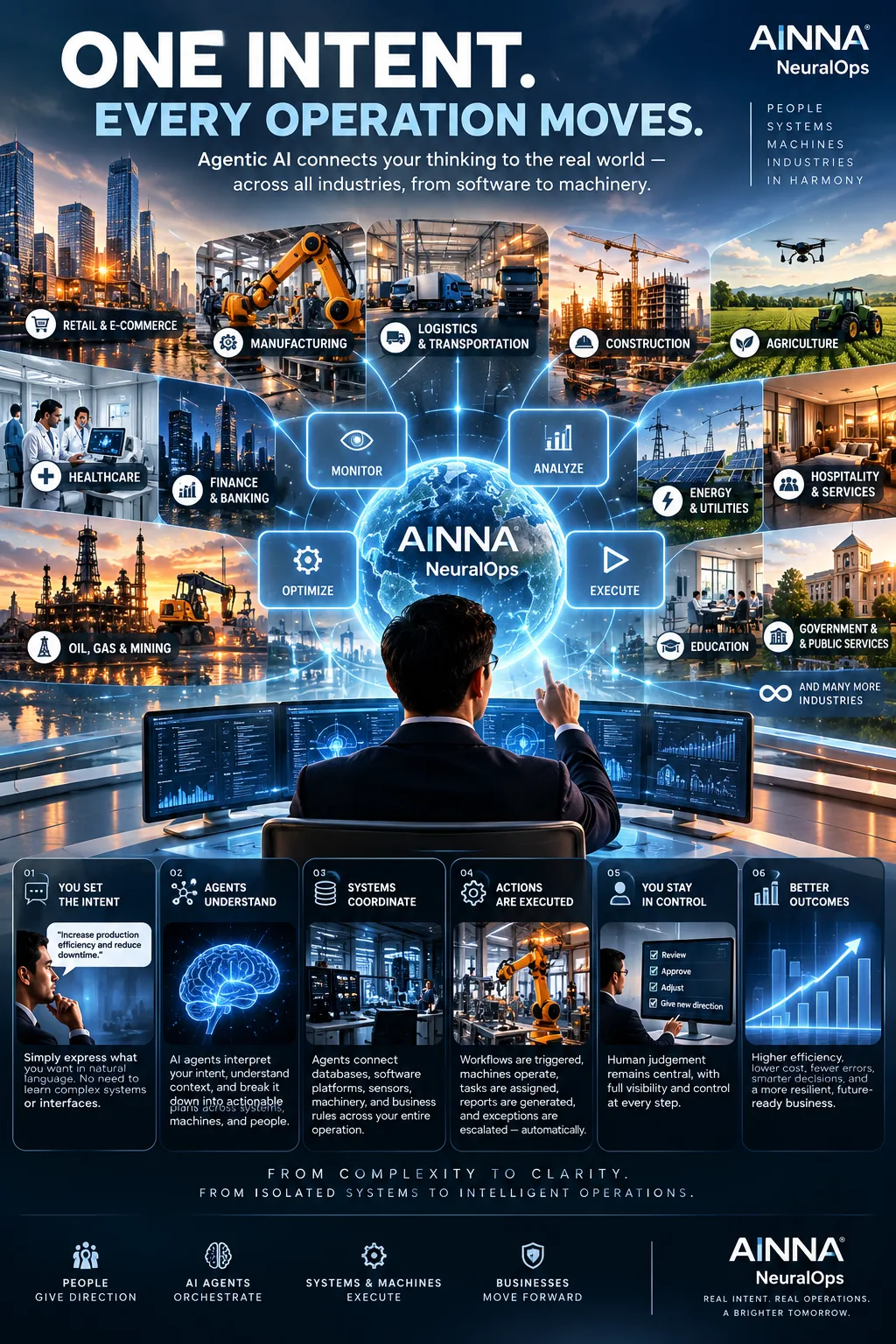
In a few years, every device, mobile phone and piece of equipment will be able to act on clearly defined business goals, not just follow pre-set instructions.
Management will no longer need to give step-by-step instructions. The business will simply define the objective, limits and authority, and the system will decide how to execute-within the budgets, controls and approval thresholds set by finance and operations.
That will change almost everything in the cost and asset structure. AI models will become smaller, more specialised and more intelligent, running directly on devices and at the edge instead of depending entirely on large data centres. For Malaysian SMEs, that means lower dependence on heavy infrastructure, more predictable operating costs, and technology assets that can be deployed, tracked and depreciated with greater discipline.
Part of AINNA’s work today is already moving in this direction, with an AI agent that can run from a USB device, and the longer-term goal of making the same intelligence compact enough to eventually sit inside a dedicated chip. From an accounting and asset-management view, that progression matters: it shifts AI from a large, shared overhead into a controlled, deployable asset with clearer cost per user, per device and per workflow.
Smaller models. Smarter devices. Autonomous systems. Management sets the goal. Finance measures the value.












Ruang pembaca
Apa pendapat anda?
Komen disemak sebelum diterbitkan. Email diperlukan untuk moderasi dan tidak dipaparkan kepada pembaca.
الأرقام حول هذا المقال أكثر منطقية من معظم ما قرأت.
Short and clear. tracked and depreciated with greater is worth sending to my team.
asset-management is the part I would forward to my boss.
La parte de este tema me hizo pensar un rato.