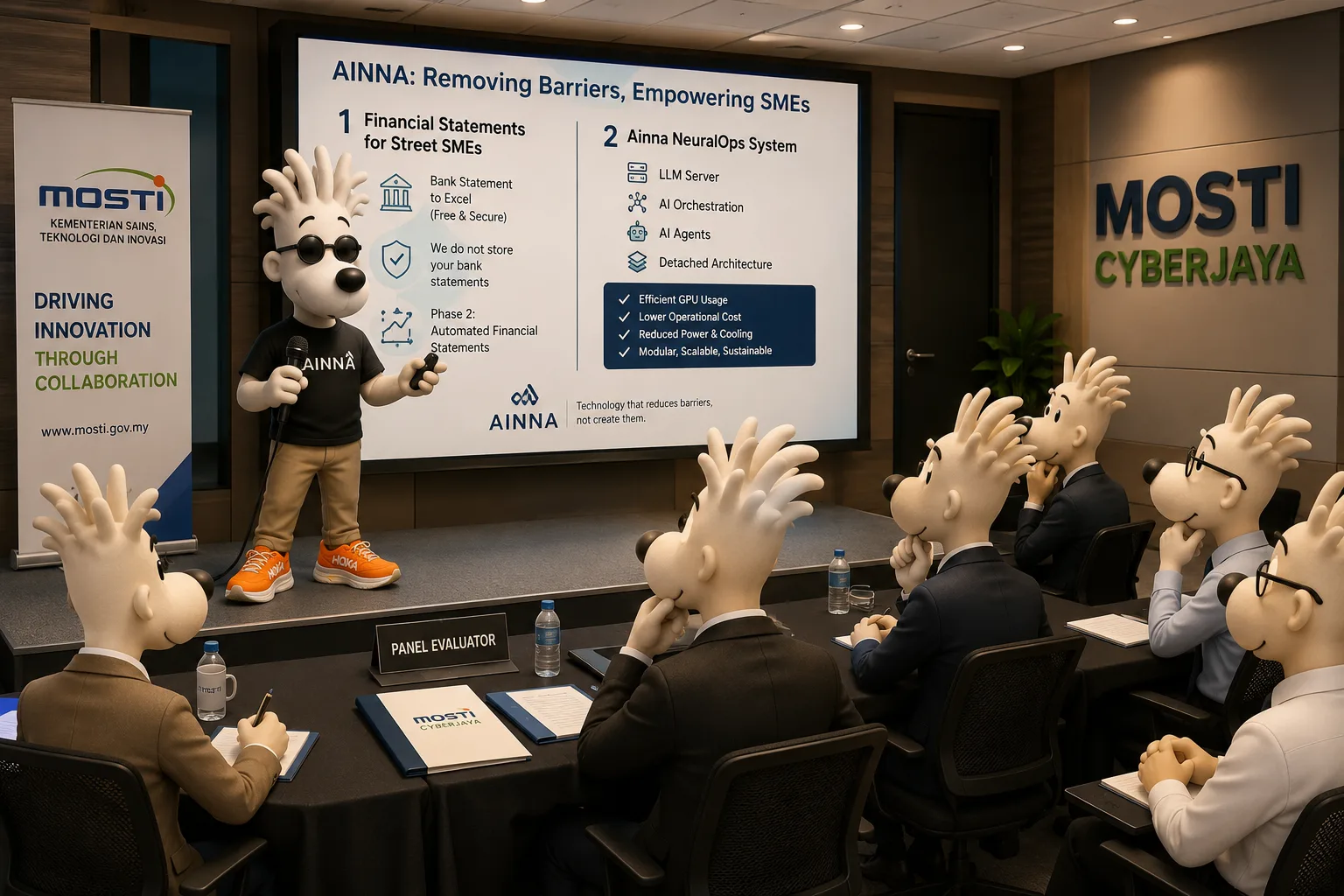
As the AI System Developer at AINNA, I am currently helping prepare two pitch sessions at MOSTI Cyberjaya. Both builds started with the same engineering question we keep asking in the lab: how can technology remove friction instead of adding more?
1️⃣ Financial Statements for Street SMEs
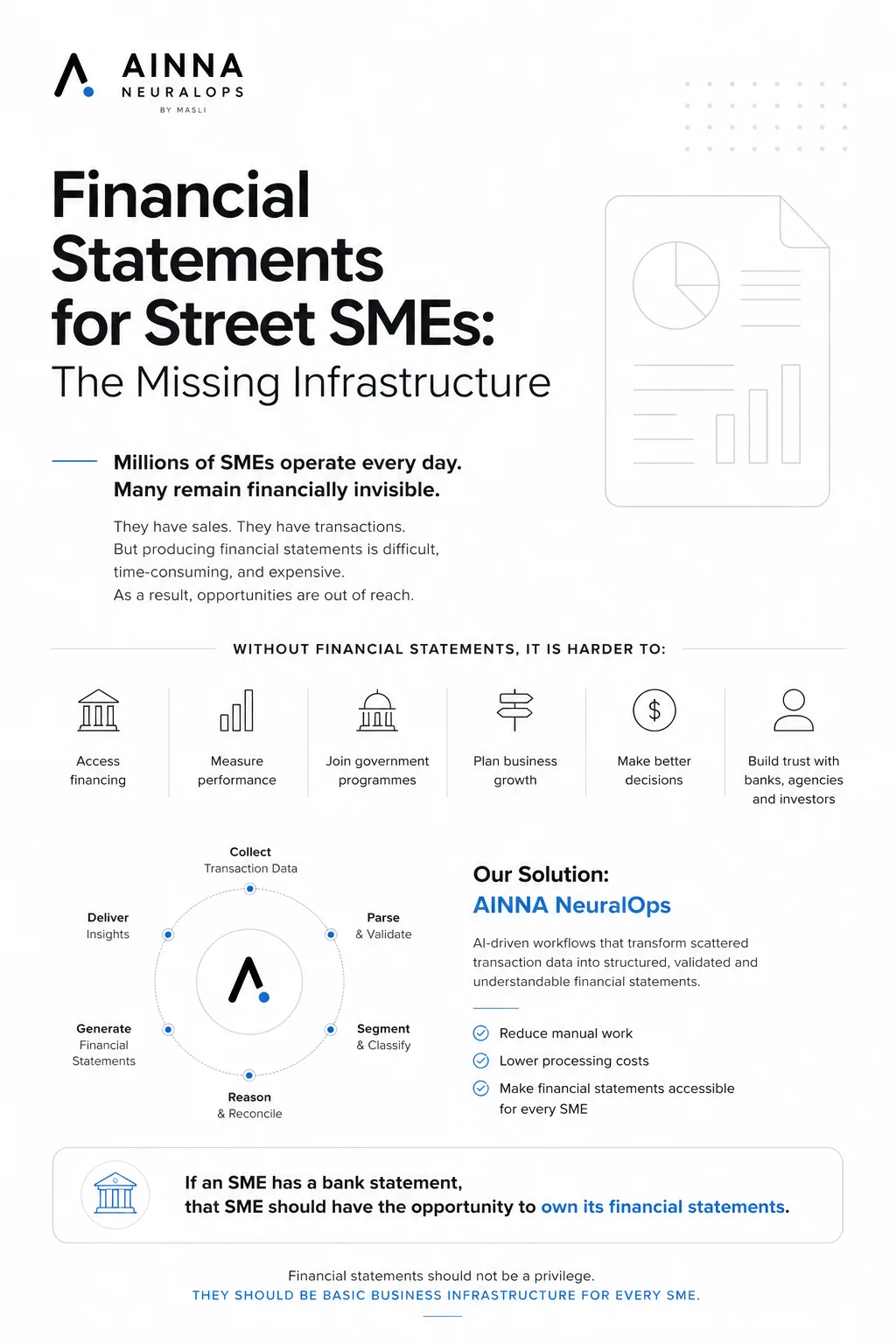
Most street-level SMEs do not skip financial statements because they do not care. The existing process is usually too complex, too costly, and too slow, so entrepreneurs keep operating without structured records.
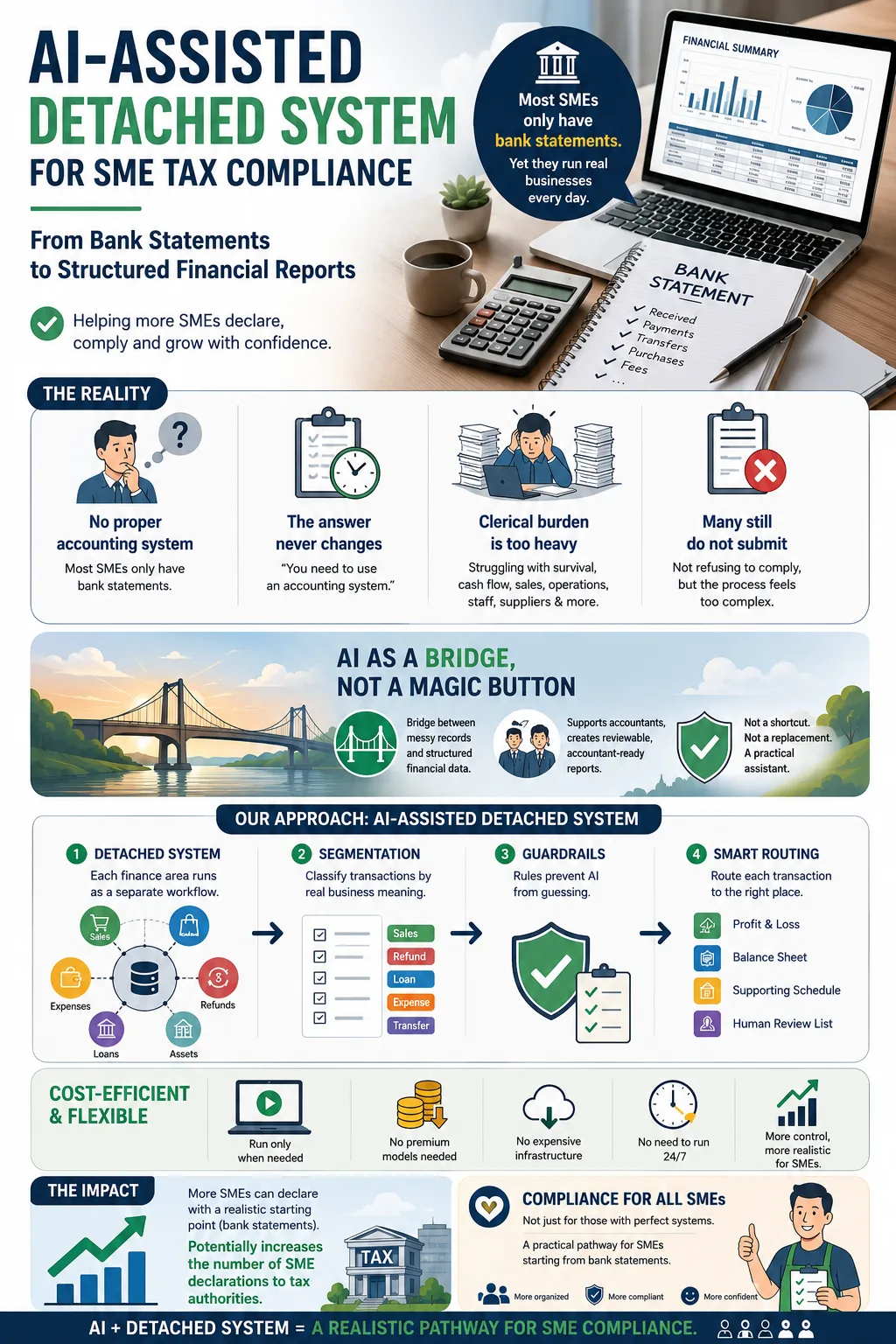
We approached it from a systems angle. Rather than forcing users to learn an accounting system, we designed a pipeline that learns how entrepreneurs already work.
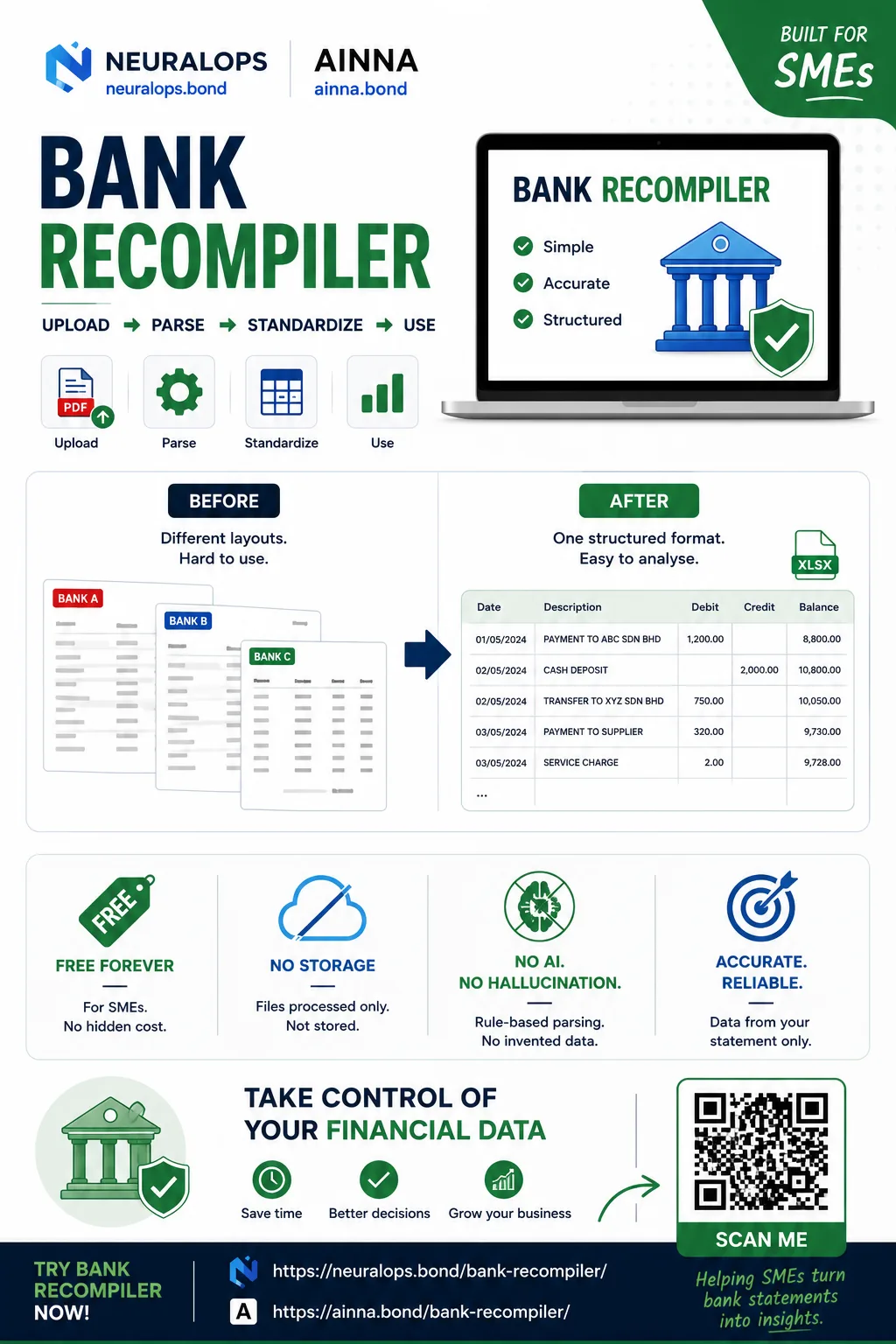
✅ Phase 1 is shipped and running.
The pipeline converts bank statements into Excel automatically and is free to use. One architectural decision matters more than the feature itself: AINNA’s servers never store uploaded bank statements. Files are parsed in memory for format conversion only, then discarded. This is not just a privacy policy; it is a system design choice. Financial data belongs to the user, not the platform.
Phase 2 is now in development. We are wiring up automated classification and statement generation so the accountant-level output requires minimal manual input.
The real goal is not just speed. It is making compliant financial record-keeping accessible to street SMEs that would otherwise be left out.
2️⃣ AINNA NeuralOps System
While the market chases bigger LLMs, we are optimizing the infrastructure that runs them.
The AINNA NeuralOps System is an end-to-end AI infrastructure platform made up of:
• LLM Servers
• AI Orchestration
• AI Agents
• Detached Architecture
Every component is demand-activated. Nothing sits idle burning GPU cycles, electricity, and cooling budget.
That design gives us:
• Higher effective GPU utilization
• Lower operating cost per inference
• Reduced electricity and cooling load
• A modular, scalable, and more sustainable AI backbone
The next phase of AI will not be won by model size alone. Smarter architecture-routing, orchestration, detached compute, and agent lifecycle management-will decide what is actually deployable at scale.
From helping street SMEs close their books...
...to running enterprise-grade AI infrastructure...
AINNA’s mission has not changed. We build systems that lower digital barriers, simplify compliance, and put advanced technology within reach of more people.
Not everyone will buy into the approach. But if engineering choices can widen participation and create real opportunities for entrepreneurs, they are worth a serious look.
We hope these two systems can contribute something useful to Malaysia’s innovation ecosystem through the MOSTI platform.
🇲🇾🤲
#MOSTI #Cyberjaya #Ainna #NeuralOps #ArtificialIntelligence #StreetSMEs #FinancialStatements #EnterpriseAI #LLM #AIAgents #DigitalTransformation #MalaysiaTech #Innovation














Ruang pembaca
Apa pendapat anda?
Komen baharu dihantar untuk semakan terlebih dahulu. Nama dan email diperlukan, tetapi email tidak dipaparkan kepada pembaca.
The figures on accountant-level make more sense than most posts. Still thinking this one through.
Clearer than the decks I usually get on simplify compliance, and put advanced.
Already sent this to two people. how can technology remove friction is why.
Worth reading for electricity, and cooling budget.That design alone.
The framing around nothing sits idle burning GPU is better than I expected. Worth a closer look.
This is where files are parsed in memory finally makes sense.
Honestly, detached compute, and agent lifecycle surprised me.
Not fully sold on enterprise-grade, but the rest is solid. Still thinking this one through.
First piece that handles demand-activated honestly.
I would push back slightly on smarter architecture-routing, orchestration, but the direction is right.