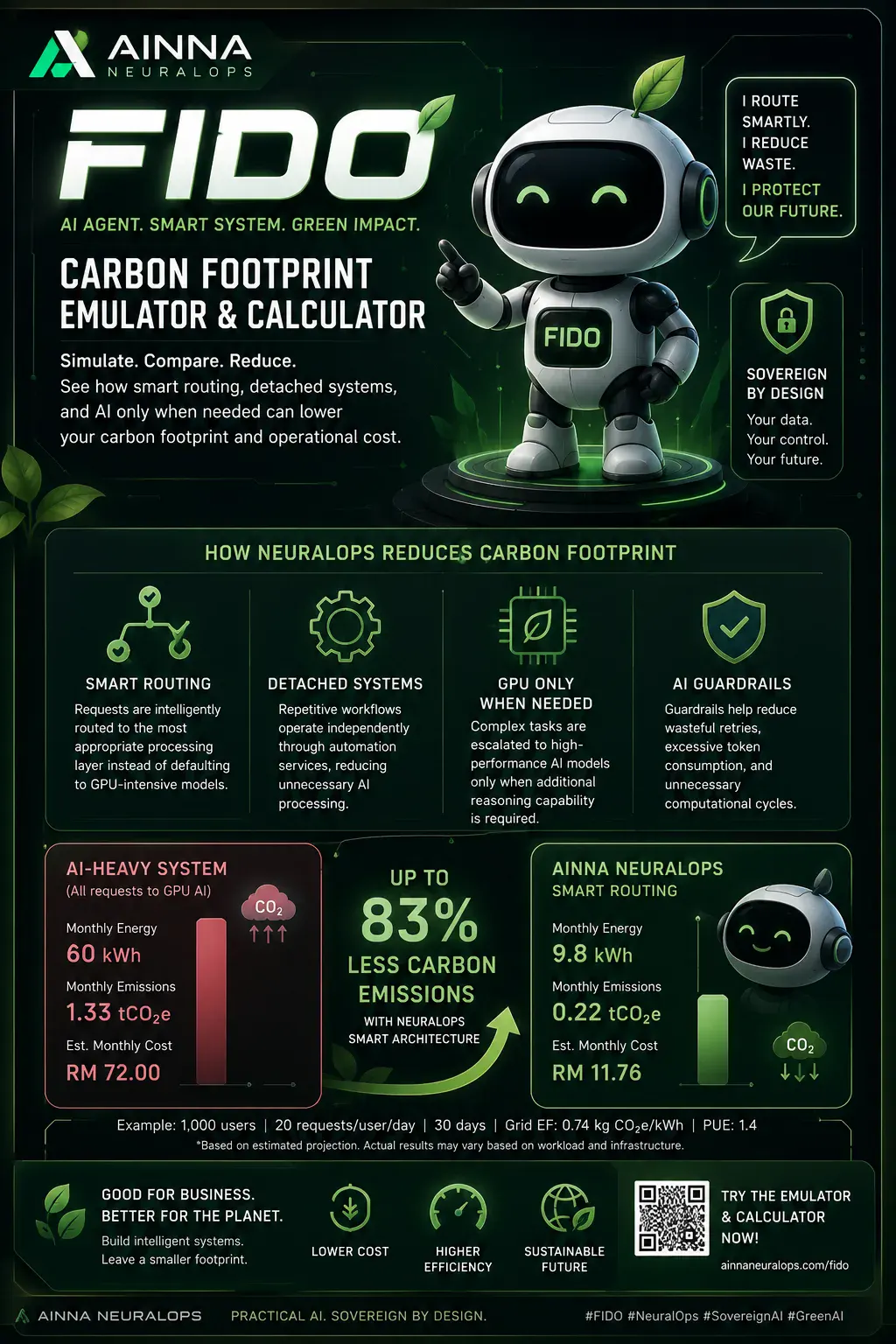
In production, the easy default is to pipe everything into the LLM. Every classification, summary, and workflow gets pushed through a large model, even though a rule engine, a cached lookup, an automation script, or a lightweight classifier could handle it faster and cheaper.
That is the gap AINNA NeuralOps is built to close.
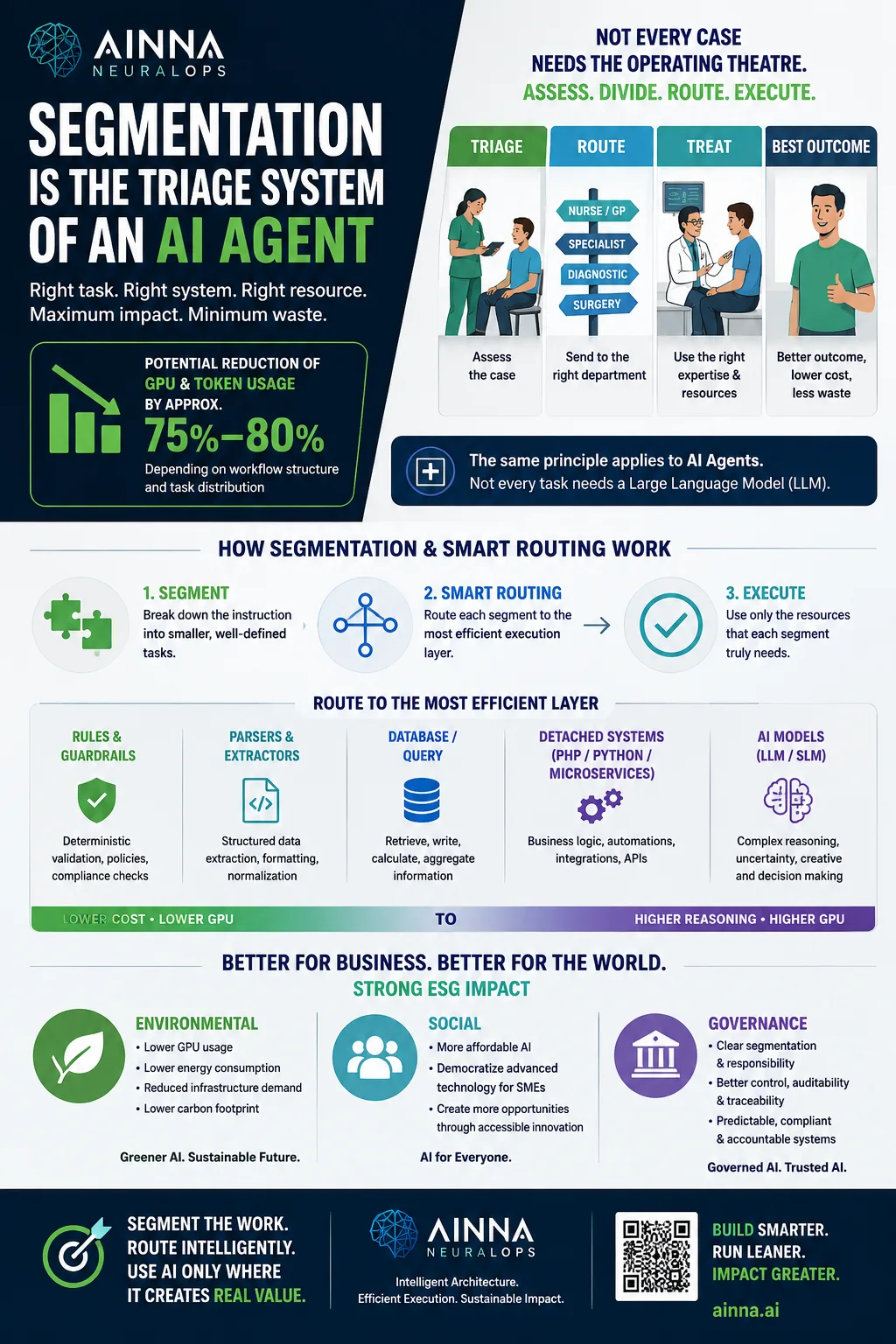
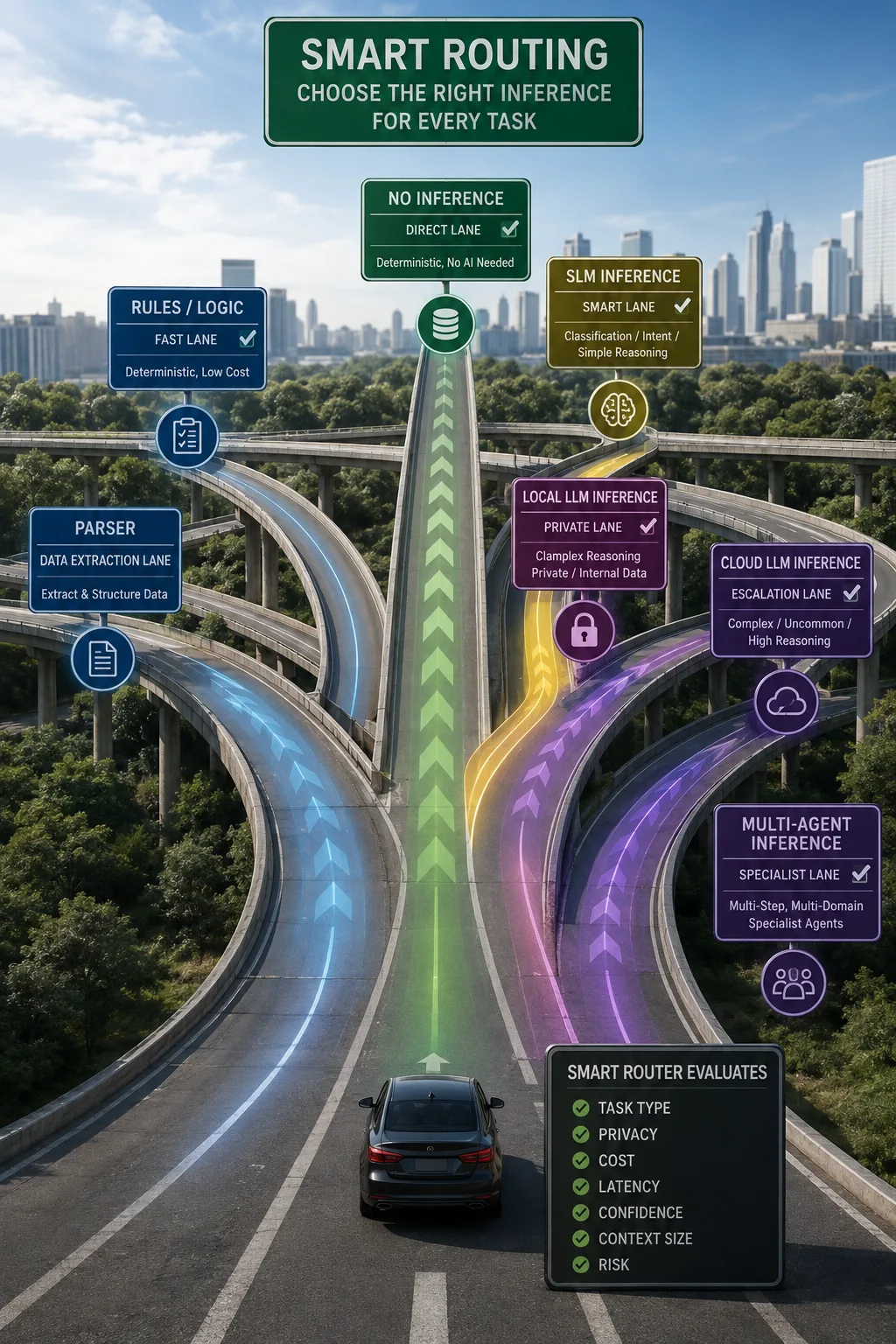
NeuralOps isn't about fearing AI. It's about running AI with the right operational discipline. Smart routing places each request on the right processing layer. Detached systems absorb repetitive workflows without blocking the main pipeline. GPU-backed inference is escalated only when the task actually needs reasoning. Guardrails stop retry loops, token bloat, failed outputs, and wasted compute from multiplying.
This is why we're building the AINNA NeuralOps Carbon Footprint Emulator & Calculator.
The idea is straightforward: simulate the carbon cost of different architectures side by side. Compare a system where 100% of requests hit GPU-heavy AI against a NeuralOps design where detached systems, rule-based automation, CPU processing, and lightweight AI absorb most of the load, escalating only the complex cases.
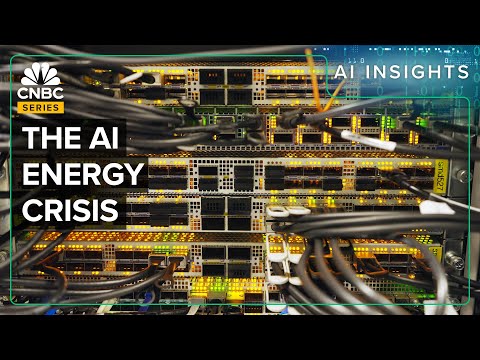
This matters because AI infrastructure is no longer just a software problem. It's an energy problem. The International Energy Agency projects global data centre electricity consumption could more than double to around 945 TWh by 2030, with AI as a major driver of that growth.
So instead of vague claims like "our AI is green", the better questions are:
Can we measure it? Can we compare it? Can we reduce it by design?
The calculator will estimate total requests, routing percentage, energy use in kWh, carbon footprint in kg CO₂e, estimated cost, and reduction percentage between AI-heavy processing and NeuralOps-optimized processing. It also exposes the assumptions clearly, because this is an estimation tool, not a certified carbon audit.
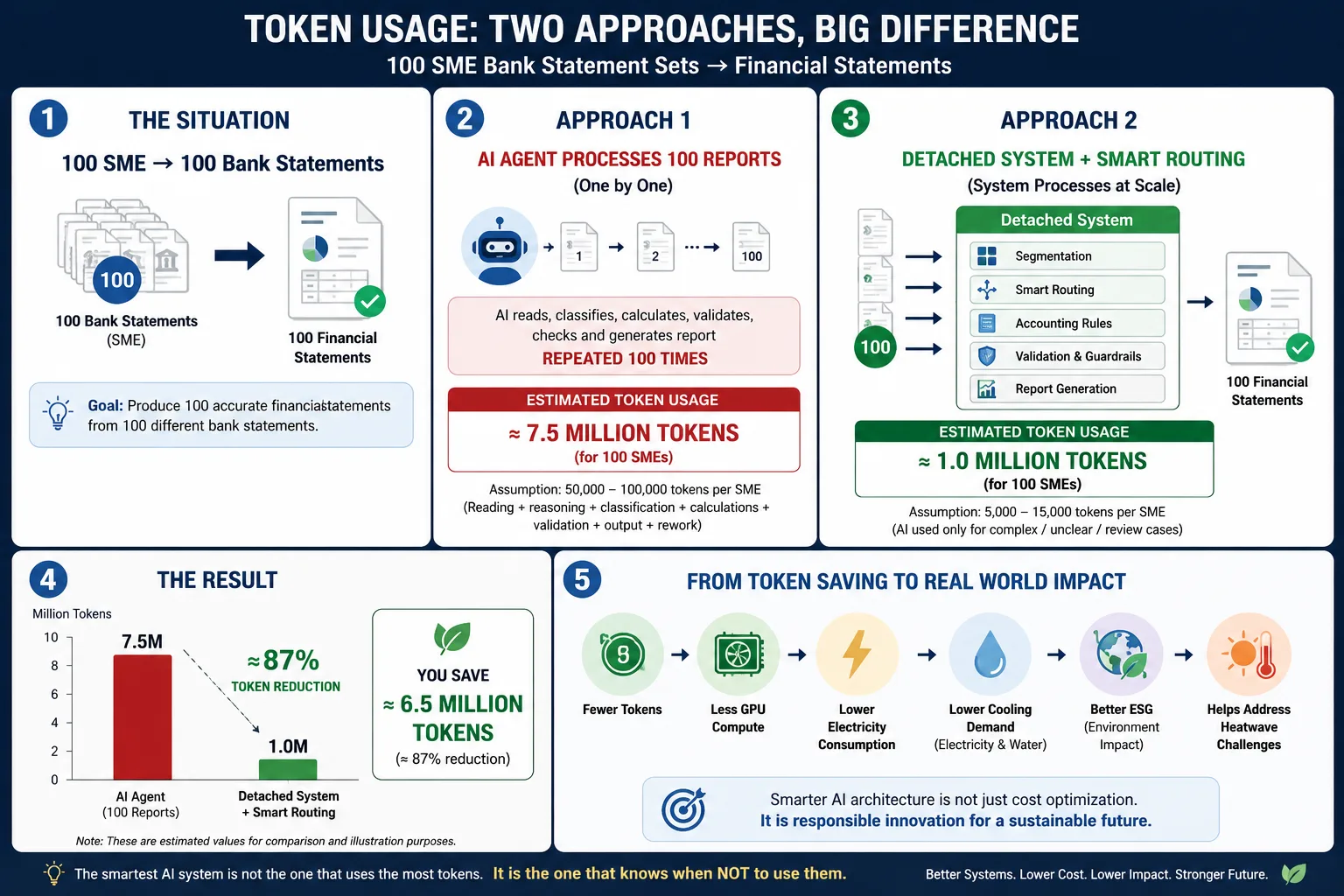
For SMEs, this approach matters even more. They don't need expensive AI-heavy infrastructure for every routine workflow. Daily processes - bank statement parsing, categorization, stock checking, report generation, and data cleaning - can be handled by detached systems first, with AI used only when needed.
That's the future we're engineering toward:
Practical AI. Sovereign control. Lower waste. Better operations.
AI shouldn't just be powerful.
It should be efficient, accountable, and designed with purpose.
AINNA NeuralOps - Practical AI, Sovereign by Design.
#Ainna #NeuralOps #SovereignAI #PracticalAI #CarbonFootprint #GreenAI #ResponsibleAI #AIInfrastructure #DetachedSystem #SmartRouting #SMEInnovation #ESG #SustainableAI
Official Cross-Network Resource













Ruang pembaca
Apa pendapat anda?
Komen disemak sebelum diterbitkan. Email diperlukan untuk moderasi dan tidak dipaparkan kepada pembaca.
ถ้ามี100%ต่อ ผมจะอ่านแน่นอน
อธิบาย100%ได้เข้าใจง่ายมาก
First piece I have read that treats detached systems absorb repetitive workflows honestly.
Sang-ayon ako sa 100%, at malinaw ang direksyon.