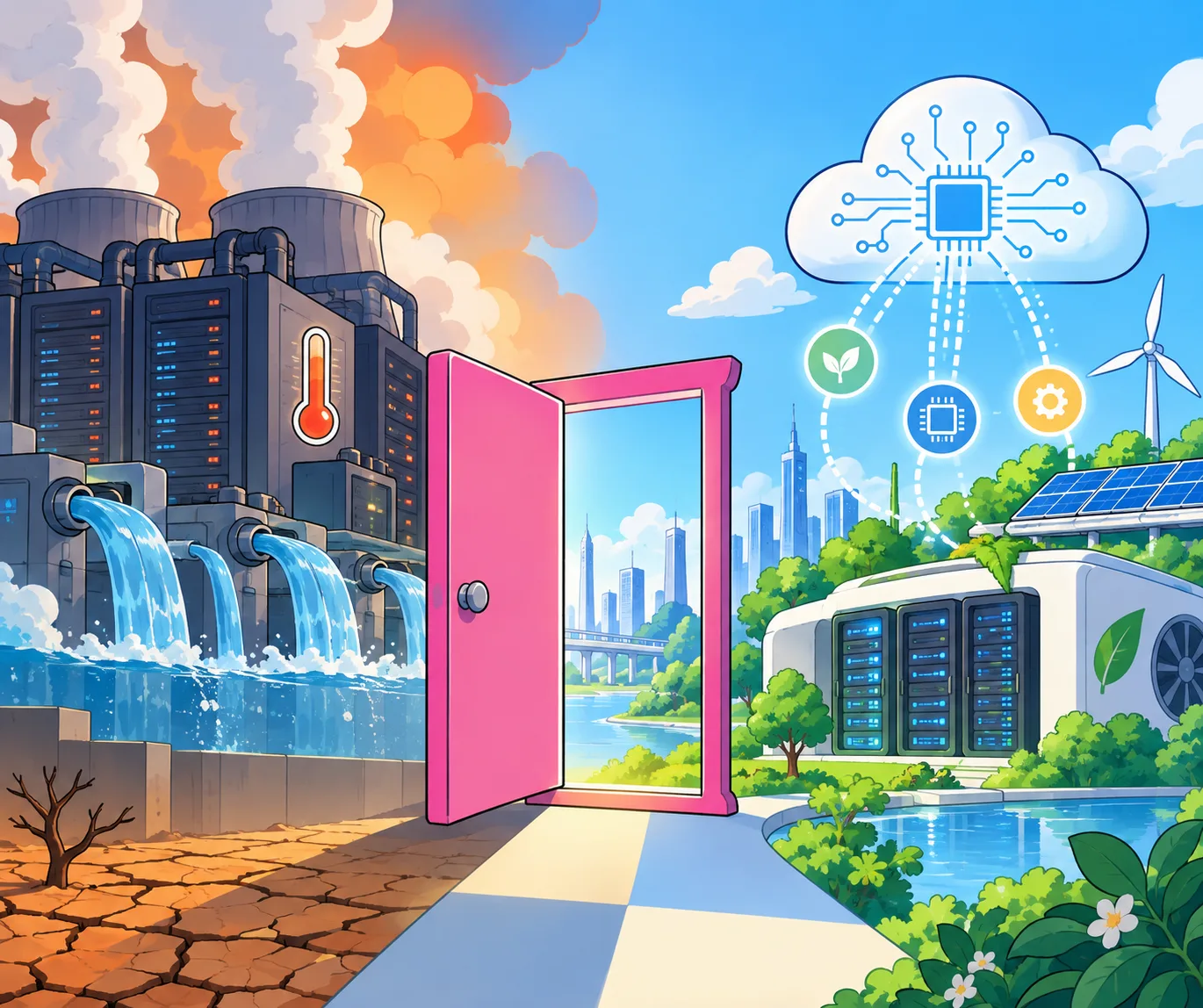
Everyone is talking about AI consuming electricity, generating heat, and putting pressure on water resources for data centre cooling.
But perhaps we are asking the wrong question.
The question should not only be:
“How much energy does AI consume?”
It should also be:
“Why are we using expensive AI compute for tasks that never needed it in the first place?”
Not every task needs a frontier model.
A simple validation does not need a massive LLM.
A repetitive workflow does not need deep reasoning.
Known business logic does not need thousands of tokens every time it runs.
This is the principle behind our work with NeuralOps:
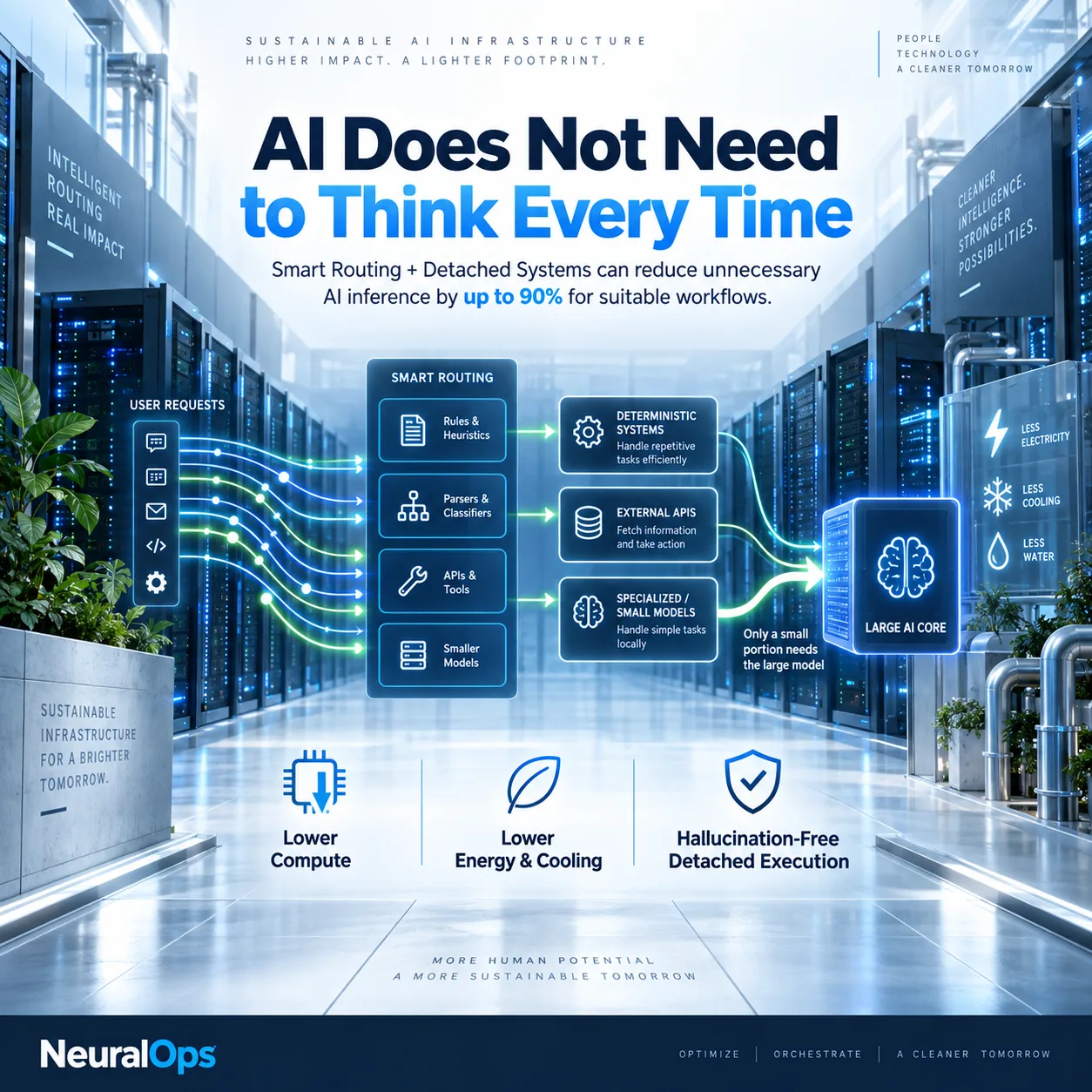
Use advanced AI only when it is genuinely required.
Route simple tasks to deterministic systems.
Use smaller or local models where appropriate.
Cache reusable results.
Reduce unnecessary context and token processing.
Escalate to powerful models only for problems that actually require them.
Less unnecessary compute means less processing, less energy demand, and less heat that ultimately needs to be managed.
The future of sustainable AI should not simply be about building greener data centres.
It should also be about building smarter AI architecture before the workload even reaches the data centre.
AI efficiency is not just an infrastructure problem.
It is an architecture problem.
#ArtificialIntelligence #SustainableAI #GreenAI #NeuralOps #AIInfrastructure #DataCenter #EnergyEfficiency #ESG #AgenticAI #DigitalTransformation
















Ruang pembaca
Apa pendapat anda?
Komen baharu dihantar untuk semakan terlebih dahulu. Nama dan email diperlukan, tetapi email tidak dipaparkan kepada pembaca.
The part about this discussion is clear, although I still have questions about the rollout cost. It make the point easier to understand.
This is a good breakdown of the case study without making the implementation sound too easy.
The section on the workflow made the real operational trade-offs much clearer, memang useful.
The article connects artikel ini to business outcomes in a very readable way. It make the point easier to understand.
This made topik ini feel less abstract and more like something a team can test.