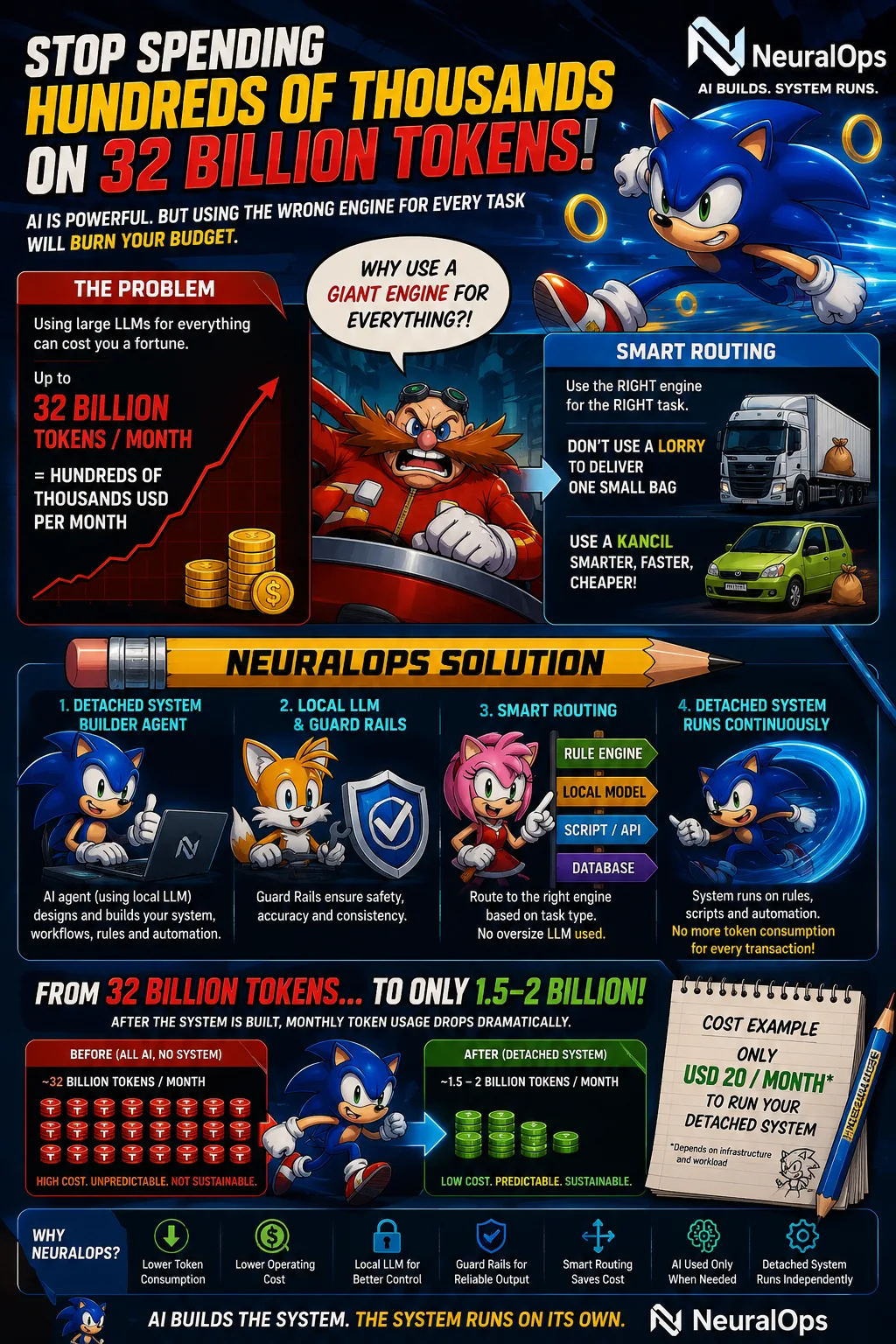
Depending on the model, architecture, and usage pattern, the operating cost can easily reach hundreds of thousands of dollars. The problem is not always that AI is expensive. Often, the real problem is that companies use large LLMs for every task, including work that could be handled by simple rules, scripts, databases, or smaller local models.
It is like using a heavy-duty lorry to deliver one small bag from Melaka to Kuala Lumpur. The lorry can complete the job, but a Kancil could deliver the same item with far lower fuel consumption and operating cost. This is the principle behind Smart Routing: use the right processing engine for the right task.
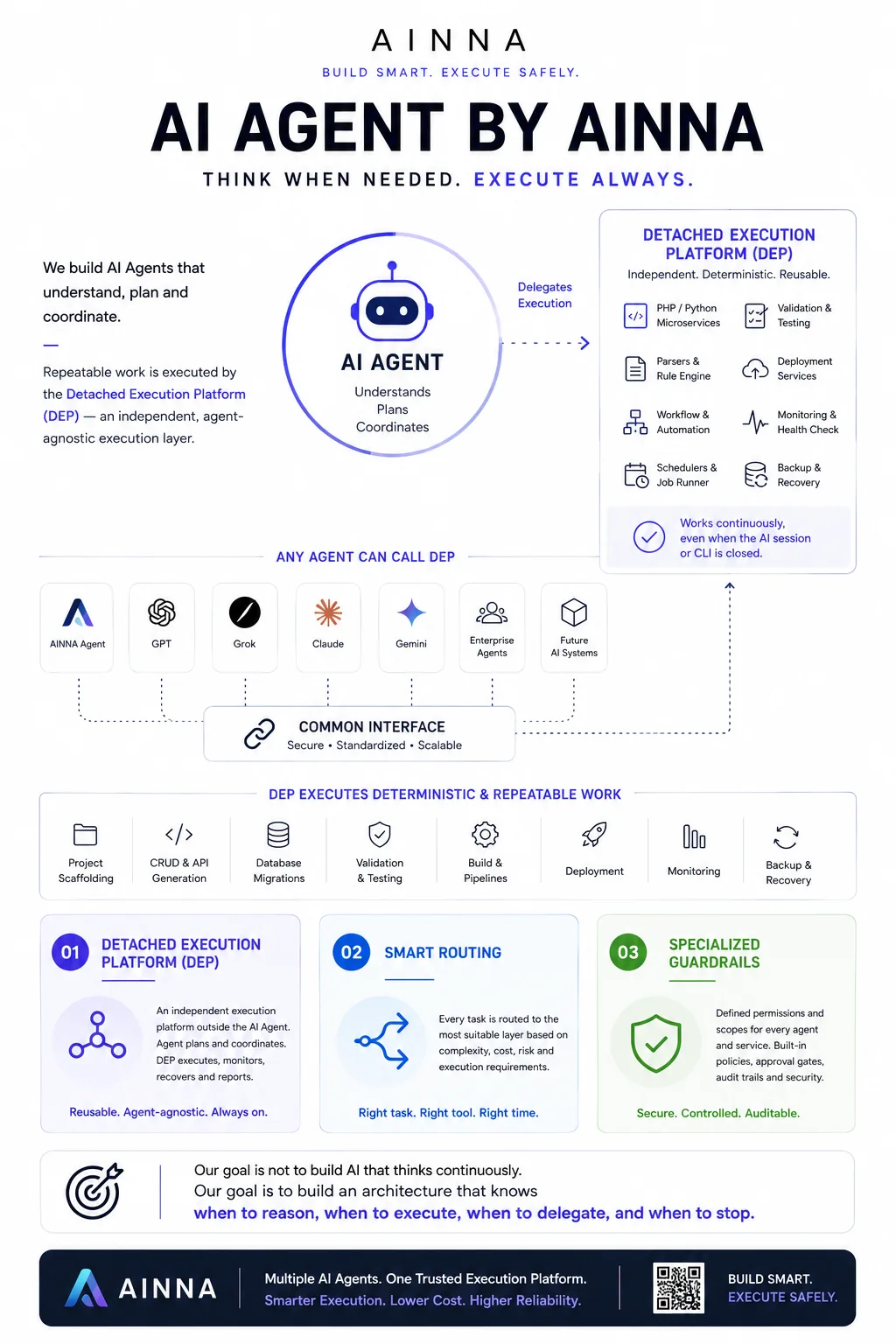
At NeuralOps, our Detached System Builder Agent uses local LLMs, Guard Rails, and Smart Routing to design and build the system. The agent may consume significant tokens during the initial learning, development, testing, and validation stage-but this usage is temporary.
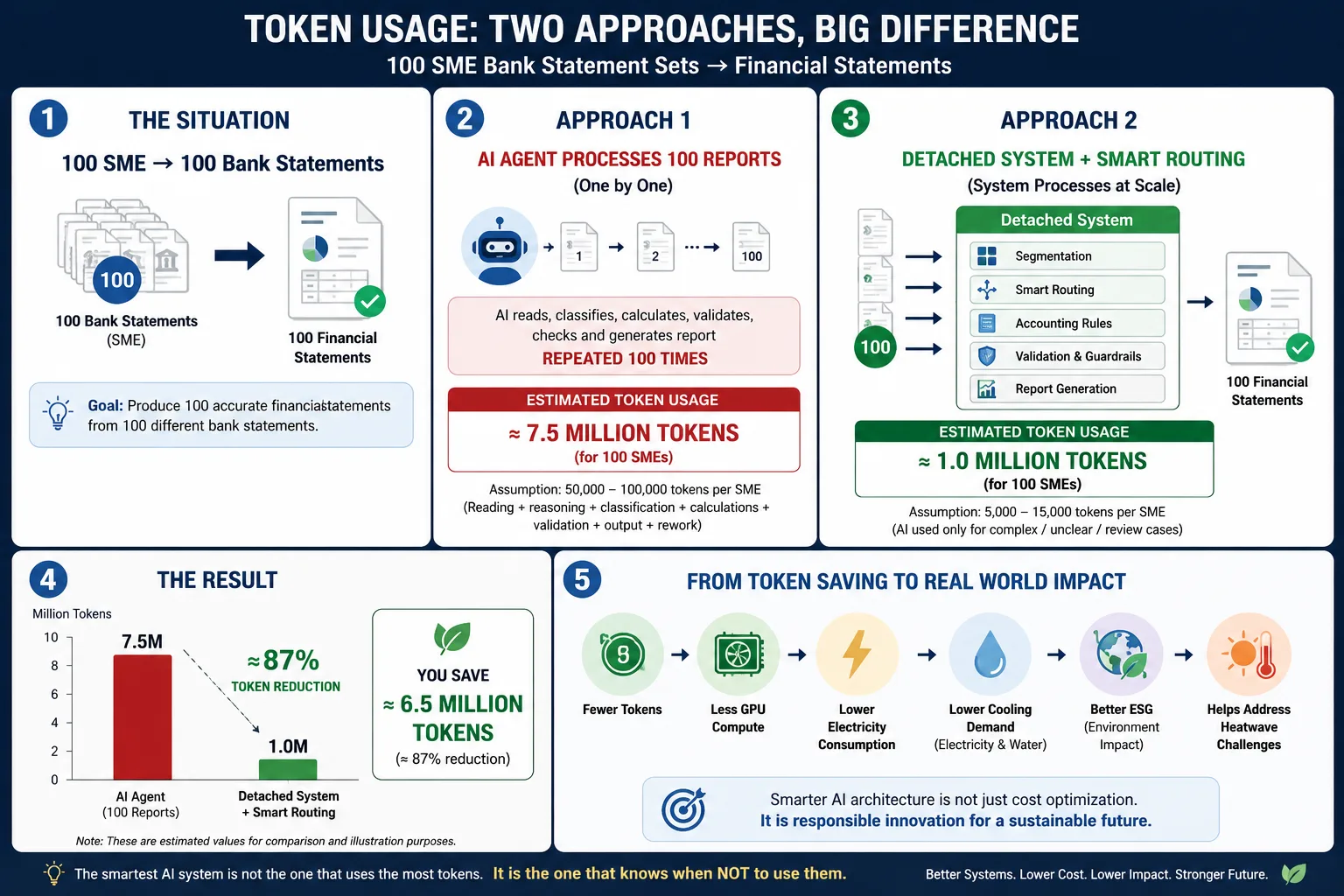
Once the Detached System is completed, repetitive operations are transferred to fixed rules, PHP services, automation scripts, databases, and validated workflows. The system can then run continuously without requiring an LLM to process every transaction.
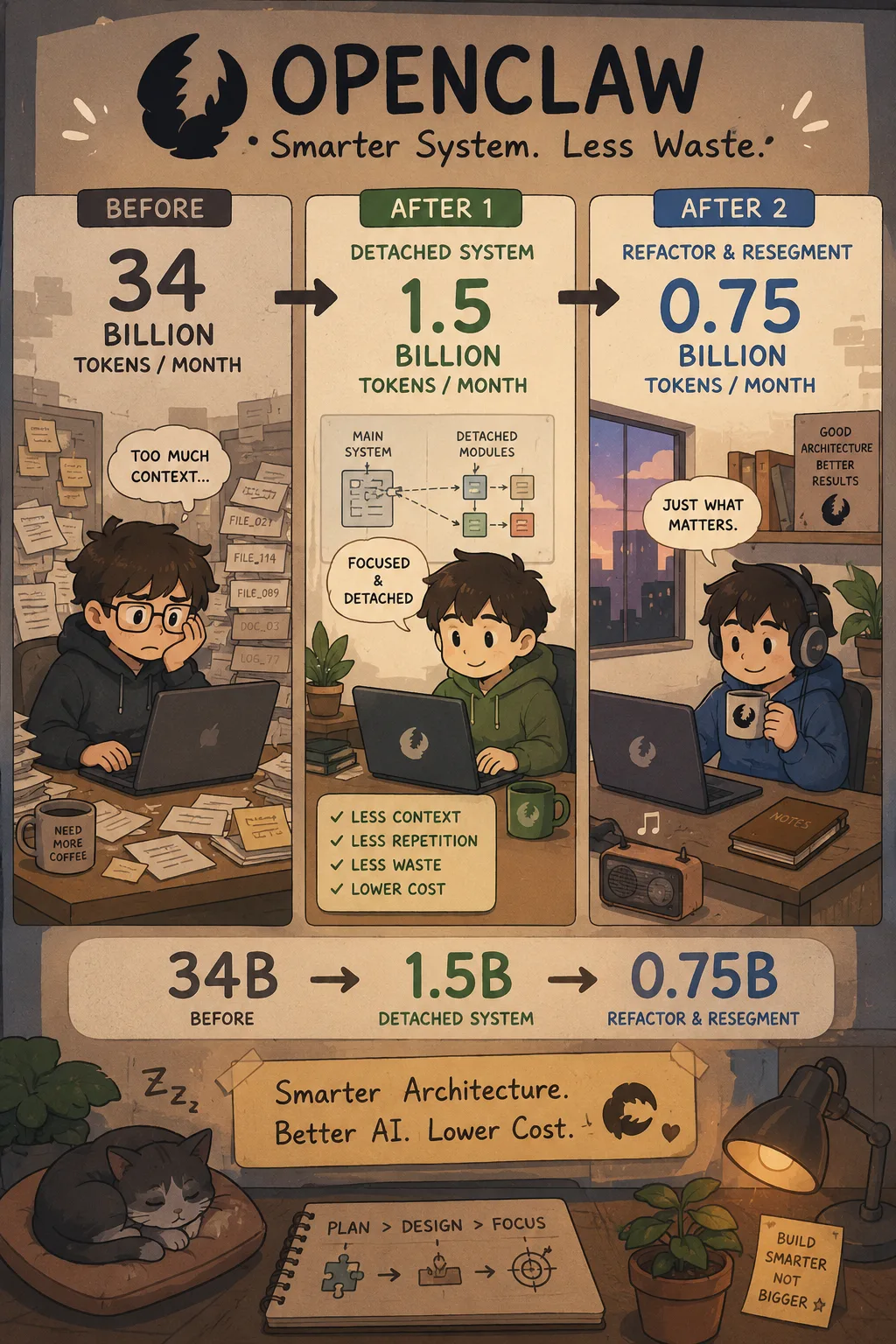
As a result, monthly usage could drop from approximately 32 billion tokens to only 1.5–2 billion tokens, mainly for exceptions, unknown cases, system improvements, and tasks that genuinely require AI. In some use cases, the core detached workflow itself may operate for around USD20 per month, depending on infrastructure and workload.
Key outcomes:
Lower token consumption
Lower long-term operating costs
Local LLM usage for better control
Guard Rails for predictable outputs
Smart Routing to avoid oversized models
AI used only when AI is genuinely required
Detached workflows that continue running without repeated token charges
The NeuralOps principle is simple:
Do not use a lorry when a Kancil can complete the job. AI builds the system. The system then runs independently.