AI infrastructure is growing fast, but there's an often-overlooked operational cost: electricity, cooling and water consumption.
Recent studies indicate that after deployment, inference accounts for roughly 80–90% of an AI model's energy consumption. Each unnecessary LLM call adds GPU compute, electricity, heat, and finally cooling demand-a chain reaction of resource waste.
This is exactly why we're building NeuralOps on a different principle:
Not every task needs an LLM.
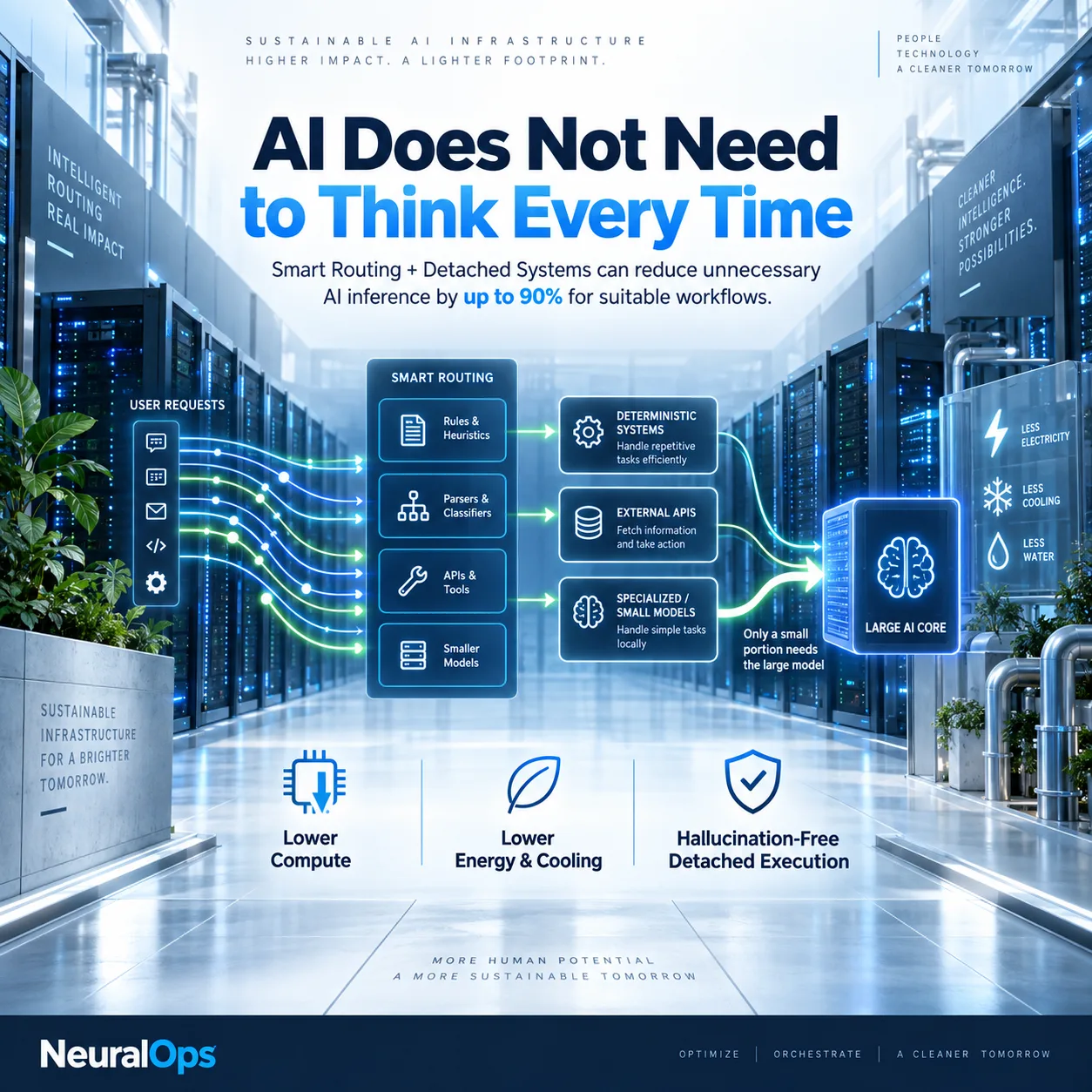
With Smart Routing, we first attempt to handle a task using lightweight, deterministic methods-rules, parsers, databases, APIs, or smaller models. Only when a task genuinely requires deep reasoning do we invoke an LLM. Once a workflow stabilises, we can convert it into a detached deterministic system that runs repeatedly without any LLM involvement. It's like standardising repeatable logistics routes to avoid dispatching a full fleet for every package.
For suitable repetitive workflows, this architecture can potentially cut AI inference demand by up to 90%-a staggering efficiency gain from an operations standpoint.
The impact here goes far beyond token savings.
Less inference means less GPU compute, which directly reduces electricity consumption, heat generation, cooling load, and ultimately water demand. Each stage in this chain compounds the resource savings.
There's another advantage that matters in any system: reliability.
When a detached workflow runs without an LLM, we achieve zero LLM tokens and zero LLM hallucinations on that execution path. Intelligence is deployed precisely where reasoning is critical; deterministic systems manage the repetitive, predictable operations. This ensures consistency and dependability, much like a well-engineered logistics network.
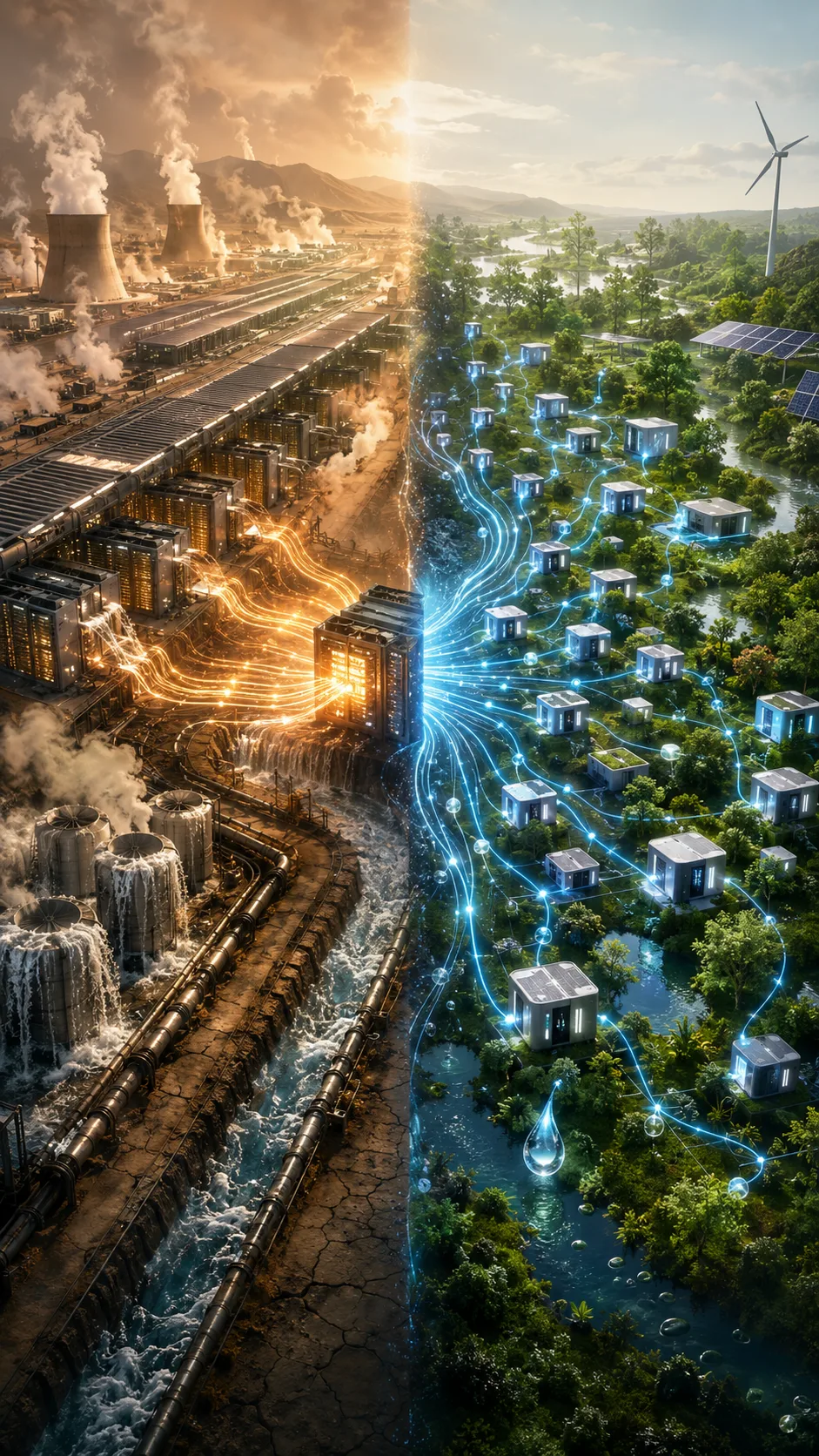
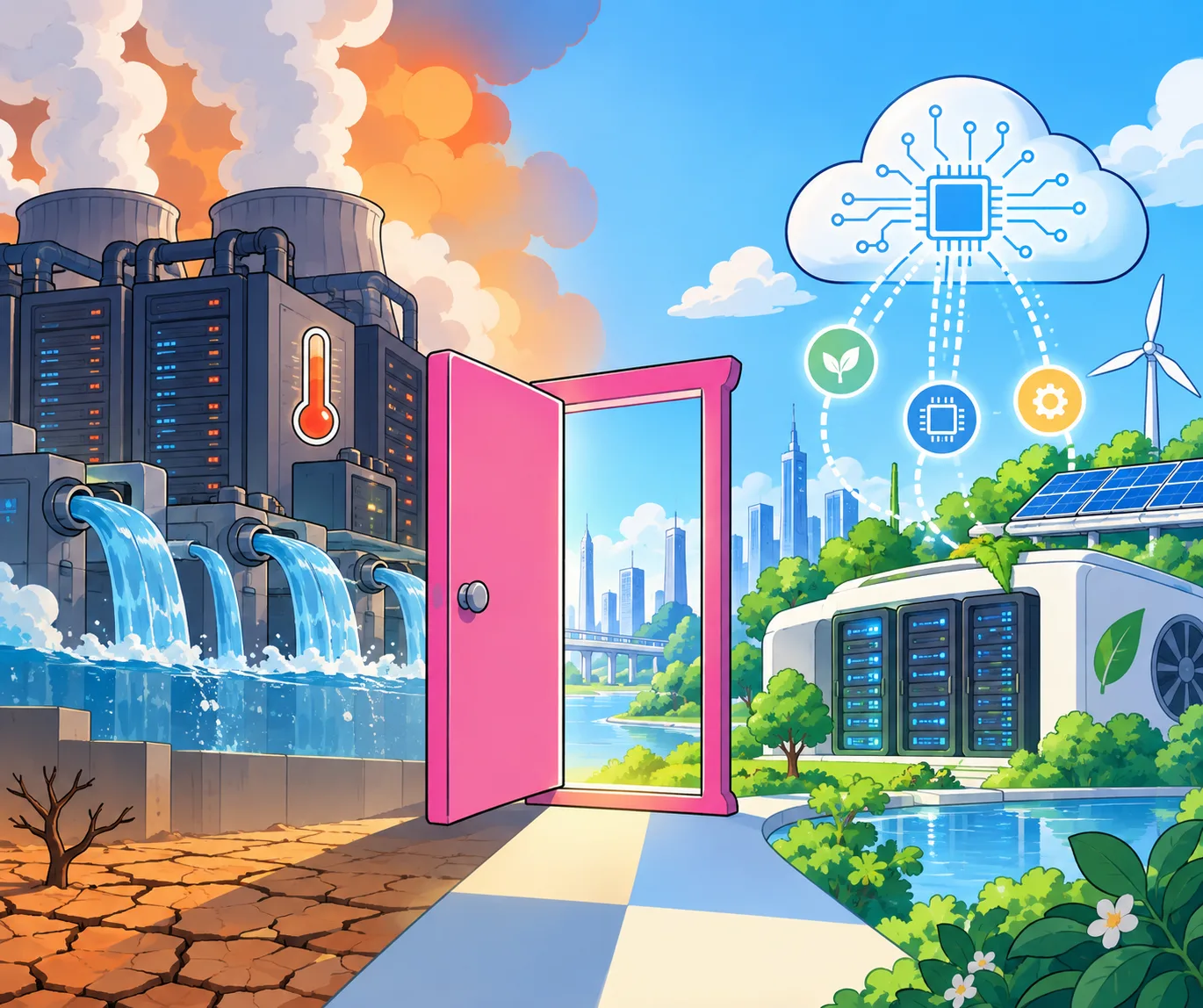
I'm convinced sustainable AI isn't solely about constructing more efficient data centres.
It's equally about preventing unnecessary AI inference from ever reaching the data centre.
That's the direction we're pursuing with NeuralOps:
use AI when intelligence is required, and deterministic systems when it is not.
#ArtificialIntelligence #AgenticAI #NeuralOps #SovereignAI #GreenAI #SustainableAI #DataCentre #AIInfrastructure #SmartRouting #Automation #SME














Ruang pembaca
Apa pendapat anda?
Komen disemak sebelum diterbitkan. Email diperlukan untuk moderasi dan tidak dipaparkan kepada pembaca.
80 के आँकड़े बाकी लेखों से ज़्यादा तर्कसंगत लगे।
The case for once a workflow stabilises is well made.
Solid take on which directly reduces electricity consumption overall.
The framing on for roughly 80–90 90% is better than expected.
The numbers around up to 90%-a 90% make more sense than most posts I read.