
At AINNA, even a couple of years ago, rolling out a Product Listing Title and Description Management System at this scale meant hardware procurement, a full engineering team, months of roadmap alignment, and production-grade infrastructure just to handle data pipelines, image processing, SEO generation, validation logic, and system observability.
Now, AI agents are rewriting how we ship systems like this.
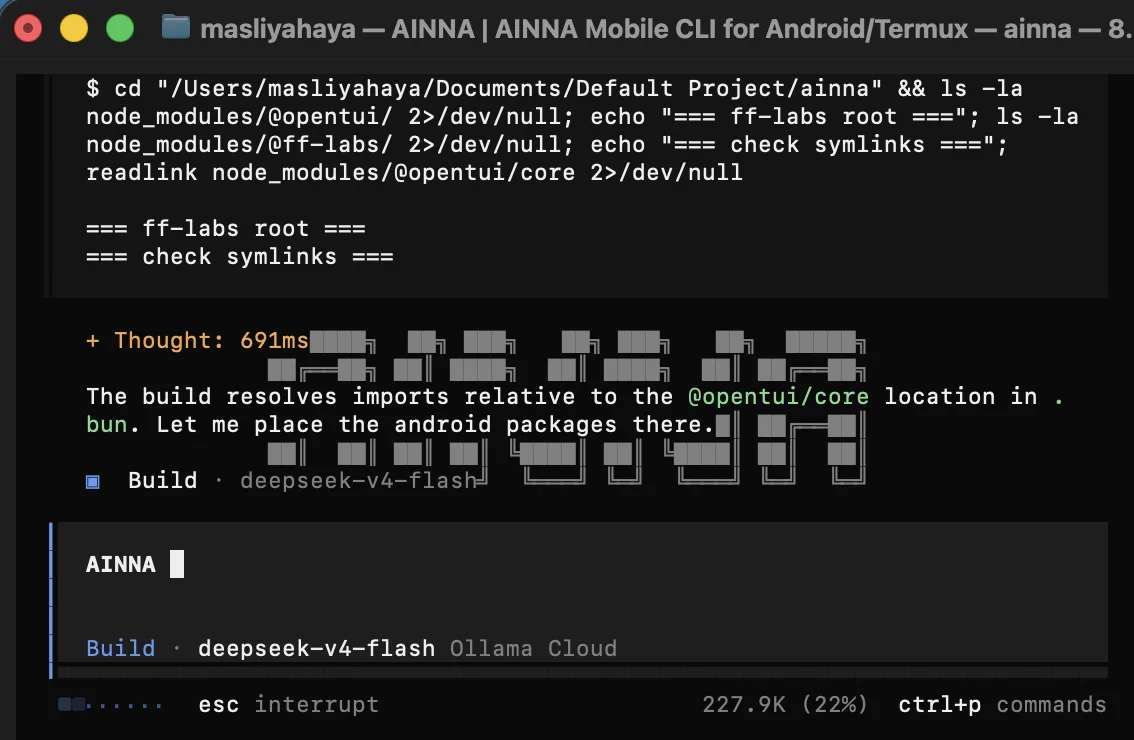
We are building the whole thing on a lightweight VPS-2 GB of RAM, two CPU cores. No large dev team. A single AI agent coordinates the build, calling modular skills, dispatching parallel subagents, and reaching out to cloud AI services only when the workload actually demands it.
The agent is not just a title-and-description generator. It helps refine requirements, writes code, runs workflow tests, validates outputs, catches regressions, watches the VPS health, and iterates on the architecture while the build is still live.
The target is to automate up to 80,000 product listings in 30 days, using batch-driven workflows. Every capability is packaged as an independent skill, so we can upgrade, swap, or debug one part without destabilizing the rest of the stack.
Current deployed skills include:
Batch Import Engine
Title Generation Skill
Description Generation Skill
Image Optimization Skill
Duplicate Detection Skill
Category Auto-Tagging Skill
SEO Batch Generator
VPS Health Monitor
Queue Router
Subagent Executor
Validation, Recovery, Routing, and Automation Control Skills
What gets me as an engineer is not the novelty of the tools; it is the underlying systems principle.
For a long time, the assumption was that bigger problems meant bigger teams, bigger budgets, and beefier hardware. Agents break that model. When you decompose a complex pipeline into small, specialized tasks, a lean stack on modest hardware can deliver outcomes that used to need a whole department.
The same idea scales beyond this build. Real progress rarely comes from one massive push. It comes from splitting the system into manageable components, improving each one continuously, and letting small gains compound.
The tools will keep evolving, but that principle is what actually keeps systems running in the field.















Ruang pembaca
Apa pendapat anda?
Komen baharu dihantar untuk semakan terlebih dahulu. Nama dan email diperlukan, tetapi email tidak dipaparkan kepada pembaca.
Short and clear. writes code, runs workflow tests is worth sending to my team.
I do not fully buy recovery, routing, and automation control yet, but it is a fair argument. Need to read this part again.
Not sure I agree with image processing, SEO generation, validation, but the rest holds up.
Me gustó la parte de 2 porque no es demasiado teórica.
Clearer than the decks I usually get on a lightweight VPS-2 2 GB.
The figures on AI agents are rewriting make more sense than most posts.
2 - itu dah ringkasan artikel ni.
Worth reading just for validates outputs, catches regressions.
This is where watches the VPS health finally makes sense. Still thinking this one through.
先存起来,主要是为了2。
The bit about listings in 3 30 is what I keep coming back to.
I read this twice. months of roadmap alignment is the part that stuck.
Useful. We are handling swap, or debug right now.
First piece that handles calling modular skills, dispatching parallel honestly.
I have watched two CPU cores go wrong in practice. Good to see it written down.