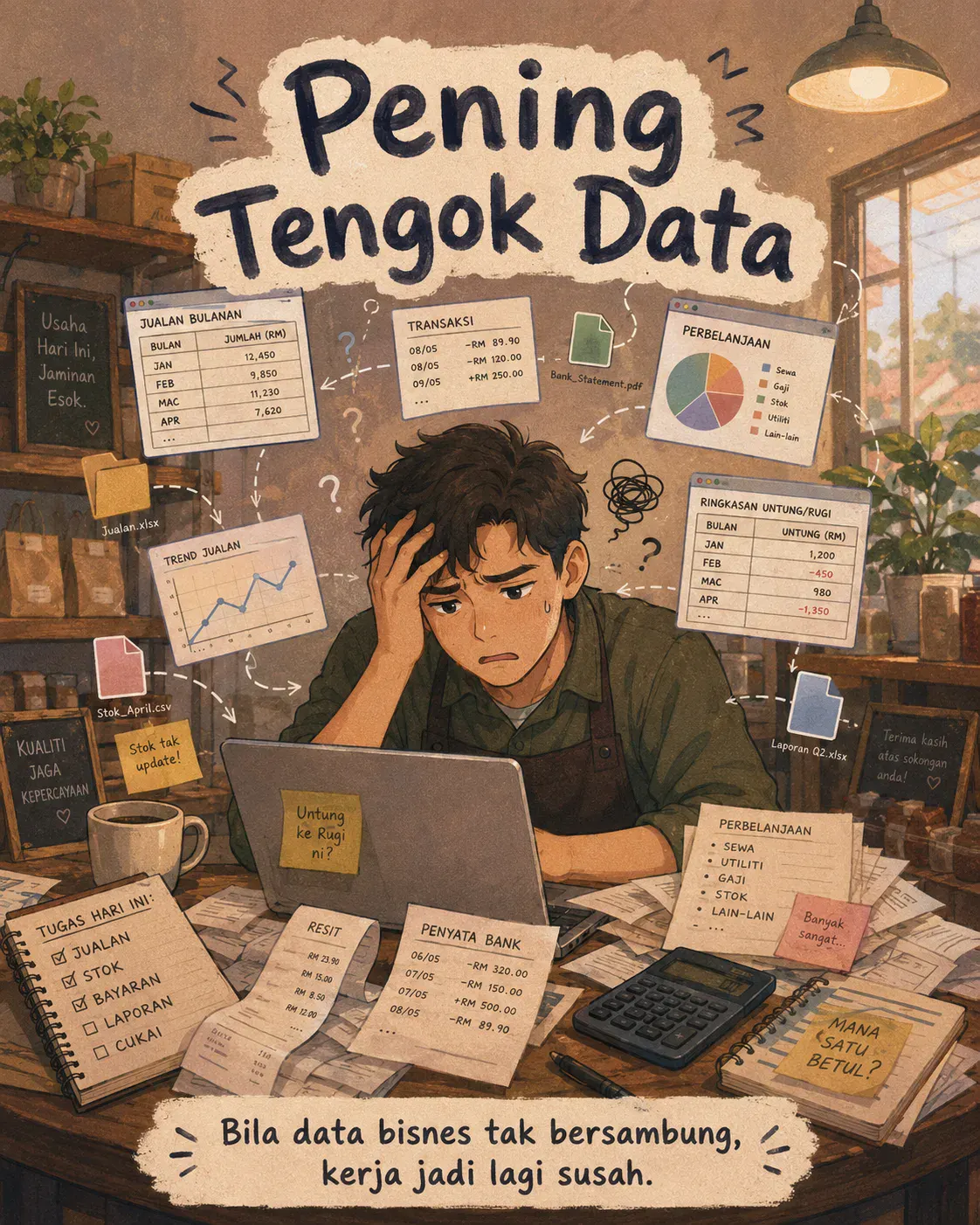
From a systems-integration standpoint, the biggest limitation most SMEs face is not data scarcity. It is that their data lives in disconnected sources, in unstructured formats, and is not normalized enough to drive daily operational decisions.
Take the bank statement. In theory, it should be a first-class input to the business-logic layer: cash-flow forecasting, transaction monitoring, sales reconciliation, expense tracking, and a real-time view of financial state. In practice, it is just another messy feed.
Every bank emits its own format. In the field we see PDFs, XLS exports, CSV dumps, scanned images, password-locked files, and inconsistent layouts. Some are machine-readable; others are visual documents that need OCR and layout extraction before any parser can touch them.
So the data exists, but it is not ingestion-ready. Someone still has to clean, transpose, reconcile debits and credits, validate running balances, and sometimes reconstruct transaction records by hand before the ledger makes sense.
That gap between raw banking feeds and business planning is what breaks cash-flow visibility. When the ingestion layer has no standardized schema, dashboards lag, alerts miss, and owners fall back to spreadsheets and intuition.
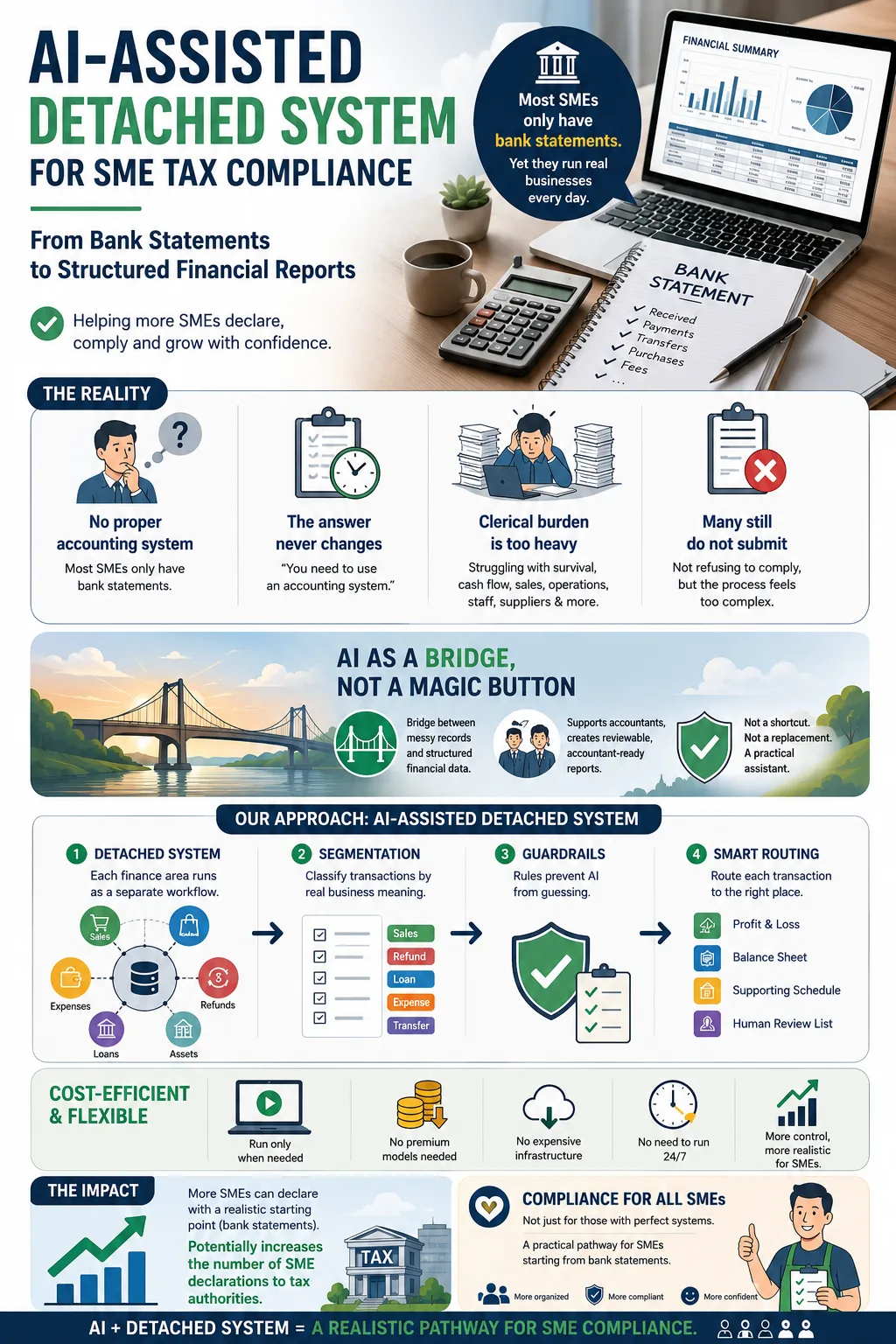
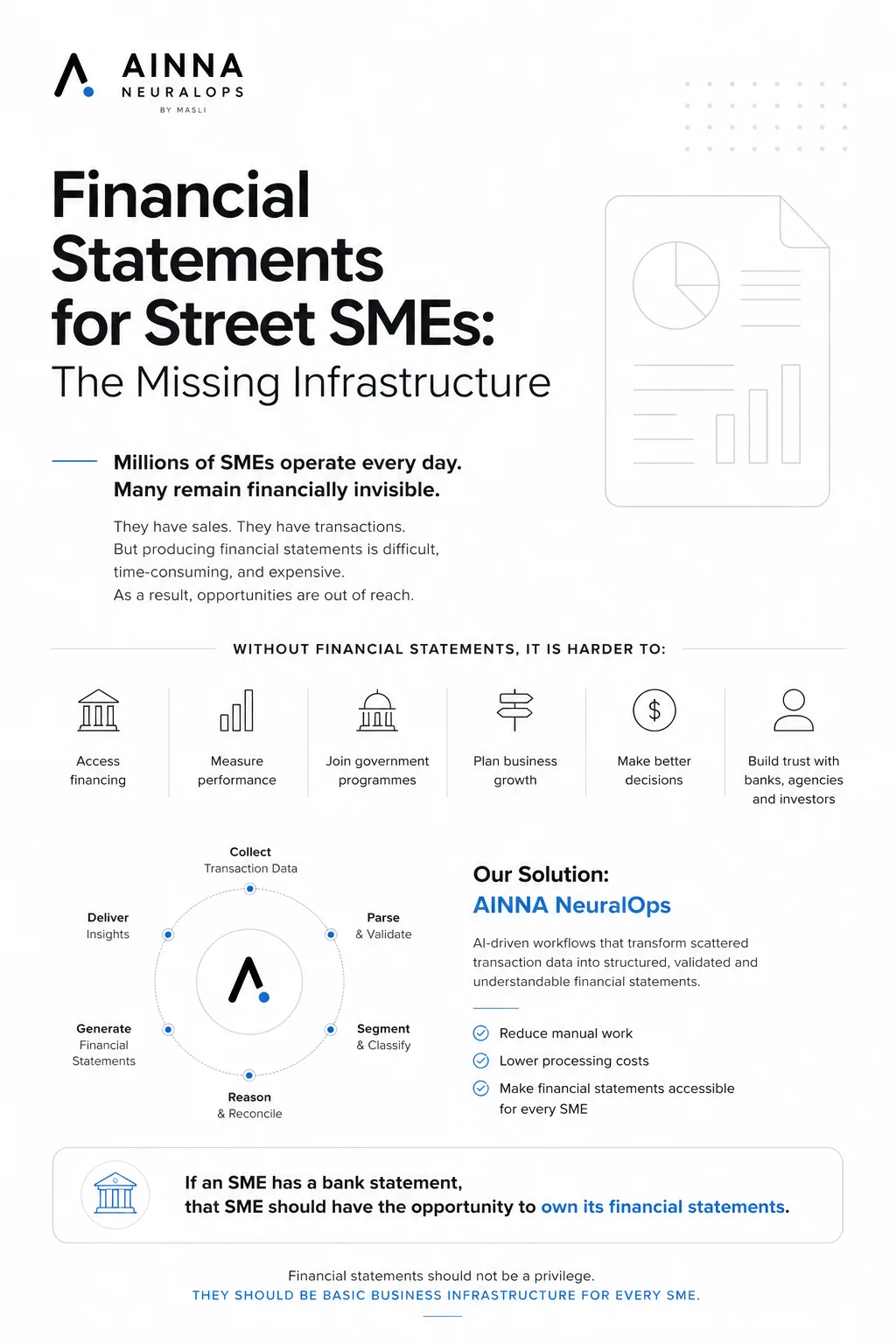
This is where a detached parsing service makes sense. Upload PDF, XLS, or CSV; the service normalizes it into a clean transaction schema that downstream validators, analytics, and export jobs can consume reliably. At AINNA, we treat bank statements the same way we treat sensor or device telemetry: as raw feeds that must be normalized before any AI or downstream business logic can consume them.
Architecturally, you do not route everything through an LLM or black-box model. Start with deterministic, rule-based parsers for known schemas. Reserve AI inference for unknown formats, layout drift, or low-confidence extractions. That keeps latency down, cost low, behavior explainable, and audits straightforward.
SMEs do not need theater-grade AI. They need a robust ingestion pipeline that answers simple questions accurately: what came in, what went out, what is the real balance, and what is the trend. A detached parser that handles format chaos and emits structured records does exactly that.
#SME #BankStatement #DataParsing #Accounting #Automation #AI #DetachedSystem #DigitalTransformation #CashFlow #Ainna















Ruang pembaca
Apa pendapat anda?
Komen baharu dihantar untuk semakan terlebih dahulu. Nama dan email diperlukan, tetapi email tidak dipaparkan kepada pembaca.
I have watched dashboards lag, alerts miss go wrong in practice. Good to see it written down.
Worth reading for sales reconciliation, expense tracking alone.
Clearer than the vendor decks I get about reserve AI inference for unknown. Need to read this part again.
The framing around cost low, behavior explainable is better than I expected.
この記事は上司に共有したい部分です。
Whoever wrote this actually did the work on upload PDF, XLS, or CSV.
This is where XLS exports, CSV dumps, scanned finally clicks.
Nice one. Someone still has to clean alone worth the read.
Slightly disagree on transpose, reconcile debits and credits, but the direction is right.
Angka tentang someone still has to clean lebih masuk akal daripada kebanyakan pos. Patut ditelusuri lagi.
Useful. We are dealing with layout drift, or low-confidence extractions right now.
Not sure I agree with start with deterministic, rule-based parsers, but the rest holds up.
I read this twice. cash-flow forecasting, transaction monitoring is the part that stuck. Have a few questions left here.
validate running balances, and sometimes - that is the whole thing in one line.