
Another day in the field, and the lesson lands the same way it always does:
Working and scalable are two different things.
The moment an internal tool starts serving external users, feature velocity stops being the bottleneck - architecture becomes it.
The live production system stays as the Golden System. Locked down. Stable. Protected from experiments that haven't earned their place yet.
From there, the real work begins: extracting the reusable core away from environment-specific behaviour, isolating user data at the tenant level, enforcing ownership and permissions on every path, and making each process traceable, retryable, and recoverable when it dies mid-flight.
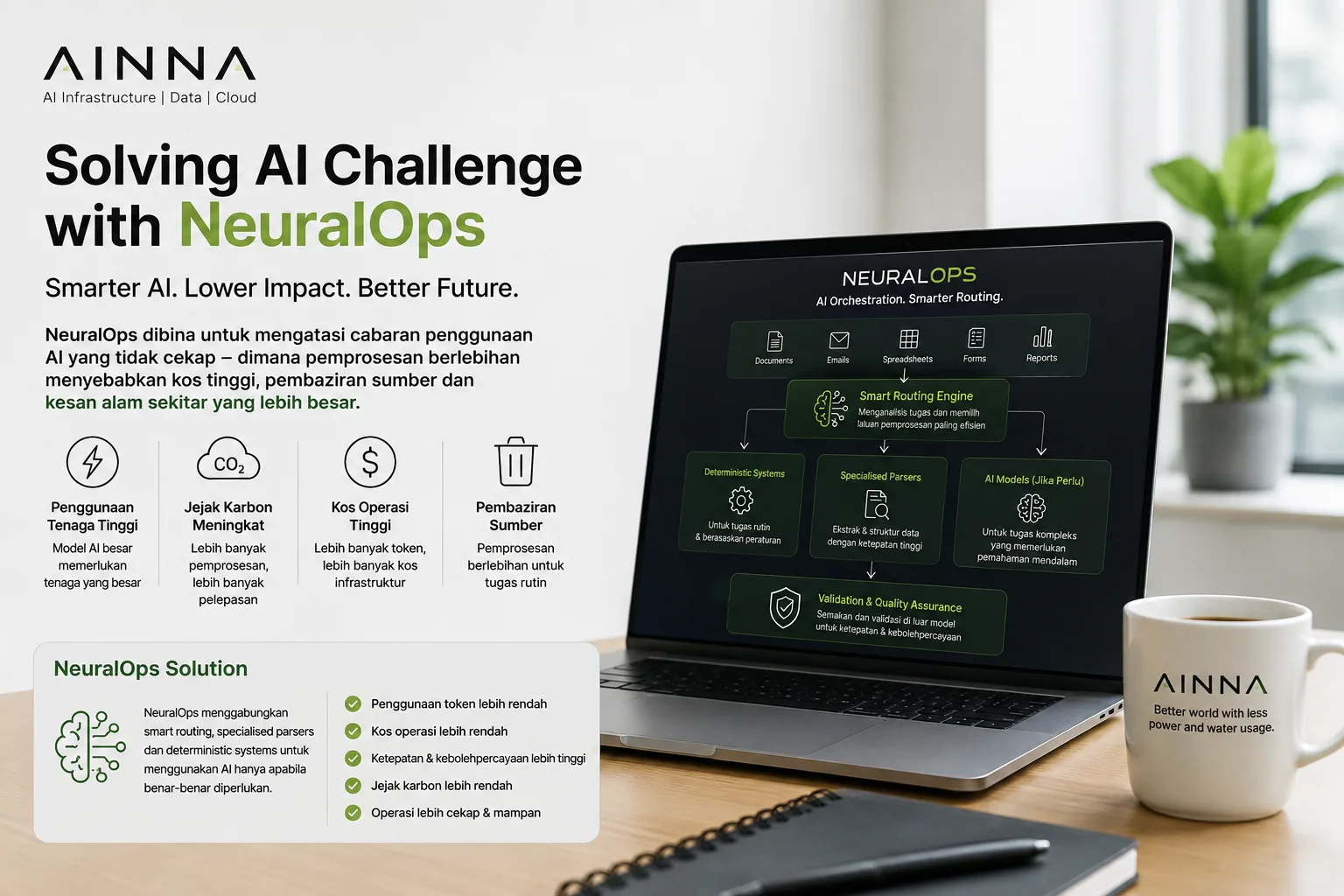
This is where an orchestration layer like NeuralOps earns its keep in production.
Instead of asking one monolith - or one LLM - to reason about everything, each task gets routed to the right target: a reasoning agent, a parser, a deterministic service, a database, a queue. Whatever the job actually needs.
The AI isn't the controller. It's one participant.
It only touches the parts where intelligence is genuinely required. Everything else stays structured, deterministic, and auditable - which is exactly what you want when a job fails at 2 AM and you need to know why.
Run it that way and the operational surface shrinks to the things that actually matter:
core vs adapter boundaries, tenant isolation, job ownership, retry policies, validation, permissions, audit trails, storage boundaries and version control.
The principle hasn't changed, and it's the one that holds up in the field:
Don't scale by copying systems. Scale by separating what's common from what's specific - then orchestrate properly between them.
That's how a working system becomes a reusable platform.
#SystemArchitecture #NeuralOps #AgenticAI #SaaS #SoftwareEngineering #Scalability #AIInfrastructure
















Ruang pembaca
Apa pendapat anda?
Komen baharu dihantar untuk semakan terlebih dahulu. Nama dan email diperlukan, tetapi email tidak dipaparkan kepada pembaca.
Read this twice. environment-specific is what stayed with me.
First piece that handles isolating user data honestly. Still thinking this one through.
Berguna. Kami sedang hadap feature velocity stops being sekarang.
关于这部分的数字比我平时看到的大多数文章靠谱。
Honestly, extracting the reusable core away surprised me.
Whoever wrote this actually did the work on scale by separating what's common.
Good write-up. architecture becomes it.The live production alone was worth the read.
Protected from experiments that haven't is what I would forward to my boss.
Not convinced on tenant isolation, job ownership, retry yet, but fair argument. Need to read this part again.
Worth reading for feature velocity stops being alone.
Not sure I agree with everything else stays structured, but the rest holds up.
Sent this to two people already. mid-flight is why. Have a few questions left here.
Clearer than the vendor decks I get about enforcing ownership and permissions.
Whatever the job actually needs.The - that is the whole thing in one line.