
Flash LLMs are increasingly capable when they are integrated with AI agents, production tools, structured workflows, and enforceable guardrails.
From an engineering perspective, the advantage is no longer determined by model size alone. It depends on how effectively the model is orchestrated inside the complete system.
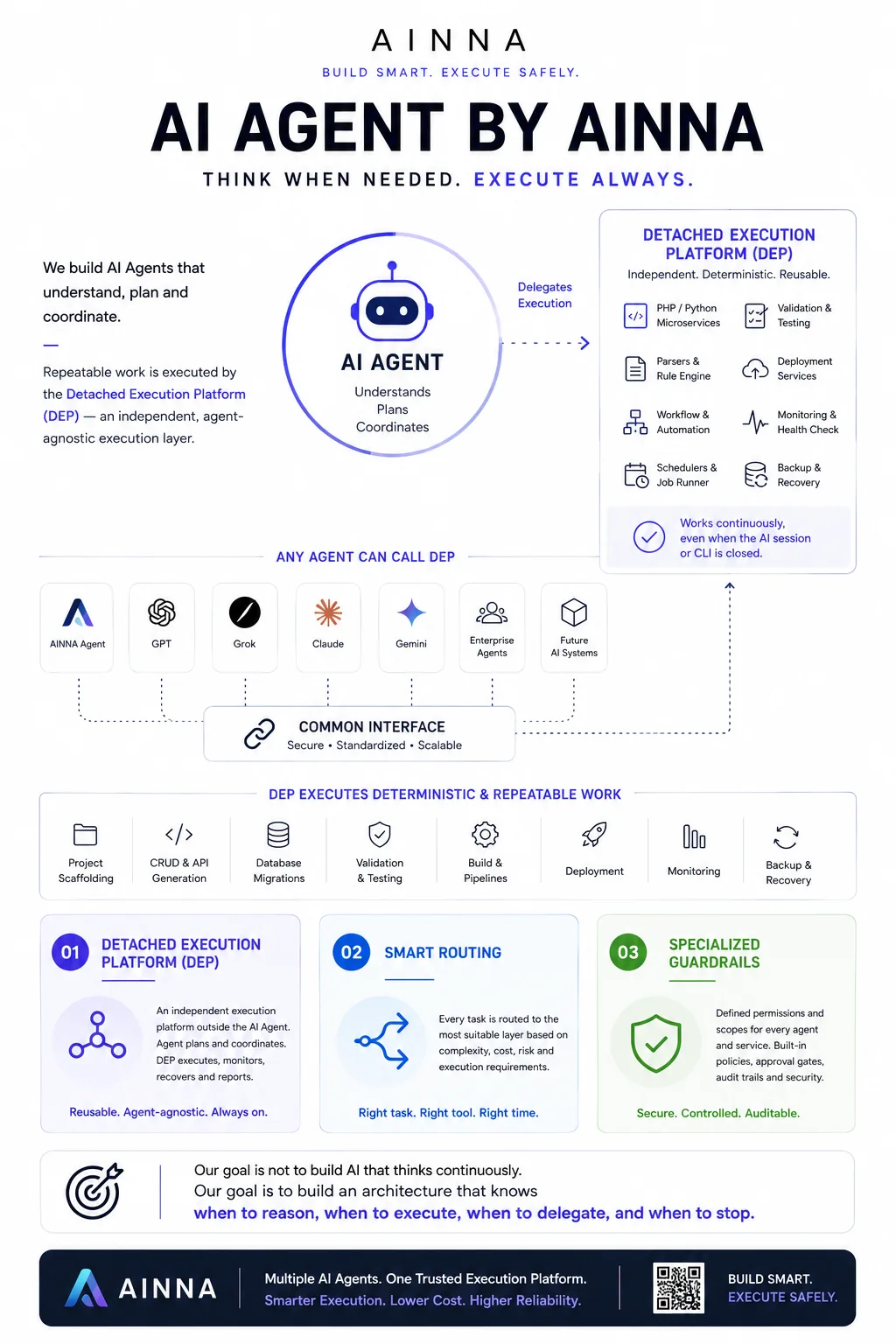
At AINNA, Agent TC works with an AI Agent adapted from a well-known open-source foundation and integrated with AINNA guardrails, permission controls, workflow logic, and operational infrastructure.
The implementation boundary is deliberate: the LLM handles tasks that require reasoning, while deterministic services, parsers, validation layers, and automation handle predictable operations.
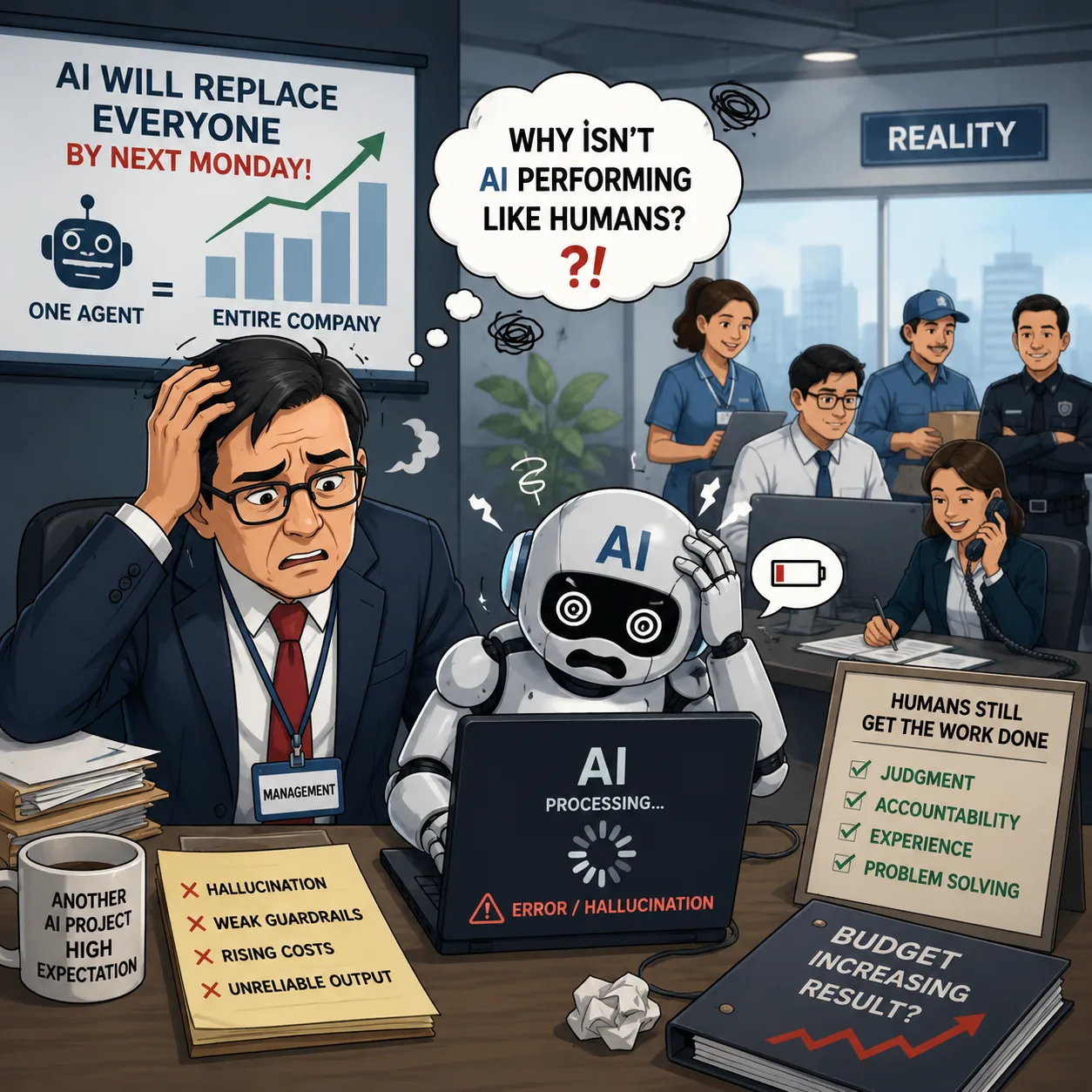
Enterprise AI will not be defined by brute-force compute alone.
It will be defined by architecture that can be deployed, monitored, controlled, and maintained in real operating environments.
#AINNA #NeuralOps #AIAgent #LLM #EnterpriseAI #AIInfrastructure #Automation #Guardrails















Ruang pembaca
Apa pendapat anda?
Komen baharu dihantar untuk semakan terlebih dahulu. Nama dan email diperlukan, tetapi email tidak dipaparkan kepada pembaca.
Saya kurang setuju sikit pasal agent TC works, tapi arah dia betul.
Tulisan pertama yang cerita agent TC works dengan jujur.
Worth reading just for production tools, structured workflows.
Already sent this to two people. permission controls, workflow logic is why. It make the point easier to understand.
The framing around monitored, controlled, and maintained is better than I expected.
Whoever wrote this actually did the work on flash LLMs are increasingly capable.
Bookmarked, mostly for well-known.
इस हिस्से वाले हिस्से ने मुझे सोचने पर मजबूर किया।
Not convinced on brute-force yet, but fair argument.
parsers, validation layers, and automation - sums the whole thing up.
I read this twice. Agent TC works is the part that stuck. Still thinking this one through.