Alhamdulillah.
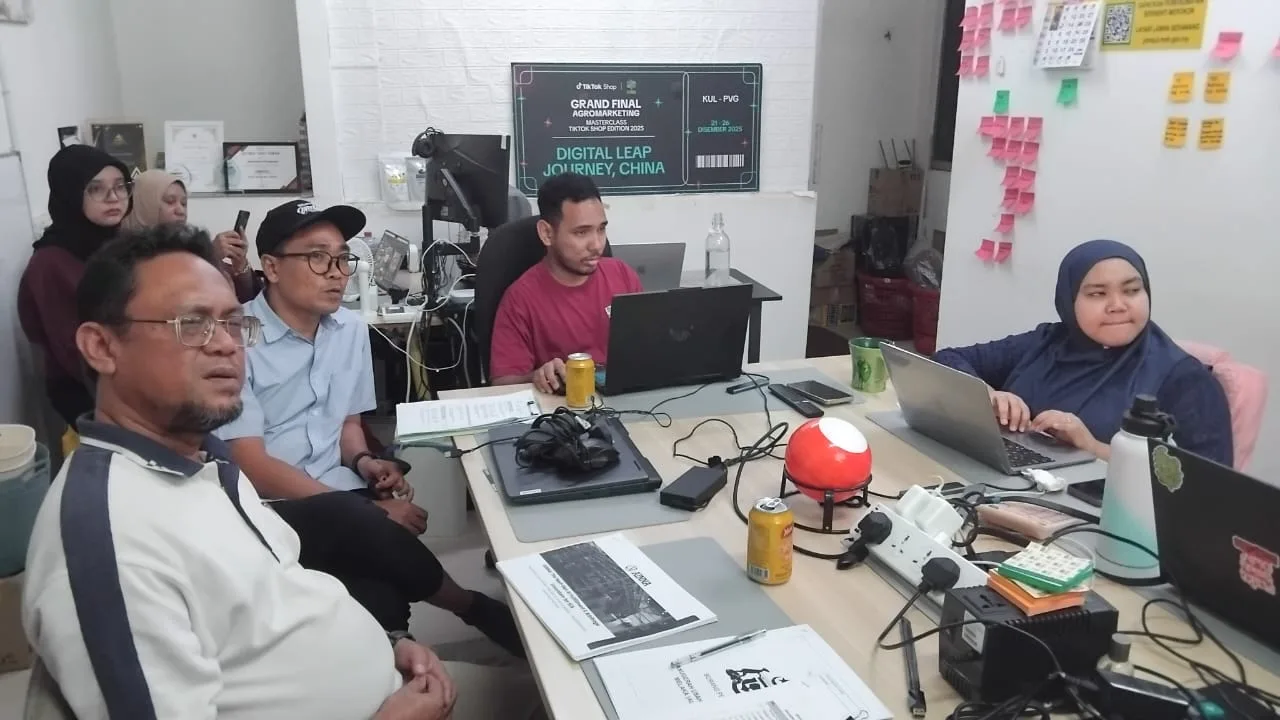
Yesterday, we were honoured to welcome representatives from UPEN Melaka (Melaka State Economic Planning Unit) and SIRIM Melaka to AINNA. We were especially privileged to have the Director of SIRIM Melaka, Mr. Kamarulzaman bin Ahamad Zainudin, join the visit.
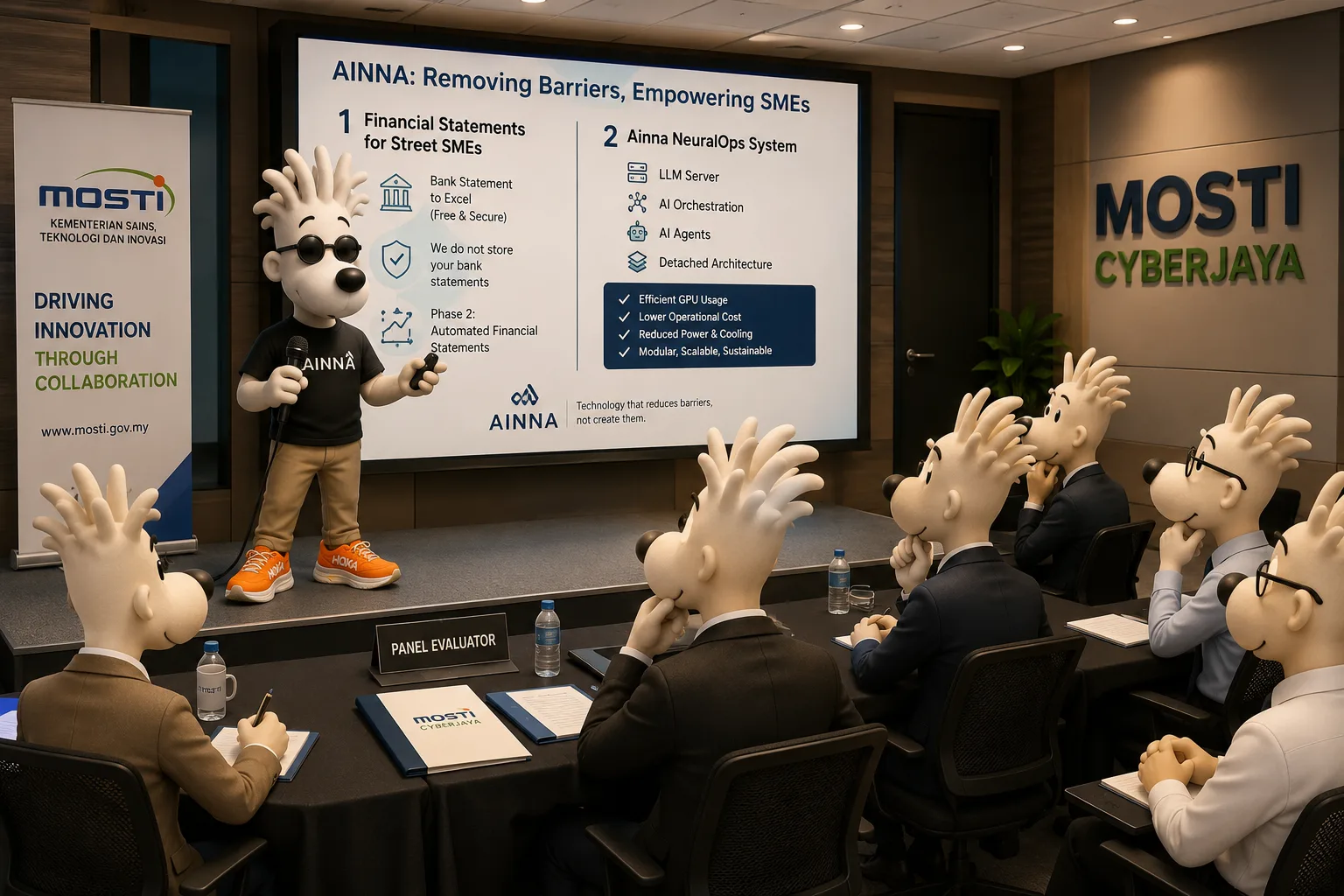
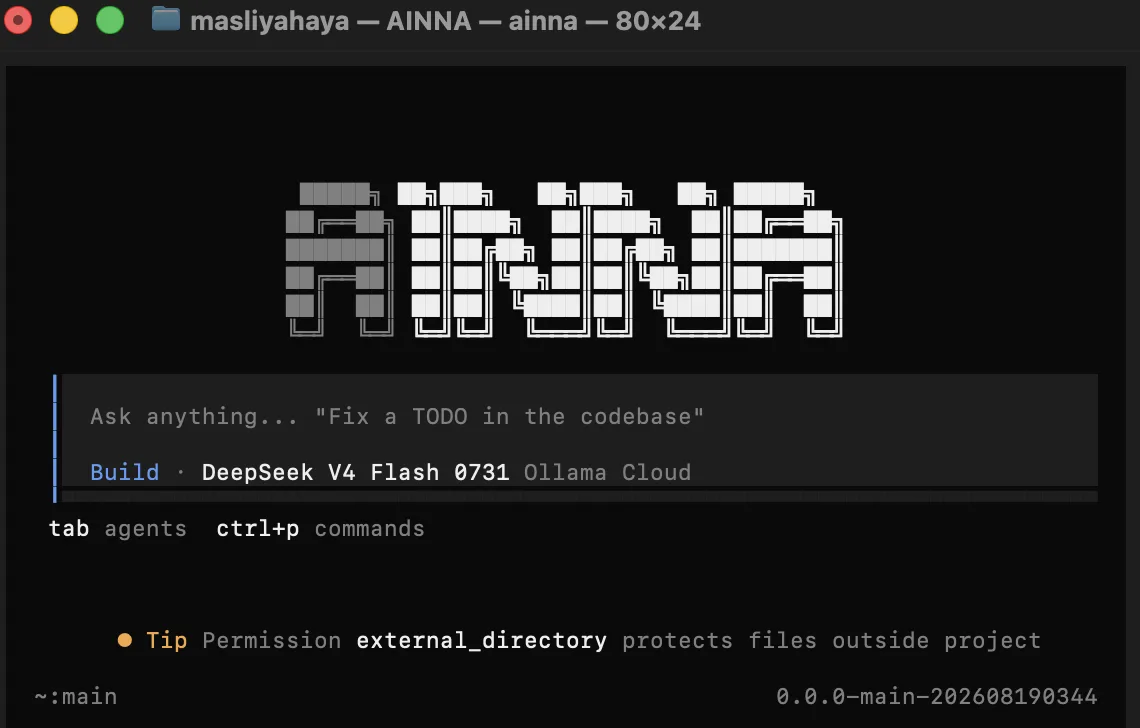
The visit was part of the evaluation process for the Melaka State Entrepreneur Award, where we had the opportunity to present the latest progress of AINNA NeuralOps-our next-generation AI architecture designed to make AI more efficient, reliable and practical for real-world deployment.
What made the session particularly valuable was that it was not a one-way presentation. It evolved into a meaningful two-way technical discussion, enriched by the insights of the SIRIM Director, who brings more than 20 years of leadership experience within SIRIM.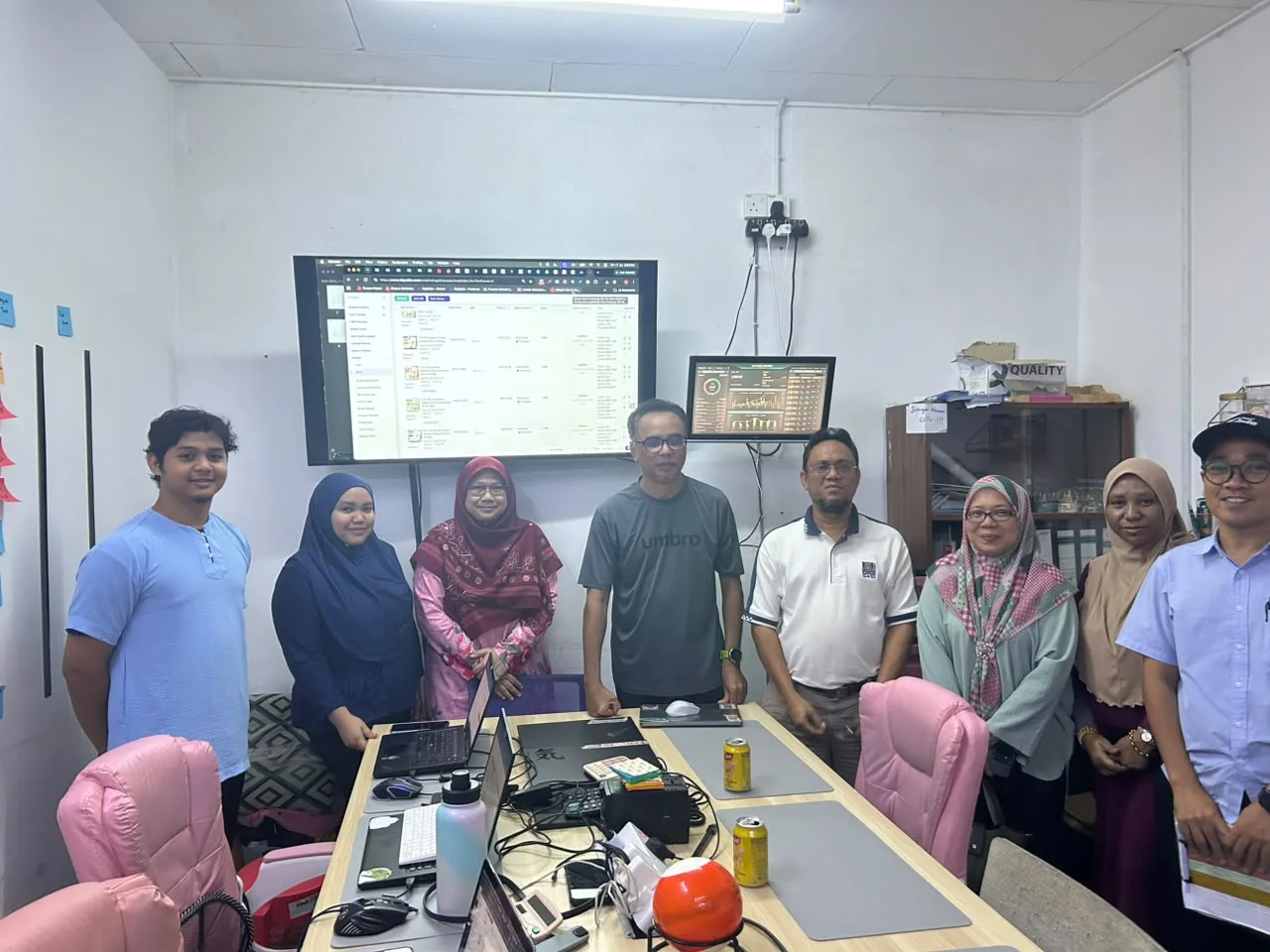
One of the most impactful recommendations was the integration of an Atomic Clock as the trusted time source across every NeuralOps component. Synchronising all detached systems, services, parsers and AI agents to a single high-precision time reference will further strengthen reliability, event consistency, auditability and overall system integrity.
We also demonstrated how the NeuralOps architecture operates with only around 10% of the GPU compute typically required by conventional AI systems for optimised workloads. By combining Detached Systems, Smart Routing, parsers and guardrails, GPU resources are invoked only when they genuinely add value, while deterministic processes run outside the LLM.
This architecture has the potential to reduce GPU-compute energy consumption by up to 90% for applicable workloads. Using a conservative estimate of 1,000 active users averaging 50 AI requests per day, NeuralOps could save approximately 459 kWh of electricity per month, equivalent to reducing around 340 kg of CO₂e emissions every month, or more than 4 tonnes annually. Actual results will vary depending on workload, AI models, infrastructure and energy sources.
For us, the future of AI is not about using bigger models or more GPUs. It is about building smarter architectures that deliver the same or better outcomes with significantly lower cost, lower energy consumption and a much smaller environmental footprint.
Please keep us in your prayers as we continue this journey. Being selected would provide tremendous momentum as we prepare for three major pitching sessions in the coming weeks.
Our sincere appreciation to UPEN Melaka and SIRIM Melaka for the visit, the constructive discussions and the invaluable insights. We look forward to turning these ideas into the next evolution of AINNA NeuralOps.