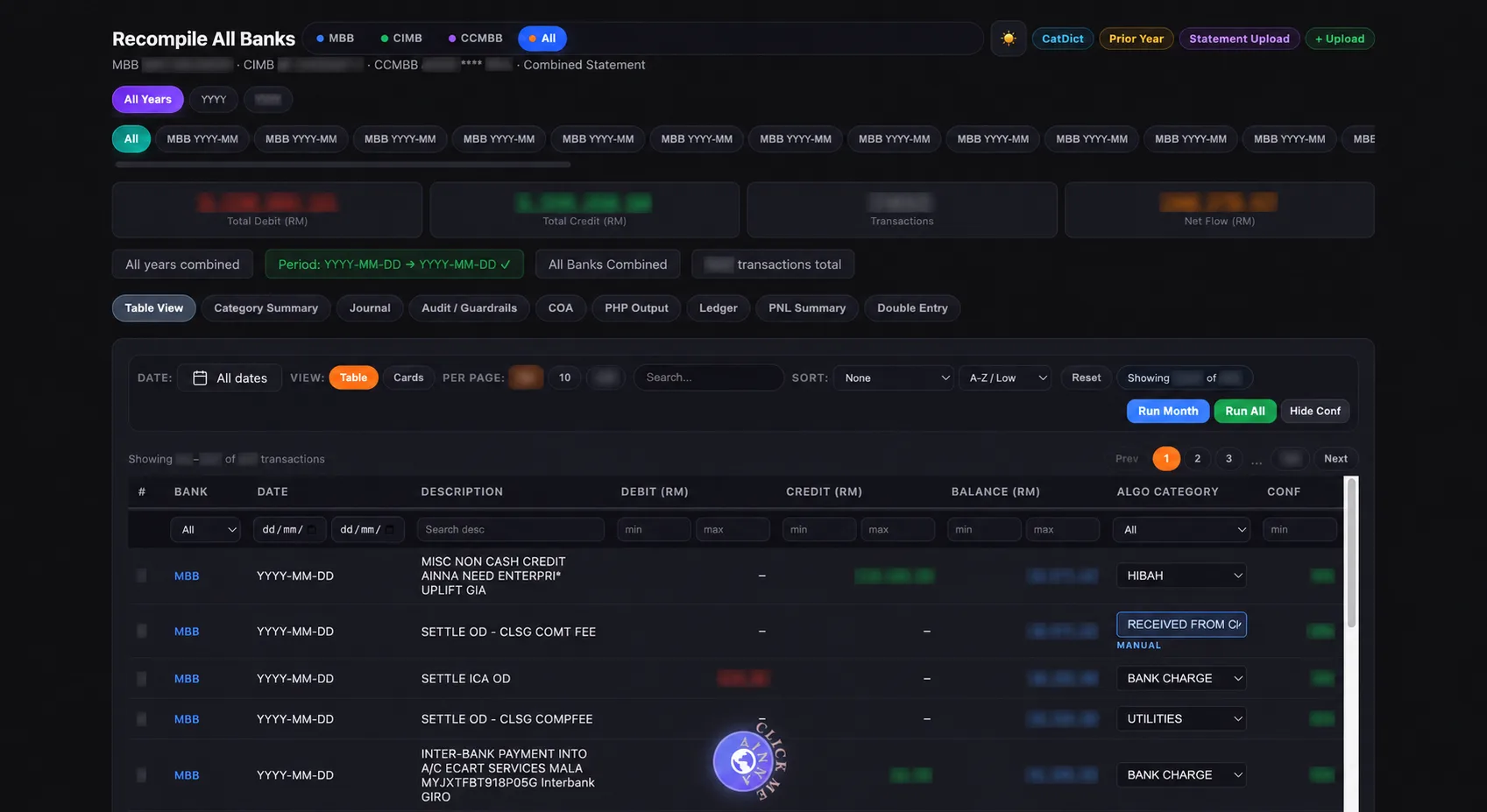
From a finance and accounting standpoint, a dashboard like this is a useful output, but the underlying processing should not be left entirely to AI.
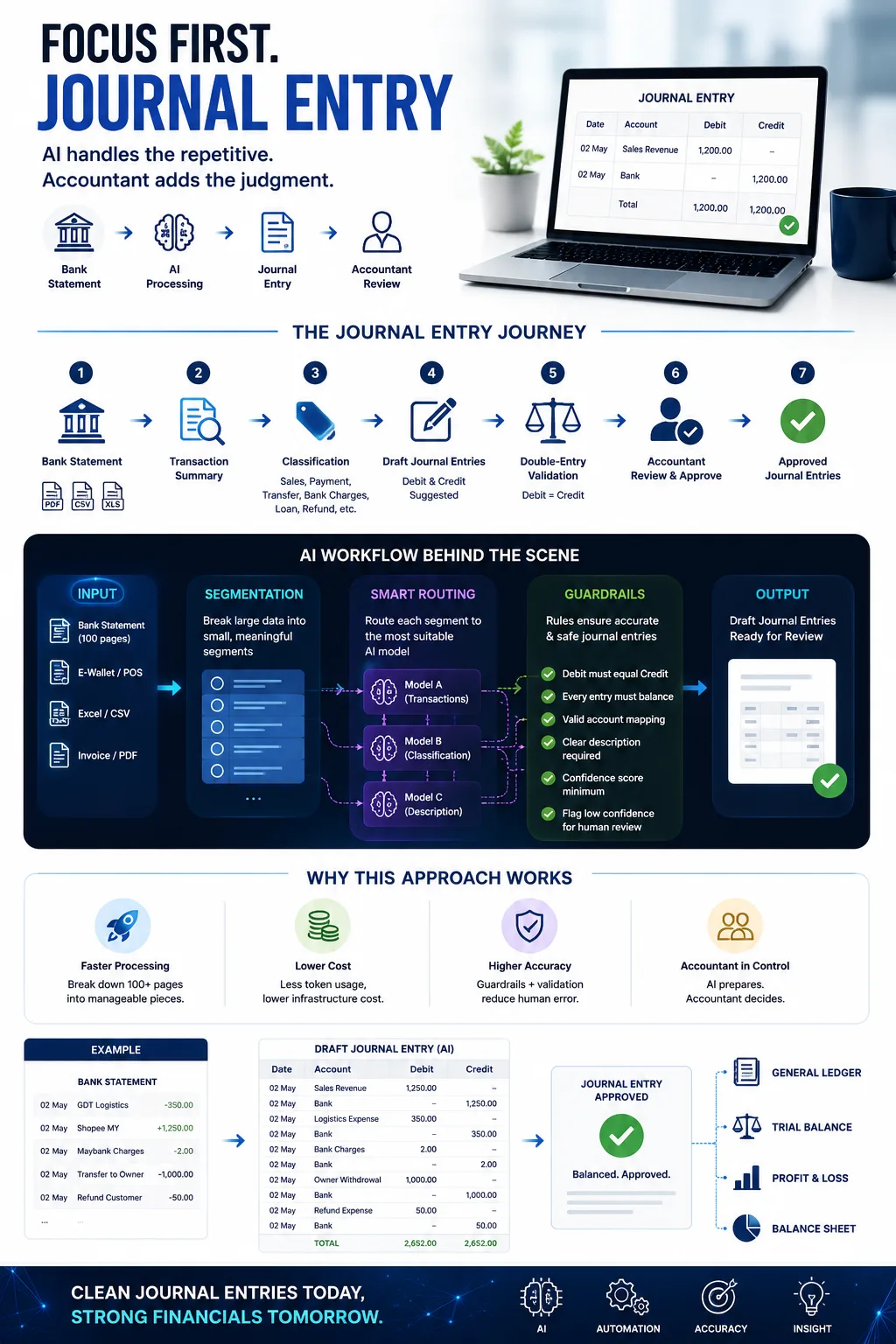
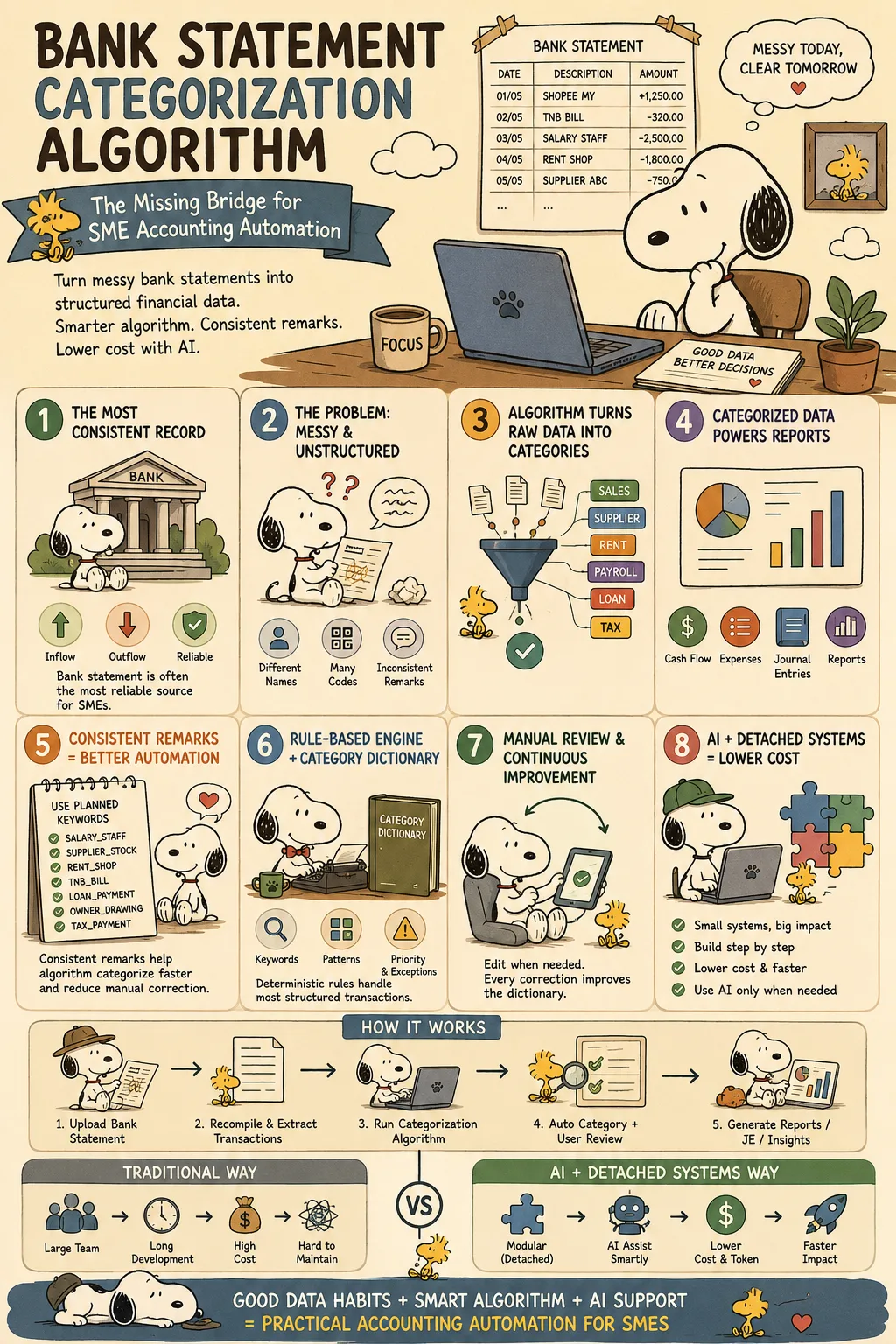
When we convert bank statement PDFs into structured digital records, the more defensible approach is a rule-driven system: fixed schemas, validation rules, automatic reconciliation flags, and a complete audit trail, with AI used only as a fallback for exceptions.
The benefit is clear: every extracted line item can be controlled, reviewed, and reconciled back to the source bank statement, rather than asking an AI to “read everything” and trusting the output without verification.
The real win, however, is in the numbers.
A system like this can be built at a very low AI-assisted development cost - in some cases around USD2 - yet it can save thousands of dollars by reducing manual data entry, reconciliation errors, and month-end close delays for thousands of SMEs.
Compare that with a 100% AI-driven approach for the same task:
Higher processing cost per statement.
Heavier infrastructure requirements.
No guaranteed accuracy.
Harder to audit for tax and compliance.
Harder to scale across multiple entities or banks.
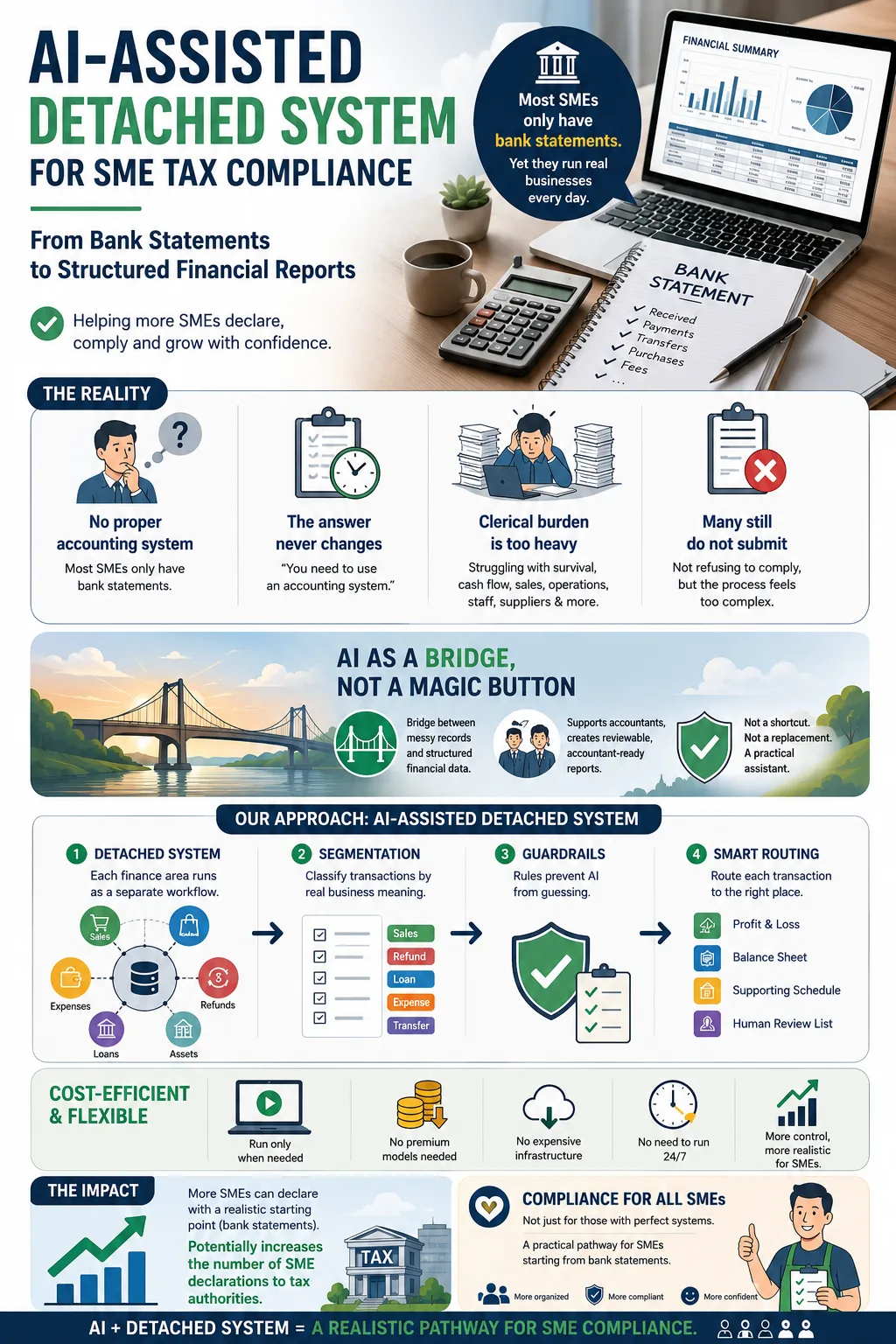
AI should not replace proper accounting system design.
It should help us build better financial operations - cheaper, faster, more accurate, and more useful for real Malaysian SMEs.
For SMEs managing cash flow, payables, and asset records, that is where the real value lies. Not hype. Not FOMO. Just practical technology that delivers measurable operational and financial returns.
Official Cross-Network Resource













Ruang pembaca
Apa pendapat anda?
Komen disemak sebelum diterbitkan. Email diperlukan untuk moderasi dan tidak dipaparkan kepada pembaca.
Orang yang tulis ni memang buat kerja rumah pasal 100%.
100% bagian yang mau saya kirim ke atasan.
The section on just practical technology that delivers is the strongest part for me.
Honestly, harder to audit for tax surprised me.
พูดตรง ๆ 100% ก็น่าสนใจ
Clearer than the vendor decks I get about heavier infrastructure requirements.