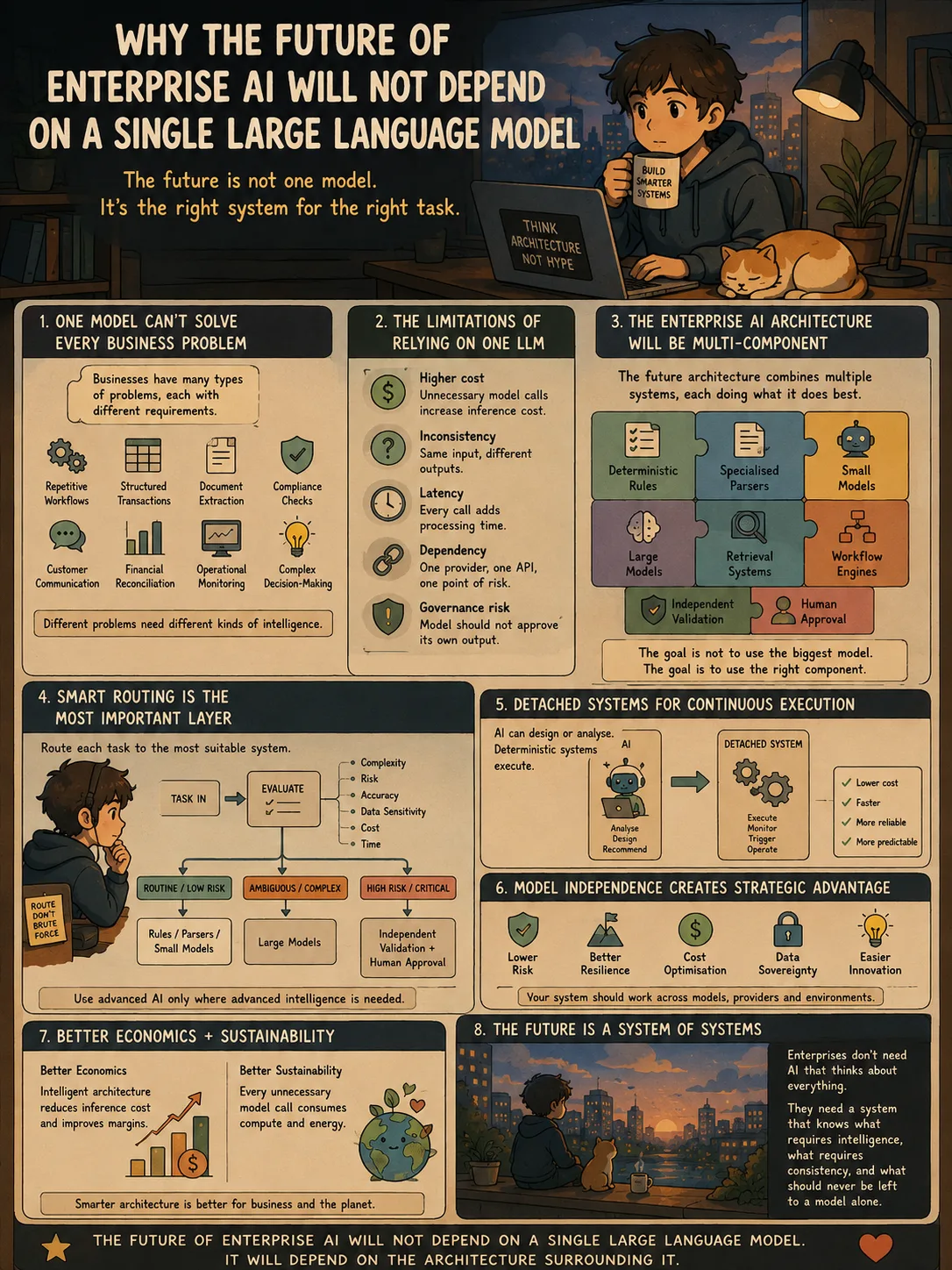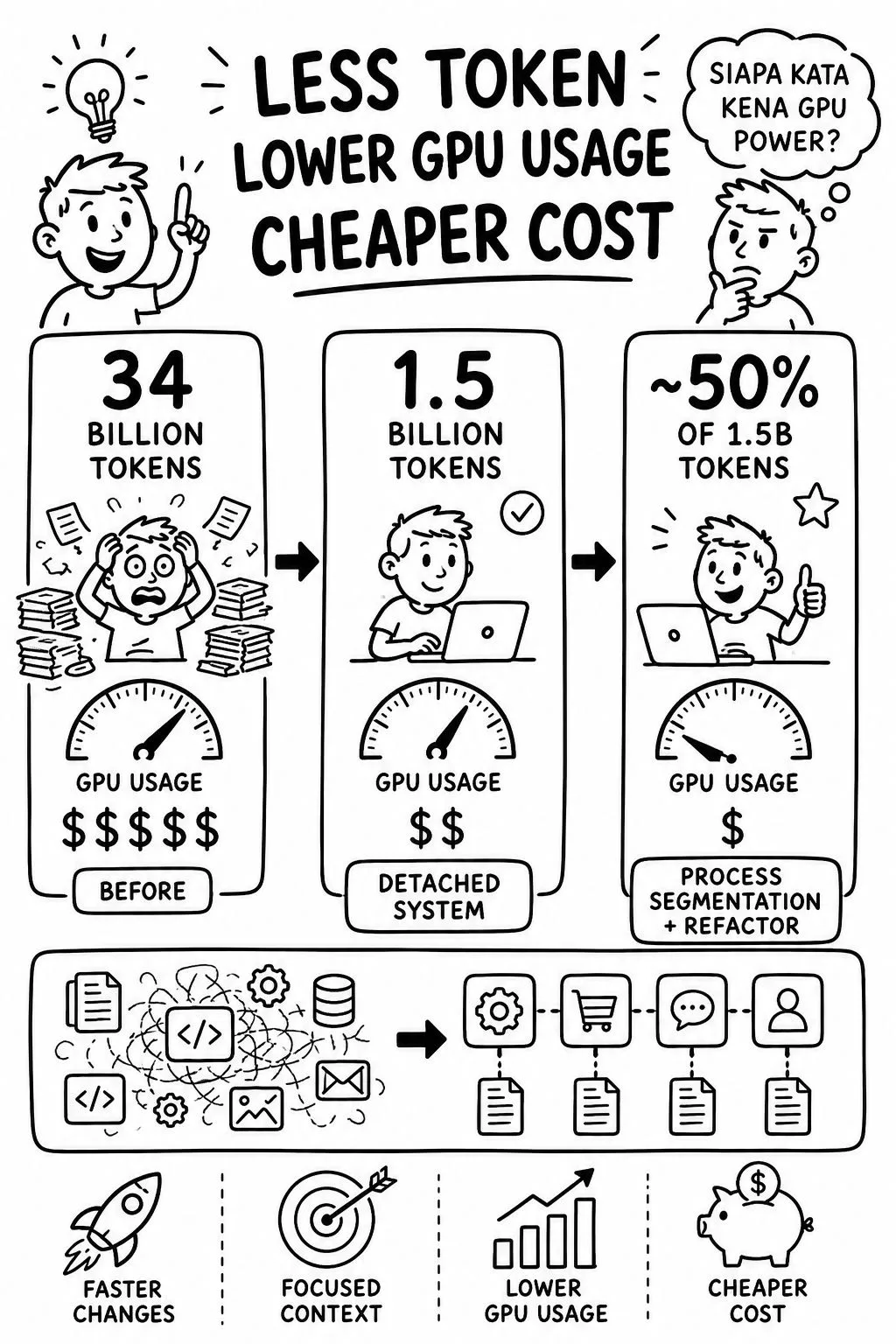
Today, many digital systems are built with a “send everything to AI” mindset. Every request, every classification, every summary, every workflow gets pushed into large models, even when a simple rule, database query, automation script, or lightweight process can do the job faster and cheaper.
That is where Ainna NeuralOps comes in.
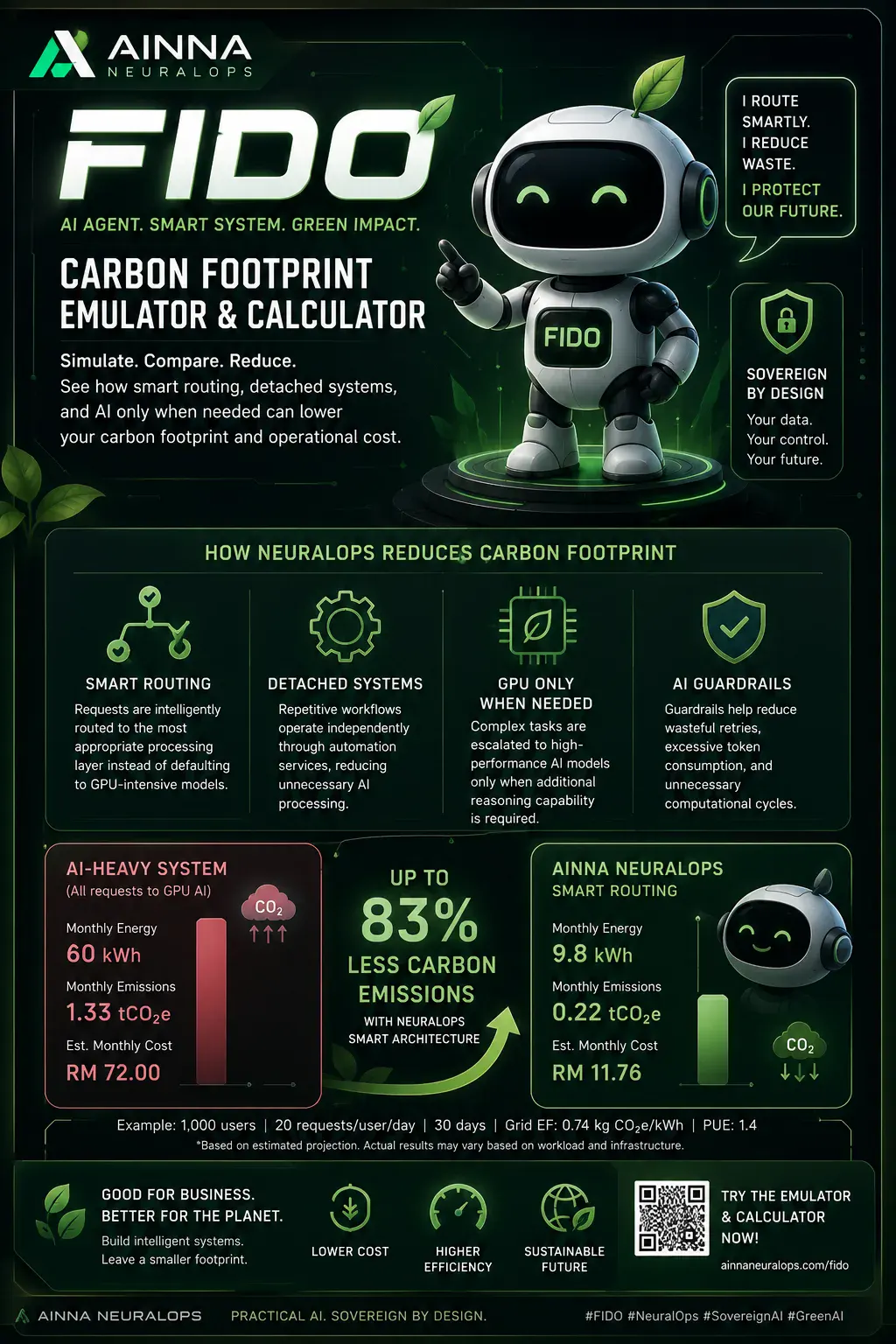
NeuralOps is not about using less AI because we are afraid of AI. It is about using AI with better discipline. Smart routing sends each request to the right processing layer. Detached systems handle repetitive workflows independently. GPU-heavy AI is only used when real reasoning is needed. Guardrails reduce wasteful retries, excessive token usage, failed outputs, and unnecessary compute cycles.
This is why we are building the Ainna NeuralOps Carbon Footprint Emulator & Calculator.
The idea is simple: let users simulate the carbon footprint of different processing architectures. For example, compare a system where 100% of requests go to GPU-heavy AI against a NeuralOps system where most workloads are handled by detached systems, rule-based automation, CPU processing, or lightweight AI before escalating only the complex tasks.
This matters because AI infrastructure is no longer just a software issue. It is becoming an energy issue. The International Energy Agency projects global data centre electricity consumption could more than double to around 945 TWh by 2030, with AI being a major driver of that growth.
So instead of making vague claims like “our AI is green”, the better question is:
Can we measure it? Can we compare it? Can we reduce it by design?
The calculator will estimate total requests, routing percentage, energy use in kWh, carbon footprint in kg CO2e, estimated cost, and reduction percentage between AI-heavy processing and NeuralOps-optimized processing. It will also make the assumptions clear, because this is an estimation tool, not a certified carbon audit.
For SMEs, this approach matters even more. They do not need expensive AI-heavy infrastructure for every simple workflow. Many daily business processes - bank statement parsing, categorization, stock checking, report generation, and data cleaning - can be handled by detached systems first, with AI used only when needed.
That is the future I believe in:
Practical AI. Sovereign control. Lower waste. Better operations.
AI should not just be powerful.
It should be efficient, accountable, and designed with purpose.
Ainna NeuralOps - Practical AI, Sovereign by Design.
#Ainna #NeuralOps #SovereignAI #PracticalAI #CarbonFootprint #GreenAI #ResponsibleAI #AIInfrastructure #DetachedSystem #SmartRouting #SMEInnovation #ESG #SustainableAI
Official Cross-Network Resource