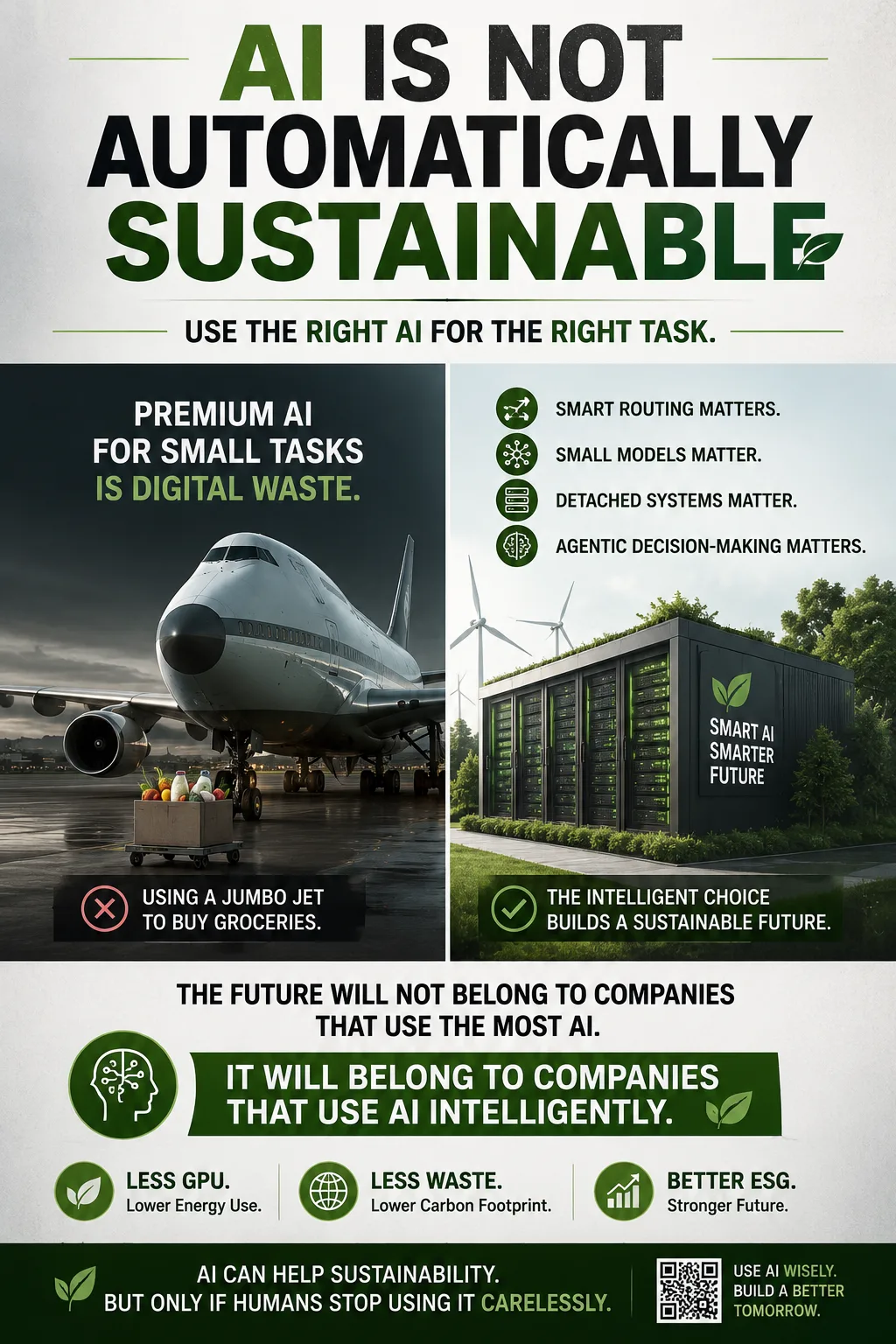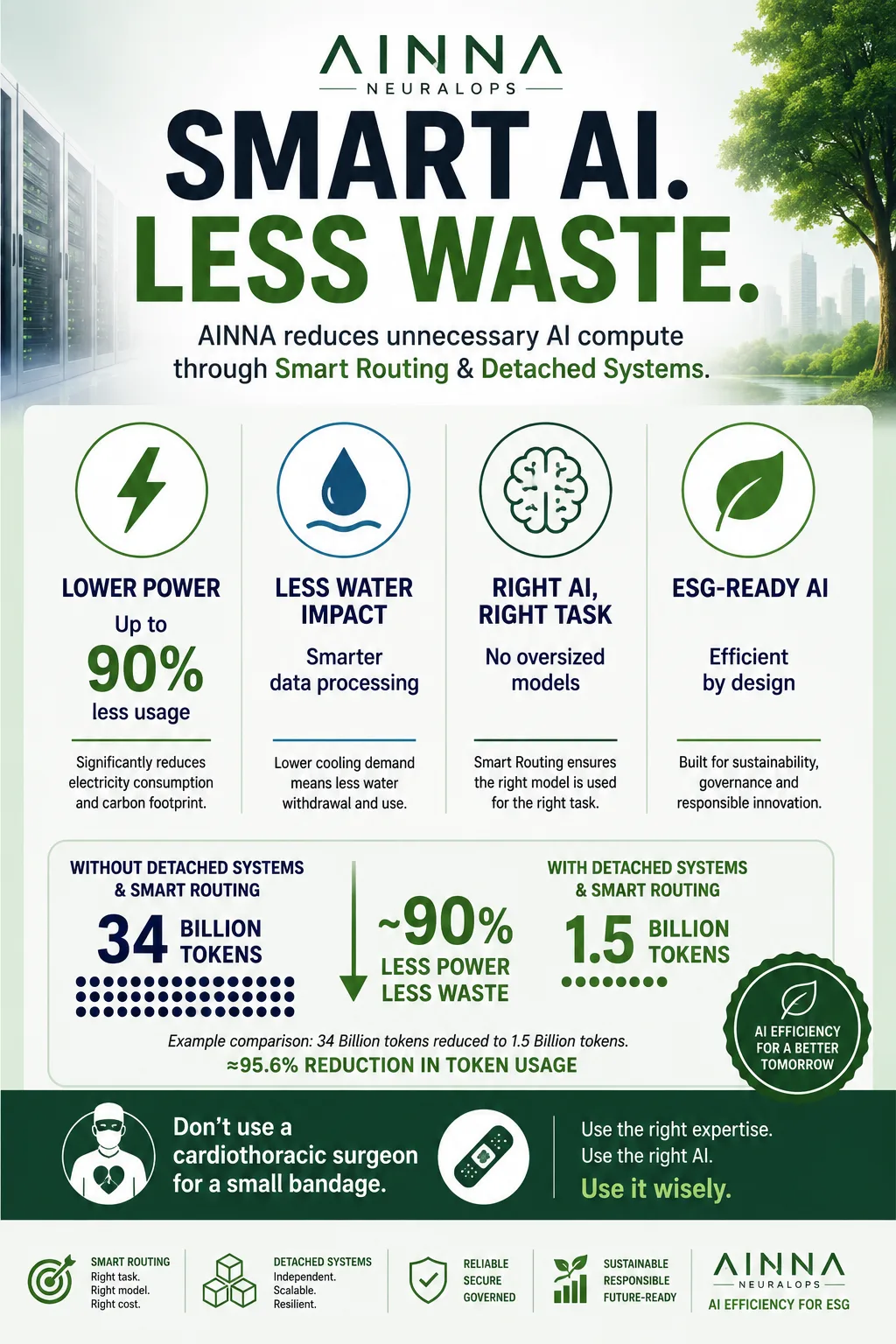
AI should work like healthcare triage. You do not call a cardiothoracic surgeon just to apply a small bandage. The same principle should apply to AI. Not every task needs the largest model, the highest GPU load, or the most expensive compute layer.
This matters because AI is not free from an ESG perspective. The International Energy Agency projects data centre electricity consumption could more than double to around 945 TWh by 2030, driven strongly by AI demand. Data centres also require water for cooling and operational efficiency, which is why major technology companies now report water use, freshwater withdrawal, and replenishment as part of their sustainability commitments.
At AINNA, our belief is simple: the cleanest compute is the compute we never waste. Without Detached Systems and Smart Routing, a workload could consume around 34 billion tokens. With our architecture, the same operational direction can be reduced to around 1.5 billion tokens - a reduction of approximately 95.6% in token usage.
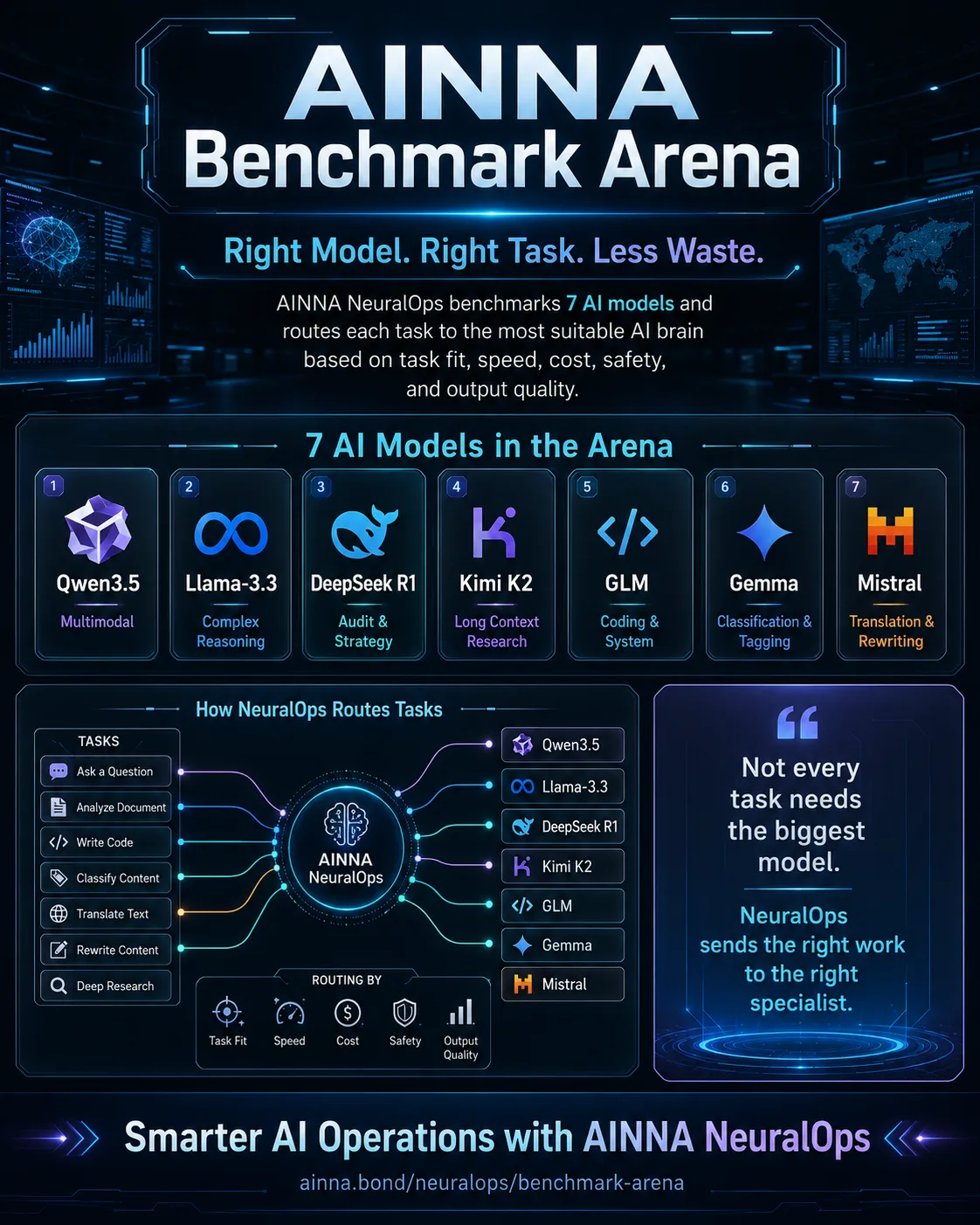
This is why we are confident in targeting around 90% lower power usage as a practical ESG direction. Simple tasks go to lightweight systems. Operational tasks go to specialized agents. Complex reasoning is escalated only when truly required. We do not activate a “cardiothoracic surgeon” for a small bandage.
The future of AI should not be measured only by how much intelligence we can activate, but by how much unnecessary compute we can avoid. Real ESG in AI is not about using AI everywhere. It is about using AI wisely.