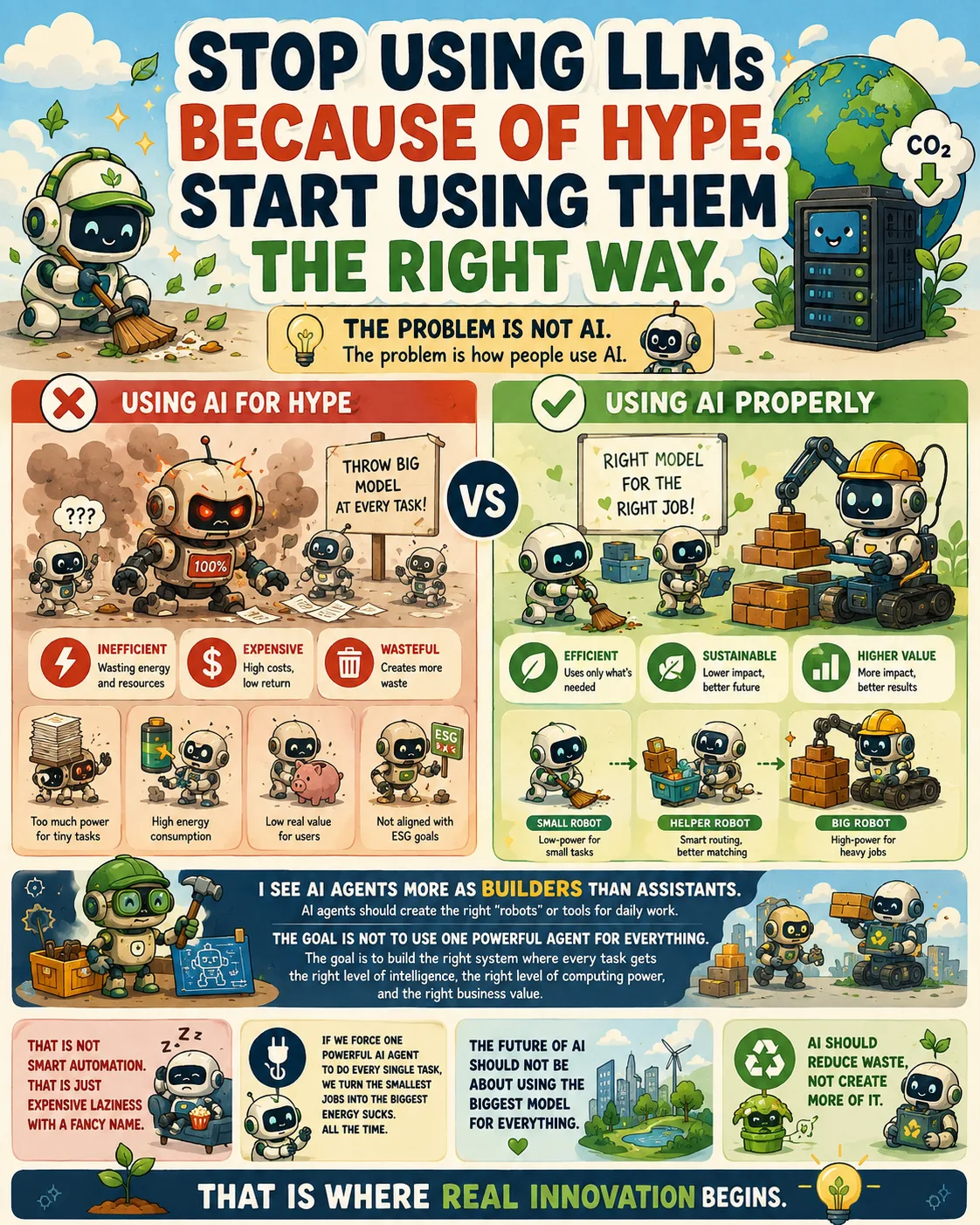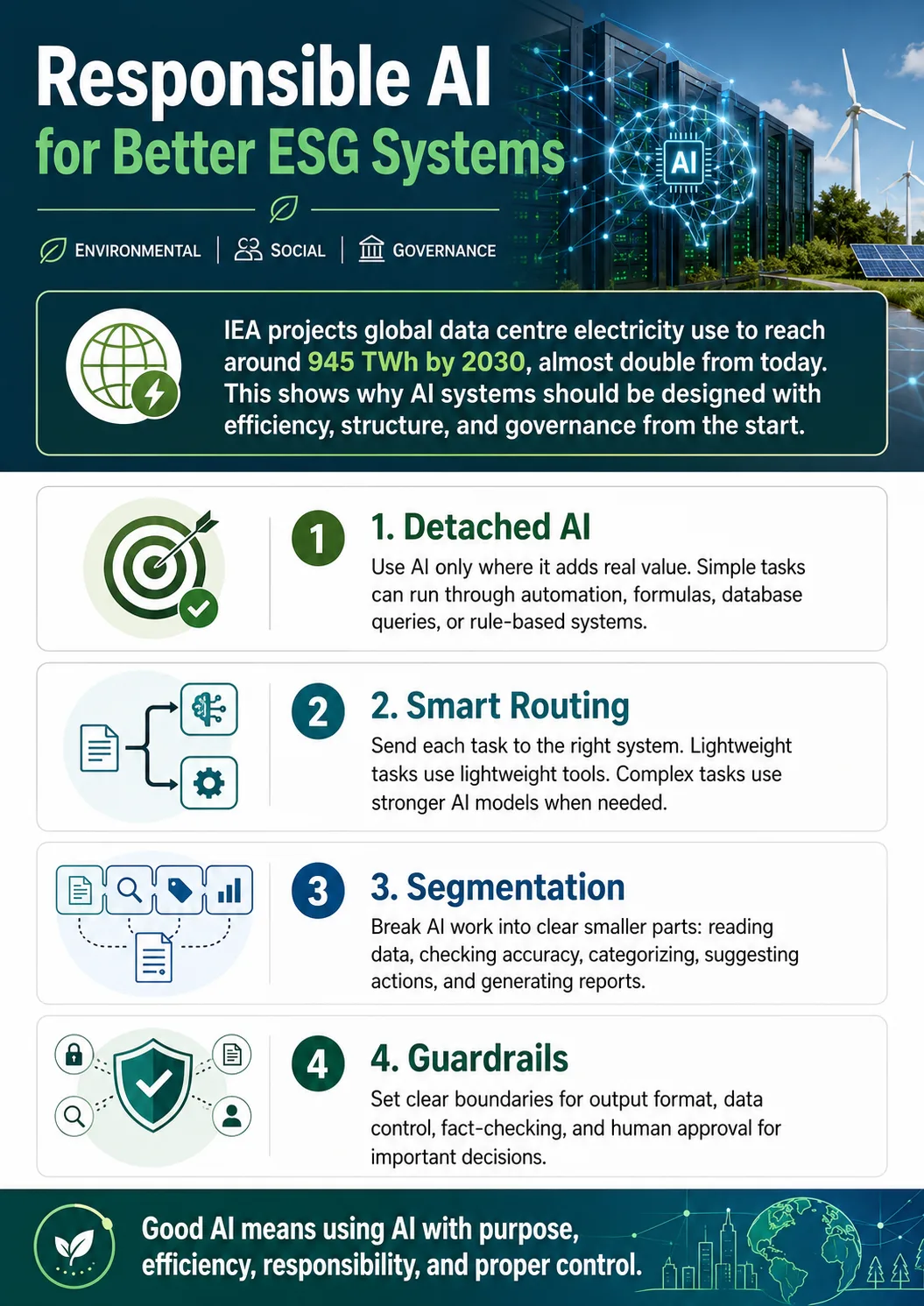
Projected data centre energy use may grow from 415 TWh in 2024 to 945 TWh by 2030, with estimated emissions rising from around 185 Mt CO₂ to 421 Mt CO₂. This shows why AI systems should not only be powerful, but also efficient, structured, and properly controlled.
1. Detached AI
Detached AI means AI should not be attached to every single process. Not every task needs an AI model. Some simple tasks can be handled better using automation, formulas, database queries, or rule-based systems. By using AI only where it adds real value, organizations can reduce unnecessary system load and build a more efficient digital workflow. This supports ESG by promoting smarter resource usage and better operational discipline.
2. Smart Routing
Smart routing means every task should be sent to the right system. Lightweight tasks should use lightweight tools, while complex tasks should only use stronger AI models when needed. This approach helps prevent overuse of high-computing resources and allows the system to operate more efficiently. In an ESG context, smart routing supports better energy efficiency, cost control, and sustainable technology usage.
3. Segmentation
Segmentation means breaking AI work into smaller and clearer parts. Instead of using one large AI system to handle everything, each part can focus on a specific function such as reading data, checking accuracy, categorizing information, suggesting actions, or generating reports. This makes the system easier to monitor, improve, and audit. A segmented AI system is also more transparent, which supports better governance and accountability.
4. Guardrails
Guardrails are the boundaries that keep AI systems controlled and responsible. These can include clear output formats, fact-checking steps, sensitive data controls, and human approval for important decisions. Guardrails help ensure that AI supports human judgment instead of replacing it completely. In ESG, this is important because responsible AI must be safe, explainable, and aligned with proper governance.
Good AI is not about using AI everywhere. Good AI is about using AI with purpose, efficiency, responsibility, and proper control.
Official Cross-Network Resource