Imagine the Minister of Defence of a country using foreign-hosted AI tools every day to draft strategies, analyse scenarios, refine speeches, review policy options, and test decision-making ideas. Over time, even without leaking any classified document, patterns of thinking can emerge. Priorities, assumptions, weaknesses, negotiation style, strategic bias, and decision logic may slowly become predictable to parties outside the country.
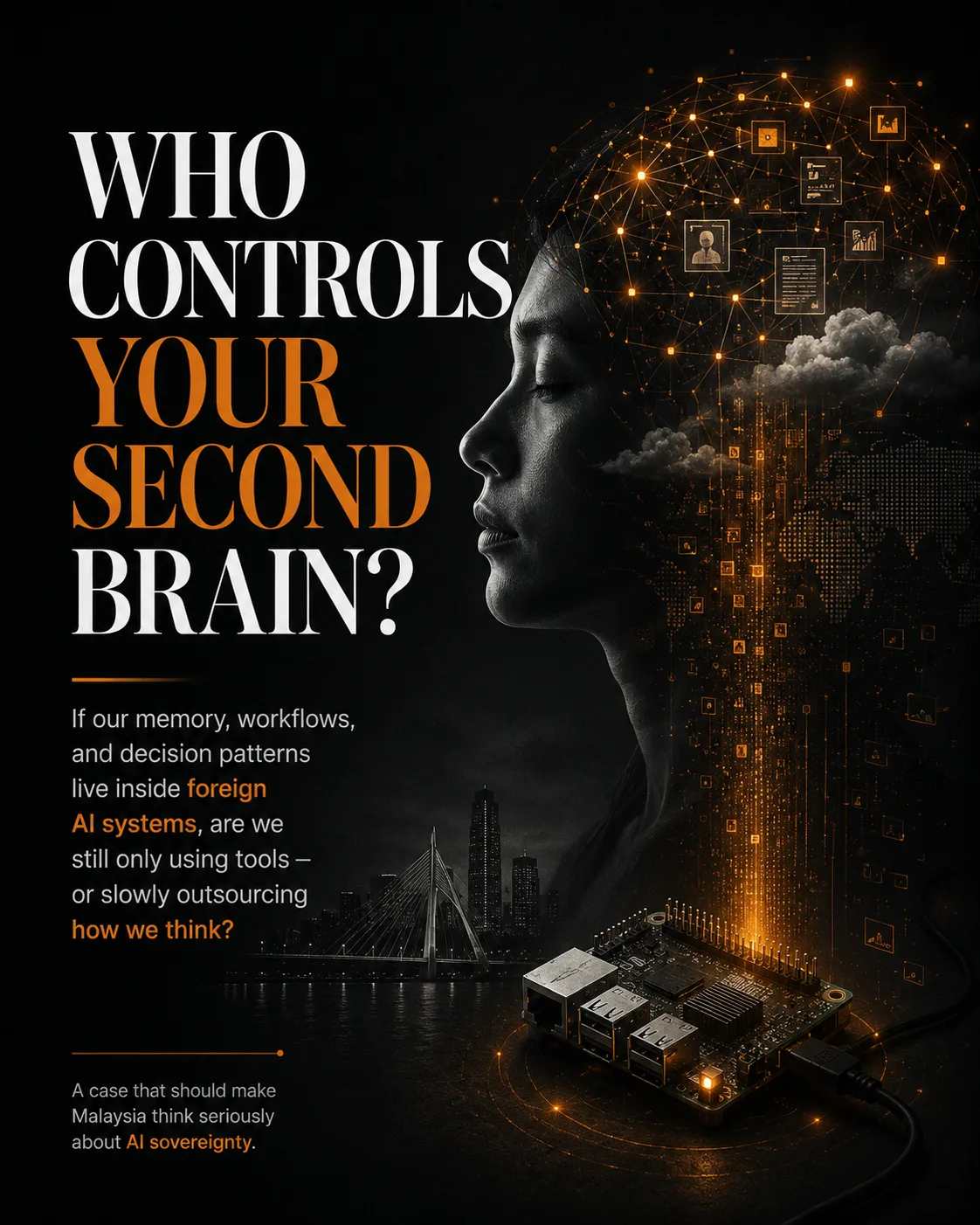
That is the real concern. National sovereignty is not only about protecting files, passwords, or official documents. It is also about protecting the thinking process behind leadership, policy, security, business, and national development. When the intelligence layer is hosted outside our control, the risk is not just data exposure. The deeper risk is the exposure of collective wisdom.
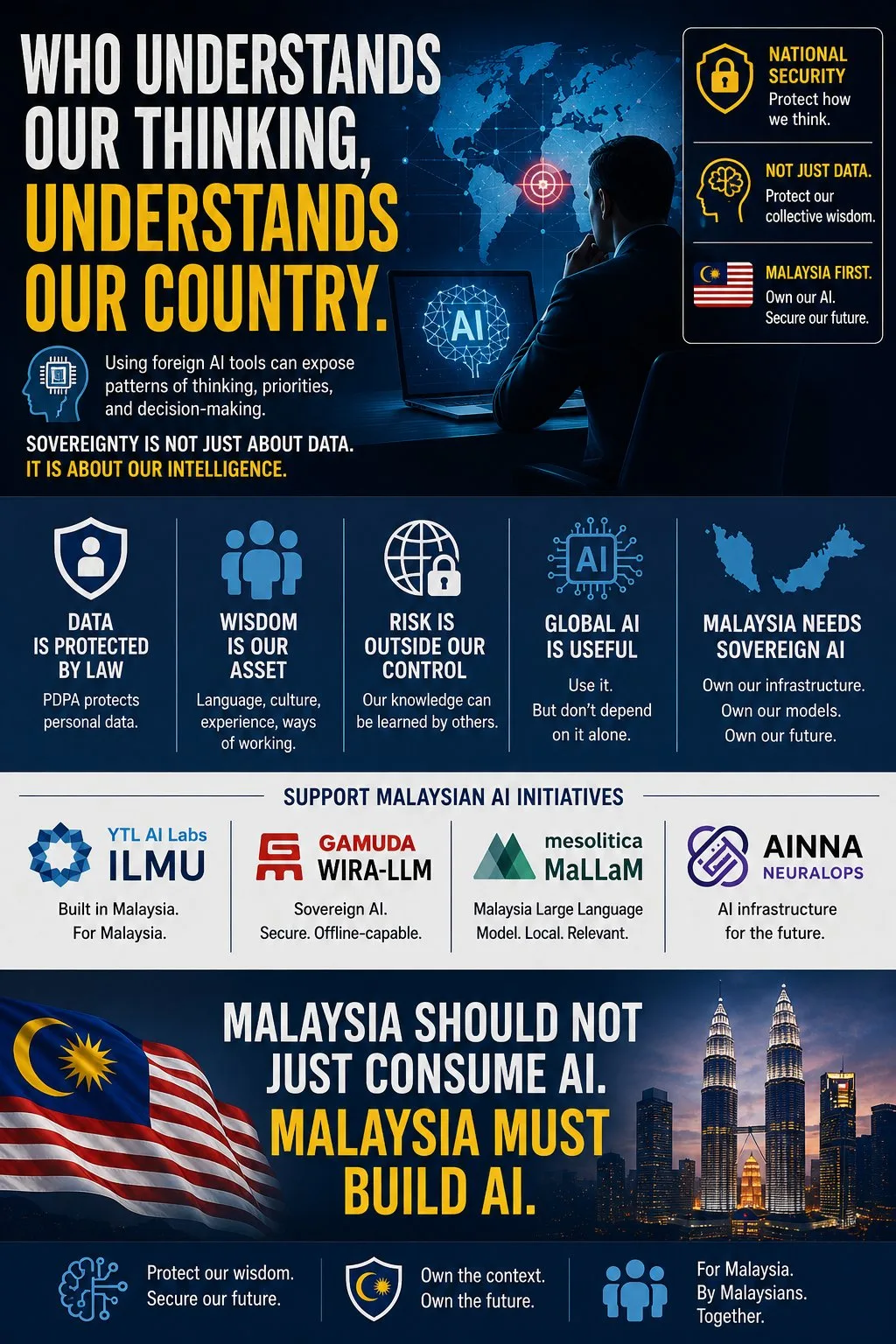
Data and wisdom are not the same thing. Personal data must be protected under PDPA, and that responsibility is clear. But collective wisdom is different. It represents the way people think, work, solve problems, communicate, trade, build businesses, manage operations, and adapt to real-world challenges.
For Malaysia, this collective wisdom is not ordinary information. It is national knowledge, cultural intelligence, and economic value. It includes our language patterns, local business practices, government context, SME experience, industry workflows, community behaviour, and practical solutions developed through years of trial, error, and survival.
This is not about rejecting global AI. Global AI is useful, powerful, and necessary. We should use it. But Malaysia must also think seriously about digital sovereignty. If our prompts, documents, policies, workflows, business ideas, SOPs, and local language patterns continue to flow mainly into systems we do not own, we risk becoming only users of technology - not owners of intelligence.
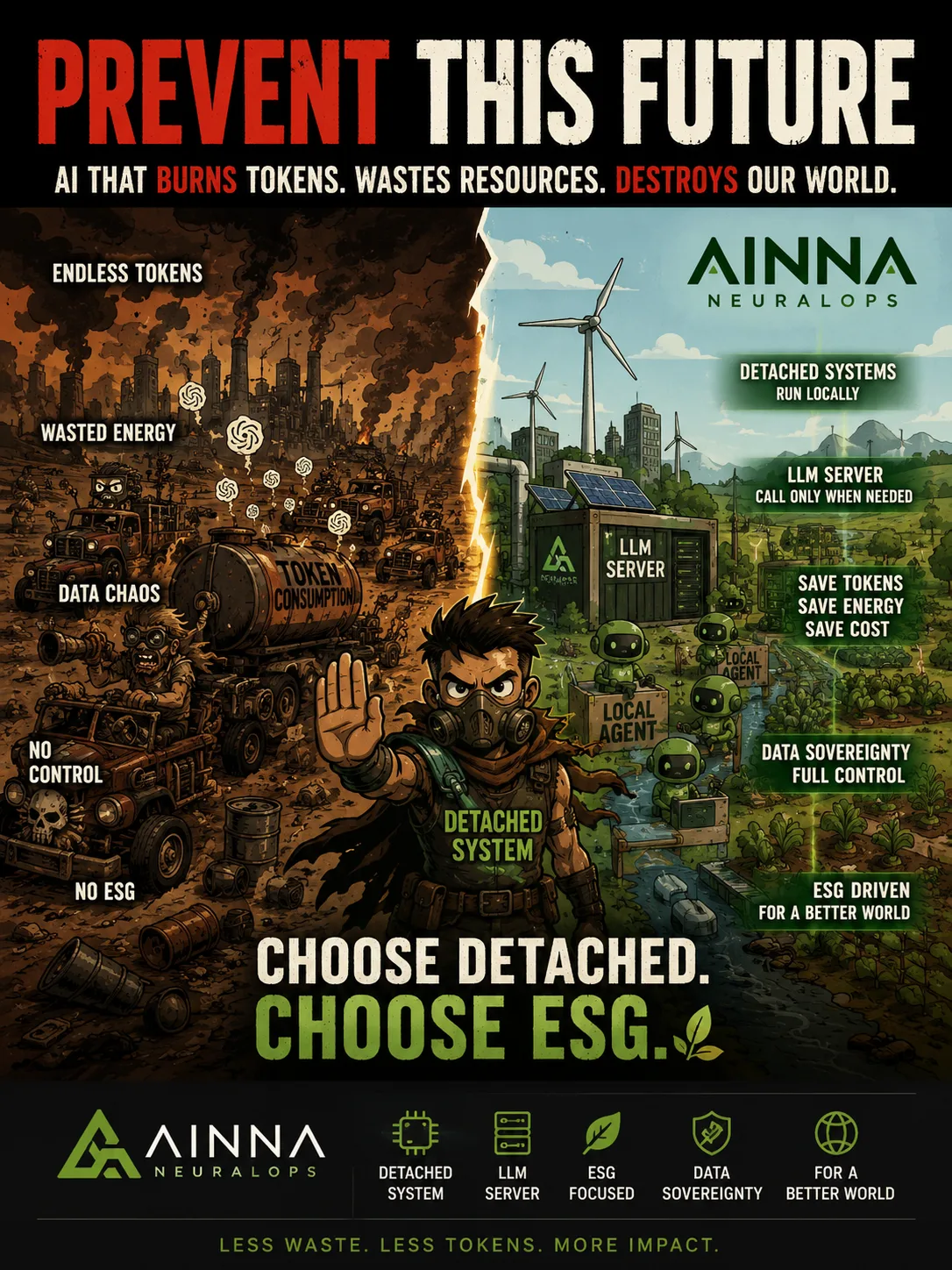
Malaysia needs its own AI infrastructure, local models, secure servers, and sovereign AI workflows. We need AI systems that understand Malaysian language, culture, business reality, public-sector context, SME operations, and regional industry needs. This is why local efforts such as YTL AI Labs with ILMU, Gamuda Technologies with Wira-LLM, Mesolitica with MaLLaM, and infrastructure initiatives such as AINNA NeuralOps deserve serious attention and support.
The future of AI is not only about who has the biggest model. It is about who owns the context. Personal data may be protected by regulation, but collective wisdom must be protected by technological sovereignty. Malaysia should not just consume AI. Malaysia must build AI.